← All posts

The Dink, Explained: Pickleball's Softest, Smartest Shot

By Pickleball Skill Levels · November 3, 2026 · 4 min read

A dink is a soft shot that floats just over the net and lands in the kitchen. It looks like nothing — and it decides more rallies than any drive ever will.

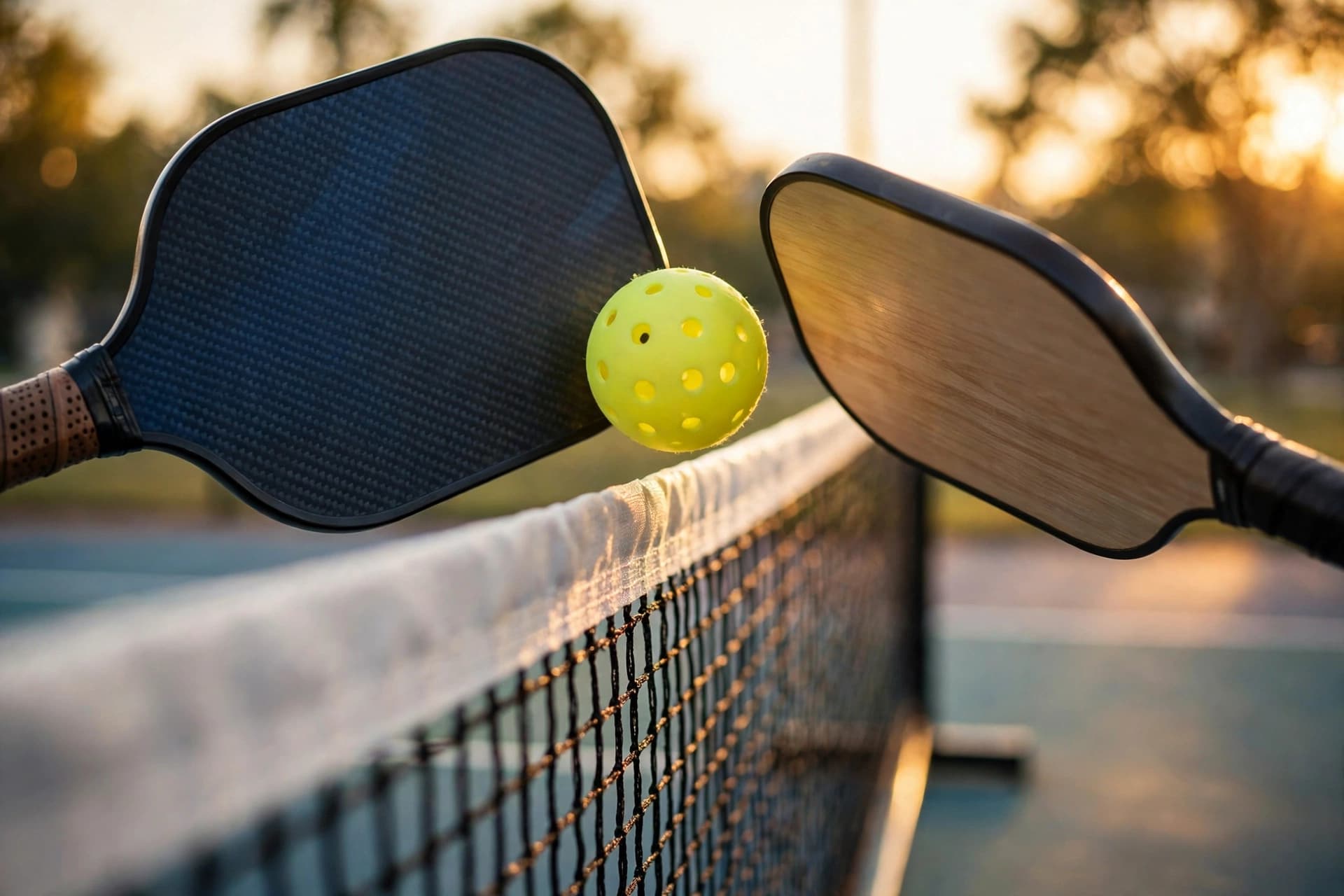
A dink rally at the kitchen line, paddles close over the net

A dink is a soft shot hit from up close to the net. You lift the ball in a small, gentle arc so it barely clears the net and drops into the kitchen — the 7-foot zone on the other side. Because it lands in the kitchen, your opponent has to let it bounce, and because it stays low, they can't smash it. The dink is how good players slow a rally down and take control of it.

When you use it

Almost every rally between good players becomes a dink rally. Once all four players are standing at the kitchen line, nobody can hit hard without the ball flying out or getting blocked — so they trade dinks, waiting. Each soft shot asks the other side a quiet question: can you stay patient, or will you be the one who pops it up? The player who answers wrong loses the point.

What it looks like at each level

At 2.5, dinks are accidents waiting to happen — they clip the net or float up high enough to get smashed.

Players rallying on an outdoor court at golden hour

At 3.0, a player can trade a few dinks in a row before impatience or a shaky hand ends it.

At 3.5, dinks stay low and unattackable for long stretches, and they start moving opponents side to side on purpose.

At 4.0 and up, the dink is a weapon of placement — aimed at feet and backhands, spun, disguised, and used to set up the one ball that can finally be sped up.

The mistake almost everyone makes

Treating the dink like a tiny drive. Players step back from the line, take a swing, and wrist the ball — and it pops up for an easy put-away. A dink is not a swing. It's a lift: paddle open, body quiet, ball pushed gently from the legs and shoulder. If your dinks keep floating, the fix is almost never your hands — it's backing off the line and giving yourself too much shot to hit.

★★★★★Mastery difficulty for this shot — our coaches' take, not a stat.

Now find out where YOU stand

Reading about levels is step one. The free skill check scores your six shots and names your level — and your weakest shot — in about two minutes.

Pickleball words, in plain English

Players throw these words around like everyone knows them. Here is what each one actually means.

Kitchen
The 7-foot zone right at the net. You can stand in it, but you can't hit the ball out of the air while you're there.
Dink
A soft, gentle shot that just clears the net and lands in the kitchen. It forces the other side to hit up, not down.
Third-shot drop
Your team's first shot after the serve and return. Hit it soft so it drops into the kitchen — that lets you walk up to the net.
Reset
When a hard shot comes at you, you block it softly into the kitchen instead of swinging back. It slows the point down and saves you.
Drive
A hard, fast shot hit low over the net. The opposite of a dink.
Pop-up
A ball you hit too high by accident. It hangs in the air, and the other side gets to smash it. Most points at low levels end this way.
Speed up
To suddenly hit the ball hard and fast on purpose, to rush the other side before they're ready.
Volley
Hitting the ball out of the air before it bounces.