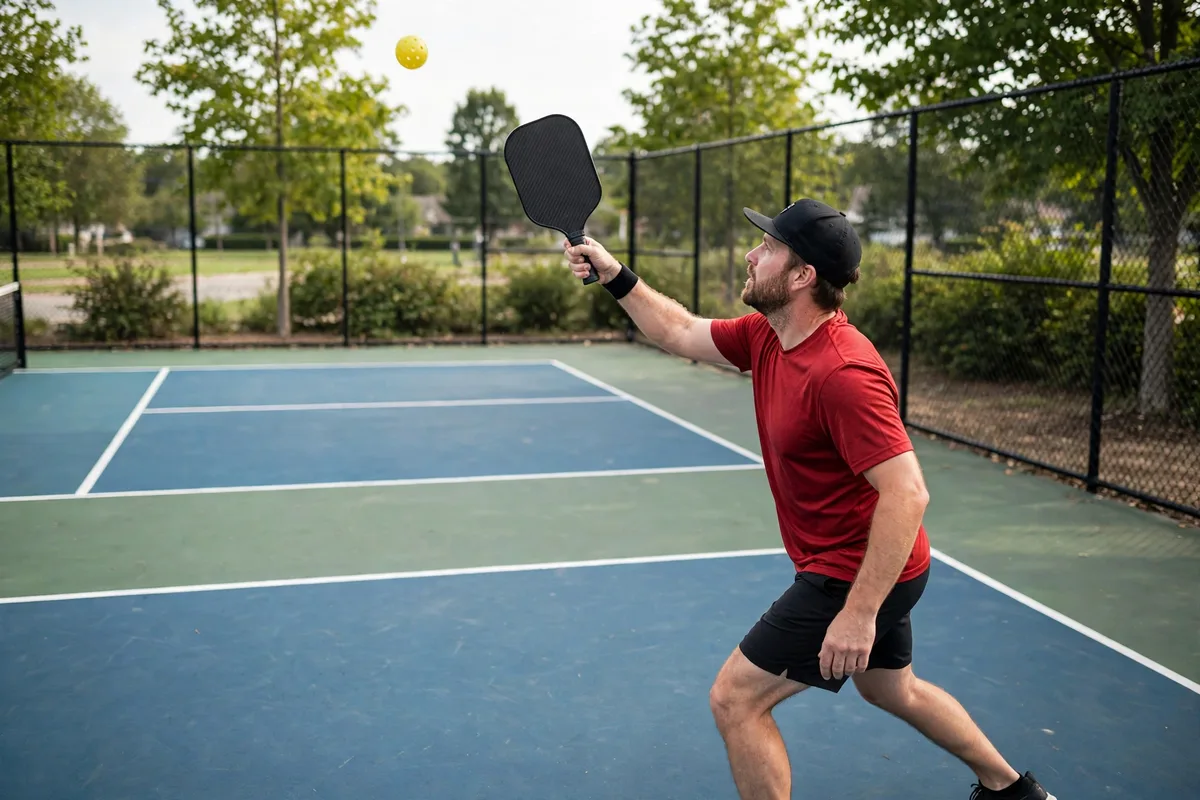
The third shot is the shot the serving team hits after the serve and the return — shot number three of the rally. It matters out of proportion because of where everyone stands: the returning team has already moved up to their kitchen line, the edge of the seven-foot non-volley zone, while you and your partner are still near the baseline. You have two real choices. Drive it: hit the ball hard and low, hoping to force a weak reply or catch someone unready. Or drop it: float a soft shot that lands in the kitchen, too low to attack, while your team walks up to the net. Our full guide to the third shot drop and how to hit it covers the drop itself. This post is about the moment before: how to choose.
First read: the return tells you
The return of serve is your scouting report, delivered a second before you have to decide. If the return is deep and high — bouncing near your baseline and rising — you are pinned back with time on the ball. That is drop weather: you have room to swing softly, and a drive from that deep, against two set opponents, usually just gives them a ball at a comfortable height. If the return is short or low — landing mid-court or skidding at your feet as you move in — the calculation flips. Step in and drive it. A drop from a short, low ball is hard to control, while a firm drive at a returning team that is still moving forward can end the rally or pop up a weak ball.
Second read: where are your feet?
Your own position settles what the return suggests. If you are behind the baseline, off balance, or moving backward, the drop is your only honest option — trying to drive from there produces errors, not pressure. If you are inside the baseline, balanced, with your weight moving forward, you own both shots and can pick based on the opponents. Teach yourself one bright-line rule: never drive while falling backward, and never force a drop when you are already standing mid-court with a ball sitting up. Most bad third shots are not bad swings. They are the wrong shot chosen for the feet the player happened to have.
Third read: are they set, or still moving?
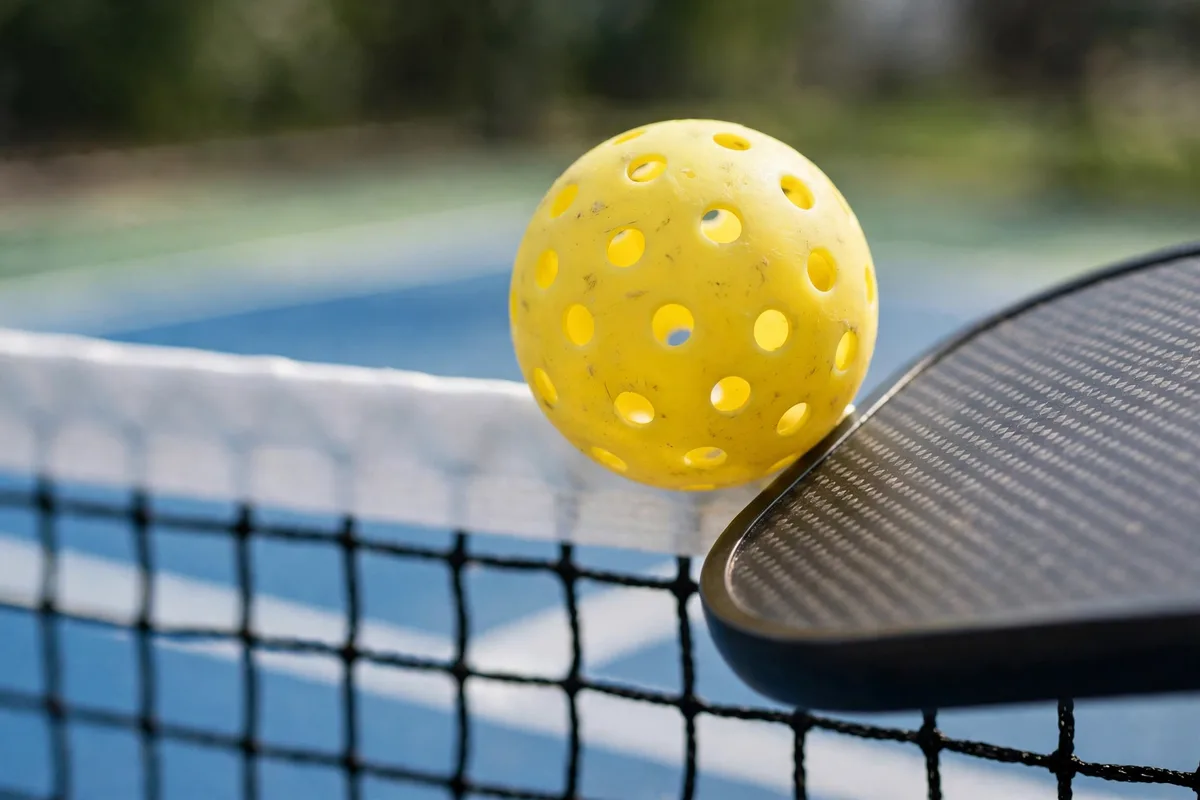
Finally, look up. If both opponents are planted at their kitchen line, paddles up, waiting, a drive has to be excellent to trouble them — the drop is the percentage play, because it makes them hit up from below the net. But if one of them is still jogging forward, turned sideways, or chatting about whose ball the return was, that is a drive target. Hit firmly at the moving player or through the gap they have not closed yet. Movement is vulnerability: a player in transit cannot control a hard ball, and even a decent drive often produces a pop-up your partner can finish.
A rule of thumb for your level
Match the mix to your game. Around 2.5 to 3.0, make the drop your default — say, eight times out of ten. Your drives at this level are not yet reliable enough to pressure set opponents, and the drop builds the habit that unlocks the net. Around 3.5, mix honestly: drop against set pairs, drive at movers and short returns, because opponents now punish predictable softness. Above that, the choice is read-by-read, and many advanced players drive the third shot to set up an easier fifth — which is its own pattern, below. Wherever you are, the third-shot drop, explained goes deeper on why the soft option works so often at every level.
The hybrid: drive the third, drop the fifth
There is a third answer the simple question hides. Drive the third shot at the feet of the opponent who is still moving in — not to win the point outright, but to force a defensive block that sits up short. Then your team's next shot, the fifth, is an easy drop from mid-court, and you walk to the line behind it. Coaches call this the shake and bake's calmer cousin: use pace once to buy the position, then use softness to take it. If your drives keep coming back, stop asking them to win the rally and start asking them to set up your drop. In other words: drive or drop is a decision you can train until it is automatic — read the return, check your feet, glance at their line. Do that for a month and the third shot stops feeling like a gamble. And if you want to know whether the third shot is even your biggest leak, our free skill check scores the drop and the other five core shots, so your practice goes where the points actually are.