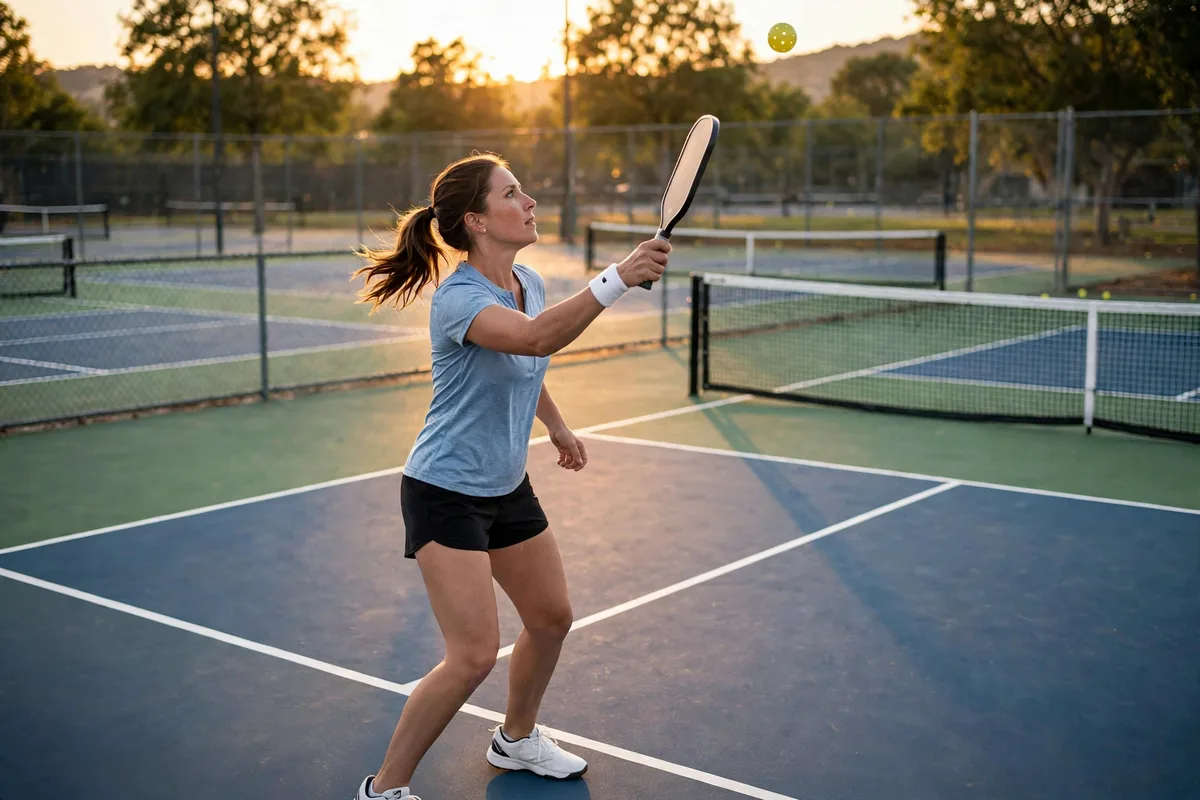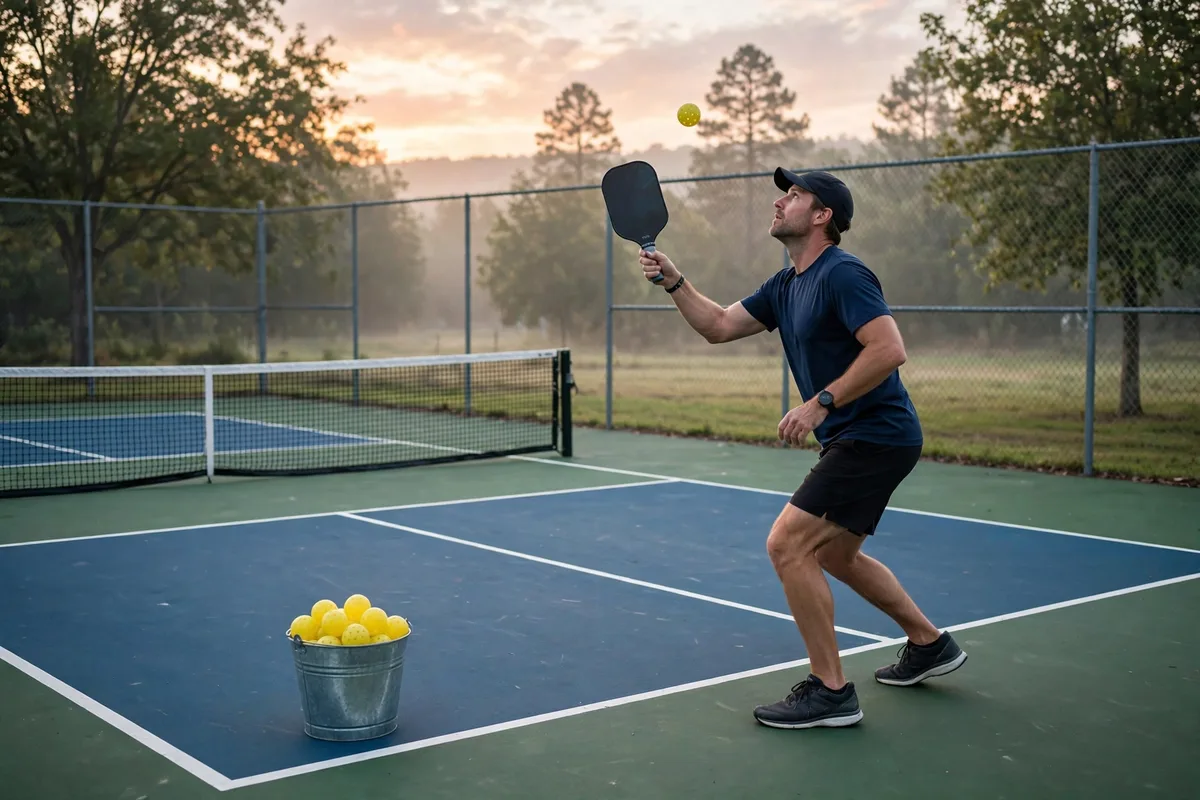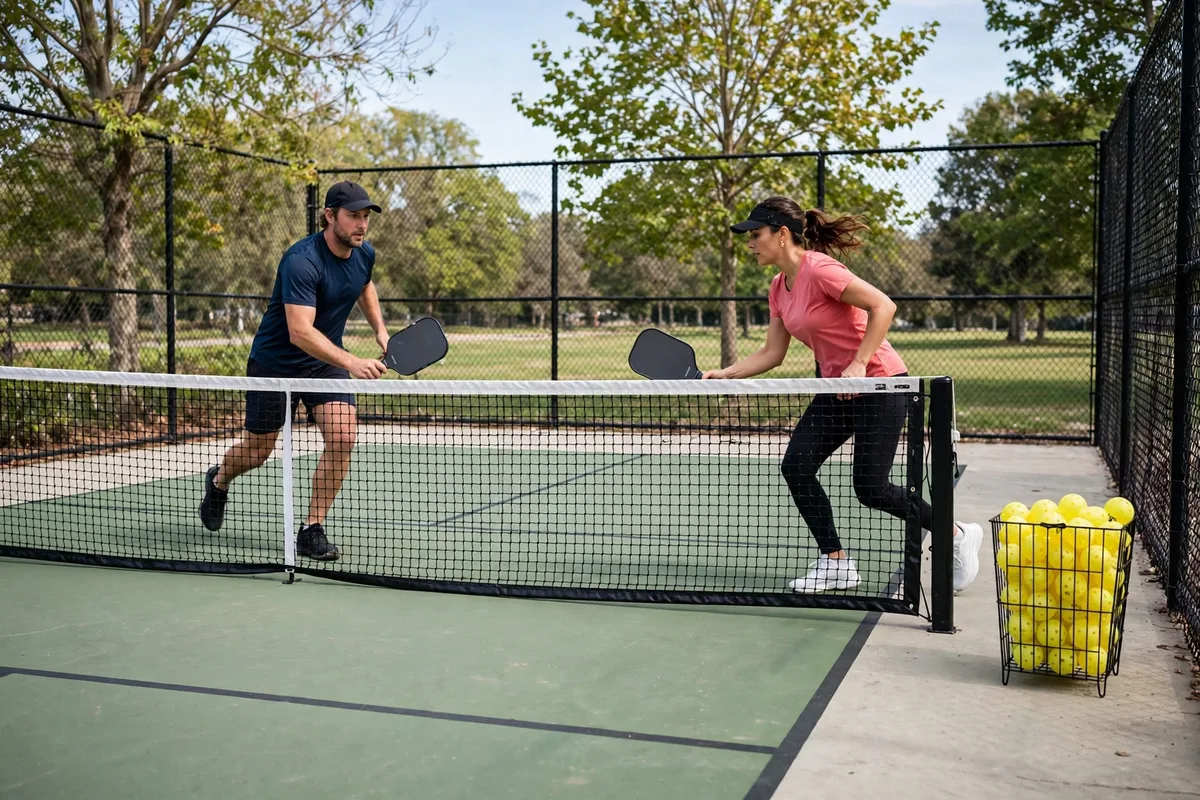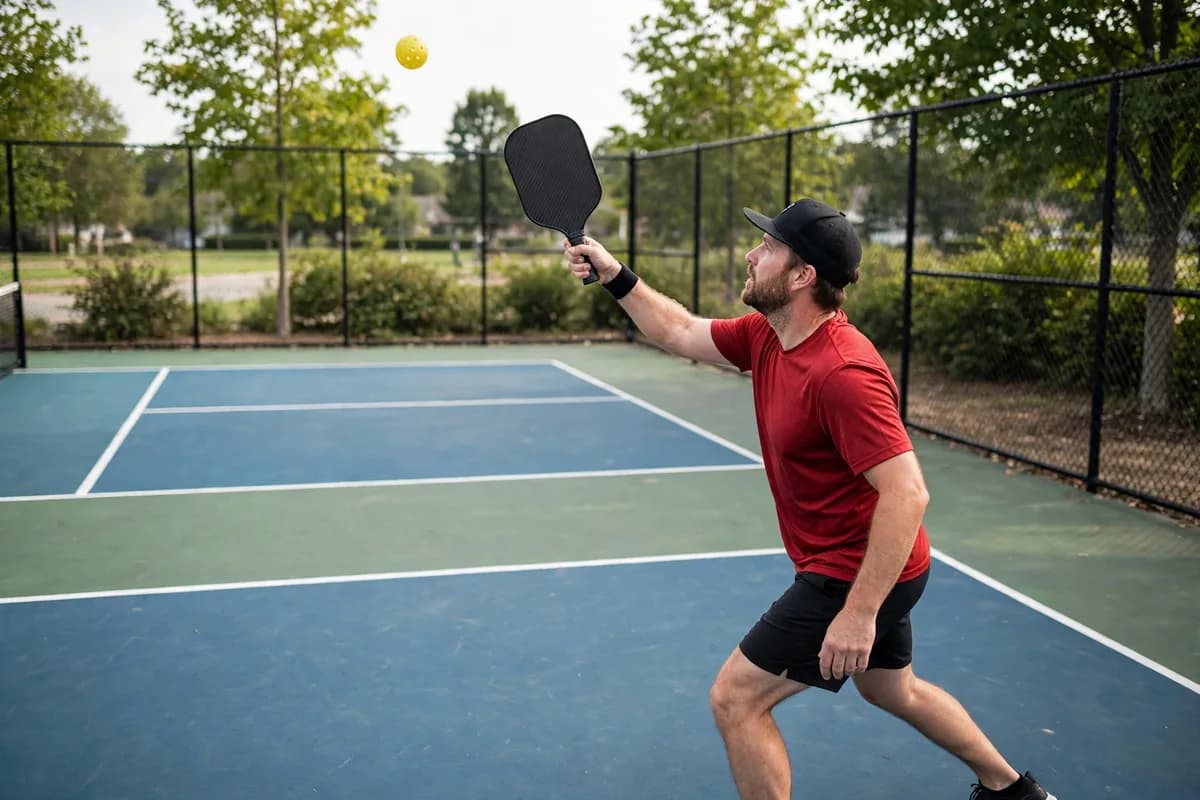
Count the shots in any rally. Your serve is one. Their return is two. Your next shot — the third — decides the rally's shape. Your opponents are already waiting at their kitchen line, and you are back near the baseline. Drive the third shot and it usually comes back faster than it left. The third-shot drop is the patient answer: a soft, arcing shot that lands in their kitchen (the 7-foot non-volley zone), too low to attack, while you and your partner walk up to your own kitchen line.
How to hit it
Think lift, not swing. Open the paddle face slightly, get under the ball, and push it up and forward in a smooth arc — the ball should reach its highest point on YOUR side of the net and then fall, clearing the tape by a foot or two and dropping into the kitchen. Your grip stays relaxed; a tight hand makes the ball jump. The motion is closer to tossing a ball underhand into a bucket than to any groundstroke you know. Our video library walks through it frame by frame — start with the drop shot videos and watch how quiet the pros' bodies stay.
When to use it (and when not to)
Use it when the return is deep and you are pinned back — that is most third shots in a decent game. Use it when your opponents are both set at the line. Skip it when the return is short or weak: then step in and drive, because a drop hands a free net position to a team you could have kept back. Higher-level players mix the two on purpose so the returning team can never settle.
The drills that make it stick
Two simple ones, both in our courses for your level as full lessons: (1) The ladder — a partner feeds returns from the net while you drop from the baseline, aiming for a towel laid in the kitchen; ten balls, then swap. (2) Drop-and-advance — drop, take two steps in, drop again from mid-court, and finish with a dink at the line, which teaches the footwork the shot exists to buy. Ten minutes of either, twice a week, and the arc starts showing up in games on its own.
The three misses, diagnosed
In the net: your arc peaked too late or not at all — aim higher, and let the ball reach its top on your side. Sitting up to be smashed: the opposite — too much height with no forward push, so it floats; add a little pace and a lower peak. Long, past the kitchen to the baseline: your swing is doing the work instead of the lift — shorten it, soften the grip, and let the paddle face do the lifting. Our full explainer, the third-shot drop, explained, goes deeper on the same shot, and how to improve your pickleball rating shows where the drop fits in a full training week.
If the drop is your weakest shot, you are in good company — it decides more level-ups between 3.0 and 3.5 than any other shot. The free skill check will tell you if it's the one holding your level down.