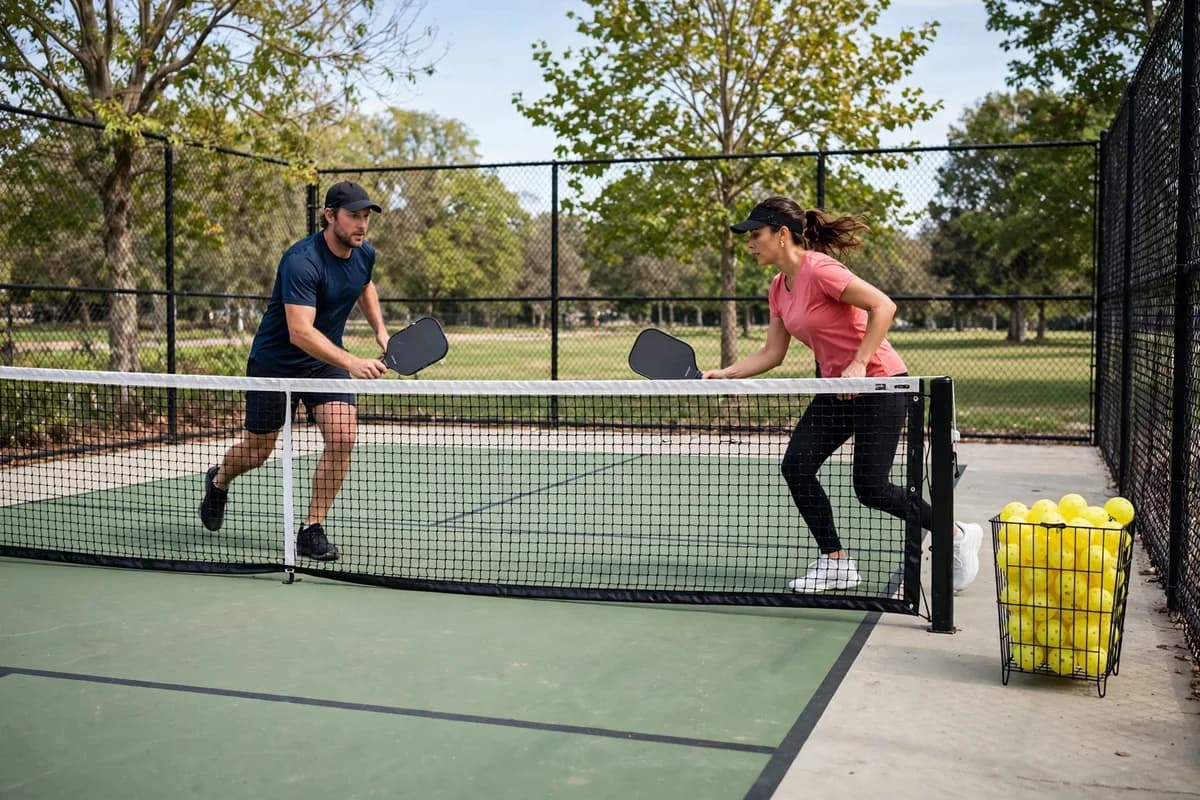
Beginners lose points in predictable places: serves that miss, returns that float, third shots that crash, and any hard ball hit straight at them. These seven drills target exactly those leaks. Each takes about ten minutes, needs a partner at most, and comes from the same progressions our coaches build into the beginner courses. Do two or three before open play instead of warming up with random rallies, and the difference shows within a couple of weeks.
1. Dink rally ladder
Stand at the kitchen line with a partner and trade dinks — soft shots that land in the kitchen. Count your rally. When you reach 20 in a row, take one step back and repeat. It builds the soft hands every rally eventually asks for.
2. Serve to the towel
Lay a towel in the back corner of the service box and serve 20 balls at it. Depth, not speed, is the skill: a deep serve starts every rally in your favor. Track how many land on or past the towel, and beat last week's count.
3. Return and run
Your partner serves; you return deep — past the kitchen, toward the baseline — and sprint to the kitchen line before their next shot. The return matters, but the running is the drill: reaching the line is the habit that separates 3.0 from 2.5.
4. Third-shot drop ladder
Partner at the net feeds balls to your baseline. You hit soft, arcing drops that land in the kitchen, then step in two paces and repeat from mid-court, finishing at the line with a dink. Ten balls, swap, repeat.
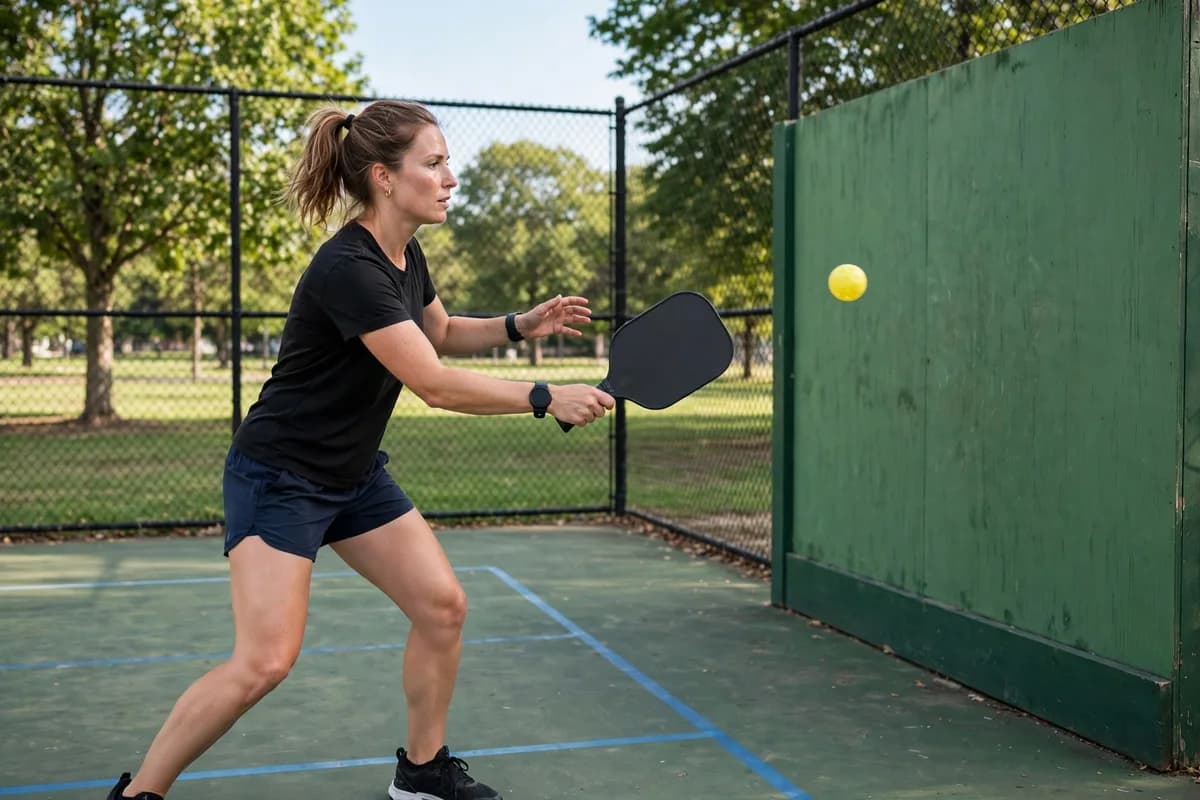
5. Wall resets
No partner? Hit drives at a wall from ten feet, then softly block the rebound so it would drop in a kitchen. It teaches the reset — absorbing pace instead of swinging at it — the shot beginners panic on most.
6. Kitchen line volleys
Both players at the line, cooperative pace: volley back and forth without the ball bouncing, keeping it below shoulder height. Slow is fine. You are building hand speed and a compact swing, not winning.
7. Skinny singles
Play a real game on half the court — one sideline to the centerline. Singles footwork and aim, without the running of full singles. First to 7, then swap sides.
A sample week that fits real life
Monday, 20 minutes: serve to the towel, then wall resets. Wednesday, 20 minutes before open play: dink ladder and kitchen-line volleys. Saturday, in warm-up: return and run, then third-shot drop ladder — then play your games and notice which drill shows up uninvited. That rotation hits every leak in this list inside one ordinary week, and it mirrors how the beginner courses sequence the same work. For the soft-game half of the week, the third-shot drop guide goes deeper on drill four.
Drills work when they aim at the right weakness. If you're not sure which of your shots leaks most, take the free skill check first — then pick the drills above that target what it names, and let the check re-score you in a month.