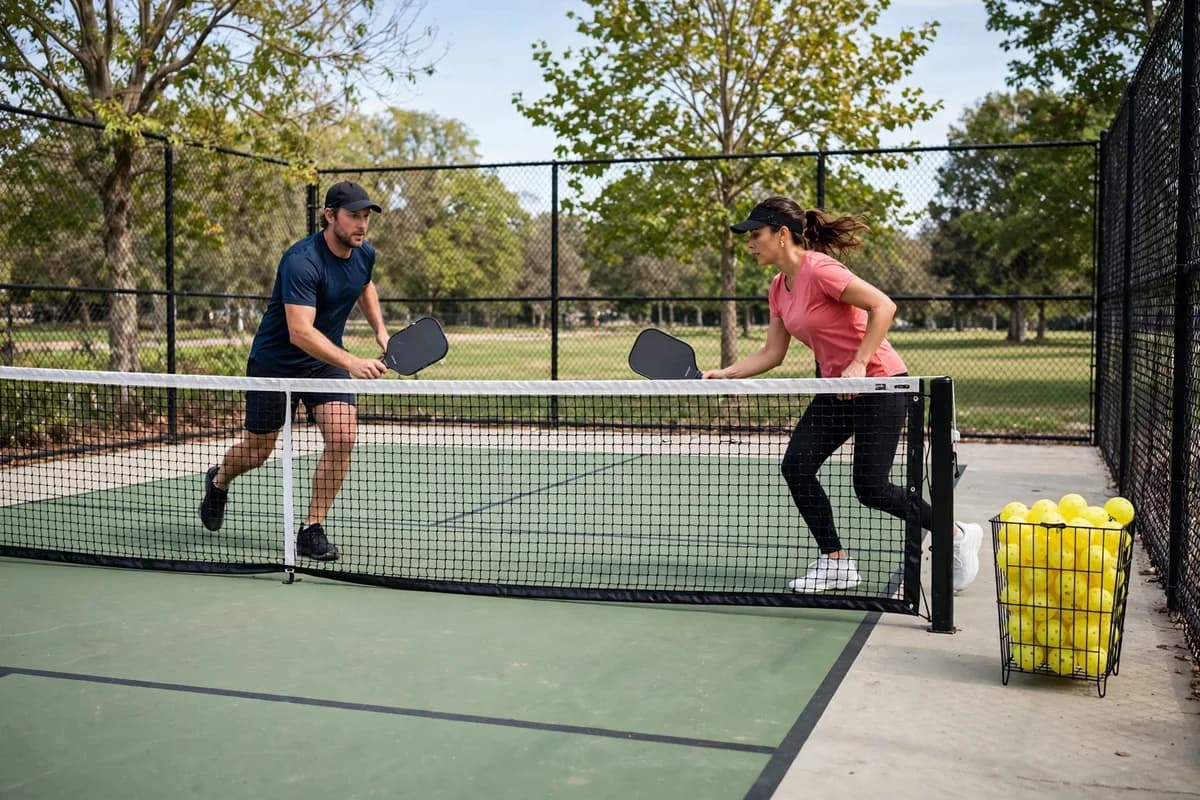
Going from 3.0 to 3.5 is not about playing more — most 3.0s already play plenty. It is about building the three soft shots the level is made of, in the right order, with enough repetition that they survive a real game. That makes the climb a training project, and training projects need a calendar. This plan runs six weeks at three sessions a week (two drilling sessions and one play session is ideal). Each two-week block builds one shot and ends with a game target that proves the shot actually transferred — because a drill you can do and a shot you own are different things.
Before week 1: know your starting line
Grade your six shots honestly first — serve, return, third-shot drop, dink, reset, footwork — because the plan assumes the standard 3.0 profile (solid serve and return, rumor-level drop, accidental dinks, no reset yet). If one of the three target shots is already real for you, swap its block for footwork: moving with your partner and recovering to the kitchen line (the edge of the non-volley zone, 7 feet from the net) as a pair. The concept behind the climb — why the soft game is the whole answer at this level — is in our guide to the 3.0-to-3.5 jump; this plan is that guide with dates attached.
Weeks 1–2: The third-shot drop
The third shot is the serving team's first shot after the return, and at 3.0 it is usually a drive hit at two players already waiting at the net — a donation. The drop is the same moment played softly: a high, arcing shot that lands in the kitchen and lets your pair walk in. Drill it with a partner feeding from the kitchen line: you alternate five drops from the baseline, five from mid-court, for 20 minutes. The only score that matters: out of 10, how many land in the kitchen or bounce low enough that your partner agrees you could have moved in? Play target for week 2: in real games, attempt the drop on at least half your third shots, and notice how the rally changes — suddenly you are at the net, playing the game from the good address.
Weeks 3–4: The patient dink
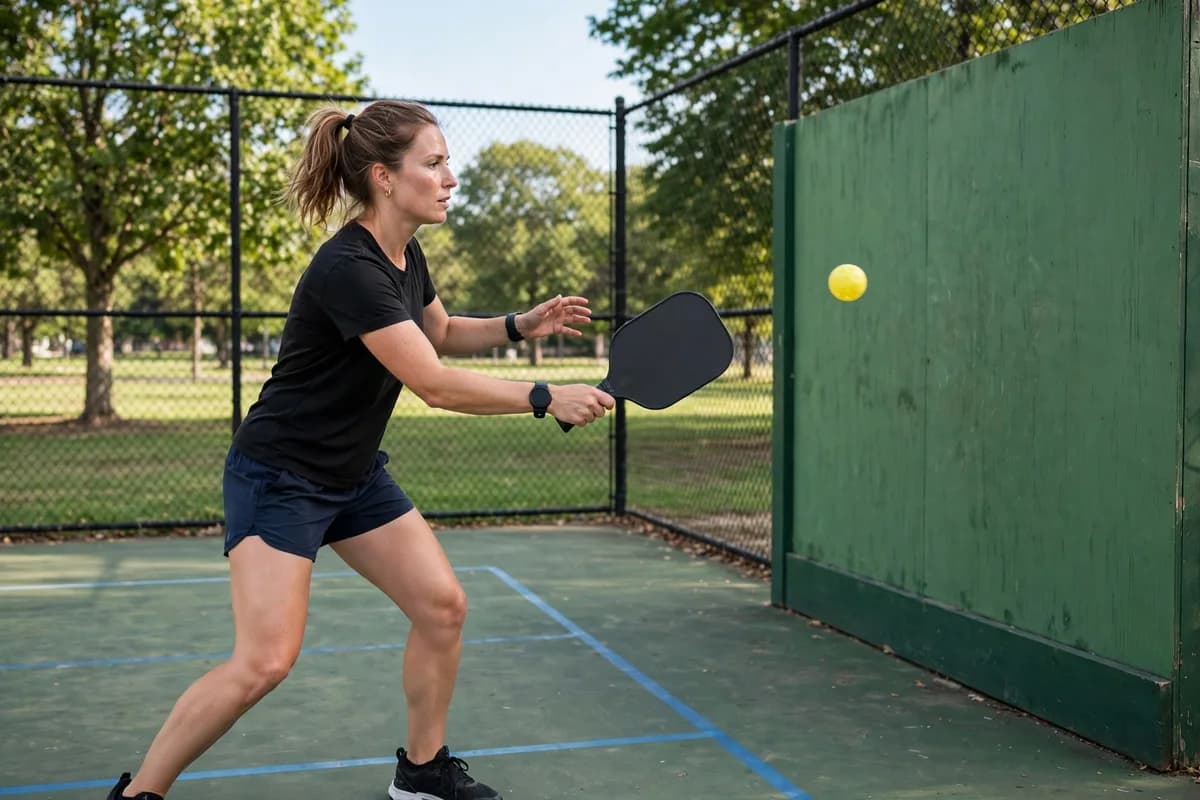
A dink is the soft shot that clears the net and drops into the kitchen, and the 3.5 version is a rally, not a shot: ten, fifteen, twenty patient exchanges, moving the ball to feet, waiting for the one that sits up. Drill it cross-court (diagonally, over the low middle of the net) with a counting game: pairs score a point for every rally of 10+ dinks, and lose the point the moment they pop one up or rush an attack from below the net. Then play games with a house rule — the first four shots after the serve and return must be dinks or drops — so the patience gets practiced at game speed. Play target for week 4: win one game a session primarily by out-waiting the other pair. It will feel slow. That feeling is the level arriving.
Halfway through the plan is the right moment to measure: Check your level — free, 2 minutes — compare your dink and drop scores with your starting line and the plan stops being faith and becomes arithmetic.
Weeks 5–6: The reset, and the whole game slows down
The reset is the soft block that takes a hard drive and drops it at the hitter's feet, and it is the shot that ends the 3.0 terror of bangers (players who drive everything). Drill: your partner drives firmly from mid-court while you stand in the transition zone — no-man's land between baseline and kitchen — and block everything soft, aiming to land the ball in the kitchen. Soft hands, paddle slightly open, almost no swing: you are catching the ball on the strings and setting it down. Then full games with the graduation rule: after the third shot, your team must attempt a drop or play a reset before any drive. Play target for week 6: face the hardest hitter in your group and finish the game feeling like the ball was never too fast. That calm is the signature of a 3.5 — the full checklist of the level will read differently when you come back to it.
Six weeks, three shots, one new sport. The plan works because it respects how skills actually transfer: one shot at a time, drilled briefly and often, then tested in games with a target attached. When week 6 ends, grade the six shots again — Check your level — free, 2 minutes — and look at what moved. Most players find the drop and dink up a full band and the reset close behind, which is another way of saying: a 3.5, built on schedule.
Source: level definitions consistent with USA Pickleball's published skill definitions (usapickleball.org); drill structures are standard coaching practice for the 3.0–3.5 band, as described in our level guides.