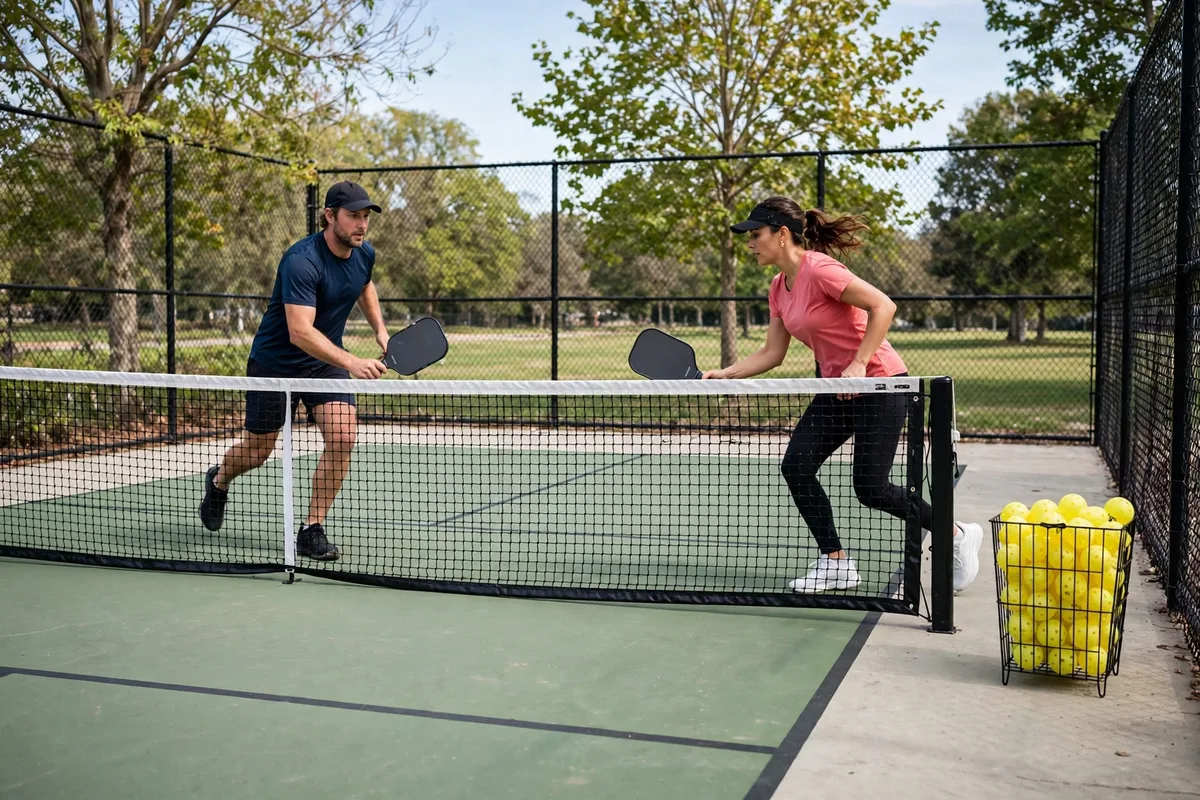
There is a reason this is called the jump most players never make. DUPR's rating distribution (published by The Dink, October 2026) puts 24% of rated players in the 3.5 band and only 11% at 4.0 to 4.49 — more than half the field thins out at exactly this door. It is not a talent door. The 3.5 toolkit and the 4.0 toolkit are the same toolkit; what changes is whether the shots survive pace, pressure, and the tenth rally of a close game. So this plan is not about learning shots. It is eight weeks of making three specific things boring: your return, your reset, and your patience.
The honest diagnosis first
Before the calendar, the mirror. A 4.0 gives away almost nothing, so count your donations: play one recorded or carefully watched session and tally (1) returns that land in front of the mid-court line, (2) resets attempted against real pace that sailed long or popped up, (3) attacks you tried on balls below the net after long rallies. Most strong 3.5s find 8–15 donations a game across those three columns — which is the entire margin in most of their losses. The honest 4.0 checklist grades the whole level; this plan attacks the three columns. If your tally looks different — say your serve is the leak — swap that column in. The structure does not change.
Weeks 1–3: The return that never lands short
The return of serve is the highest-leverage shot in the climb, because a deep return buys your pair time to reach the kitchen line (the edge of the non-volley zone) and a short one donates the point slowly. Drill it with a line, not a hope: a towel or tape across the back third of the court is the target zone, and a serving partner hits real serves while you score yourself — 10 returns, count the deep ones. The 3.5 standard is 6 or 7. The 4.0 standard is 9, with the miss long rather than short (a long miss at least made them play a ball; a short return lets them dictate). Add the second habit immediately: return and move — every return, no admiring it — because at 4.0 the return and the arrival at the net are one action. Play target by week 3: one full session where your pair reaches the line together on nearly every return.
Weeks 4–6: The reset at real pace
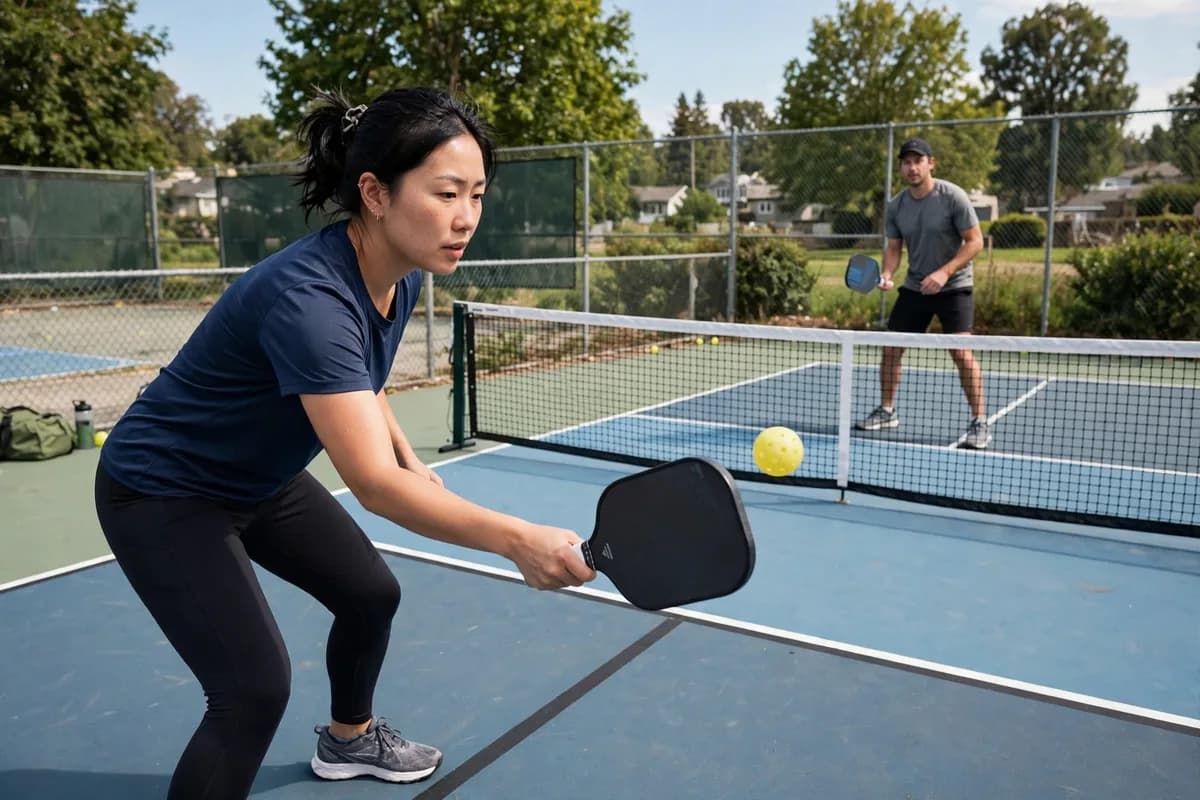
Your reset works in drills. The jump is whether it works when a genuine 4.0-level drive comes at your chest while you are still moving through the transition zone. So the drill must stop being polite: a partner (or two, alternating) drives at 80–90% pace from the kitchen line while you start at mid-court and advance — block soft, land it in the kitchen, keep coming. Count survival in blocks of 10 drives; the target is 7 balls dying in the kitchen by week 6. The technique does not change from the polite version — soft hands, open face, catch it and set it down — only the incoming speed and your balance do, and that is precisely the point: shot selection under pressure is a skill, and pressure has to be in the drill or it will only ever be in the game.
Mid-plan measurement keeps the work honest: Check your level — free, 2 minutes — watch the reset and return scores specifically; they are this plan's report card.
Weeks 7–8: Patience past the tenth ball
The last wall is mental, and it is a wall: rallies at 4.0 stretch past twenty dinks (the soft exchanges at the kitchen), and the point usually goes to the player who attacks ball eleven like it is ball two — only when it sits above the net. Train it with constrained games: dink rallies where attacking a ball below net height costs your pair two points, and full games where the first speed-up of each rally must come off a ball that bounced above the tape. You will lose points at first to pairs who attack freely — and beat them by week 8 as their donations pile up. Play target: win one game a session against your regular 3.5 group primarily on their errors, in rallies you refused to end early. Boring, scoreless-feeling, decisive. That is 4.0 pickleball, and it is now yours.
Eight weeks will not make every 3.5 a 4.0 — the level also asks for hands, anticipation, and a partner system that this plan assumes you are building in your regular games. But the three columns are where most of the class is held back, and they are all trainable. Grade the six shots again at the end — Check your level — free, 2 minutes — and if the return and reset have climbed, the decimal will follow in your recorded games. It always does; it just follows last, which is why most players quit one season early.
Source: rating distribution from DUPR data published by The Dink (Oct. 7, 2026; snapshot Sep. 22, 2026 — global DUPR doubles users with a recorded result in the previous 12 months); level definitions consistent with USA Pickleball's published skill definitions (usapickleball.org).