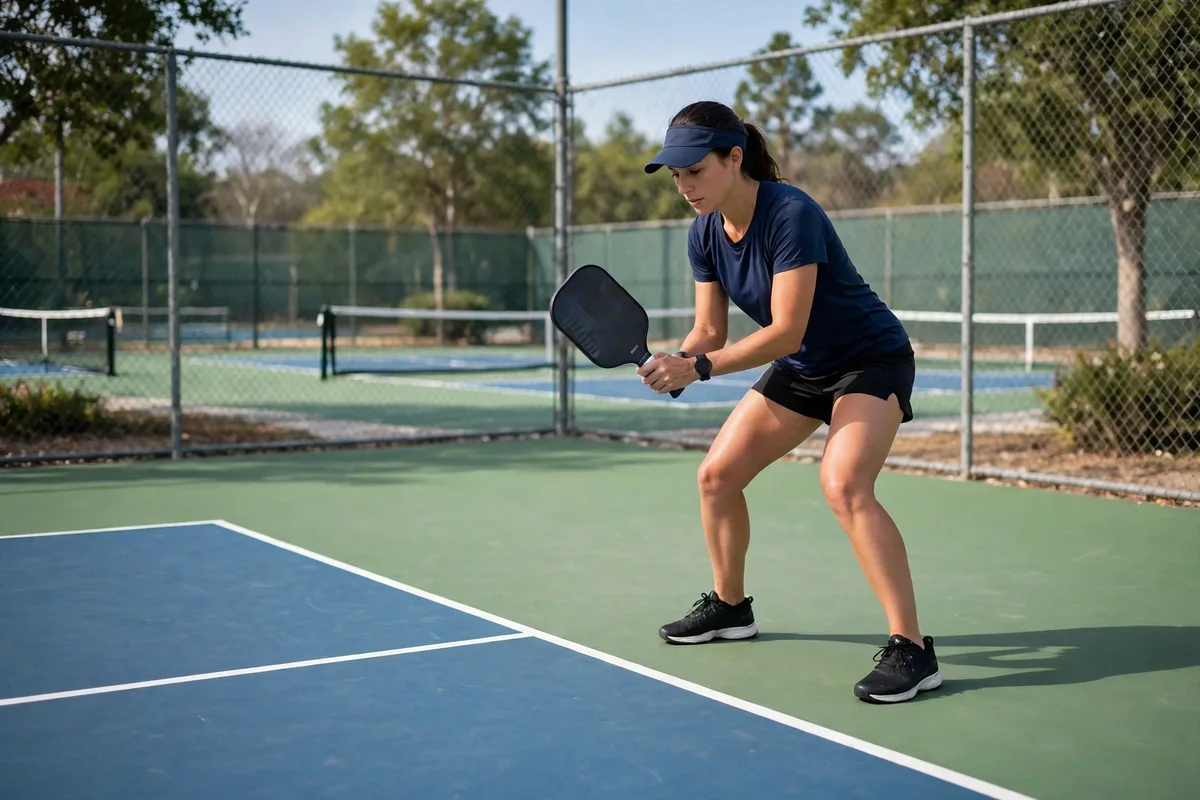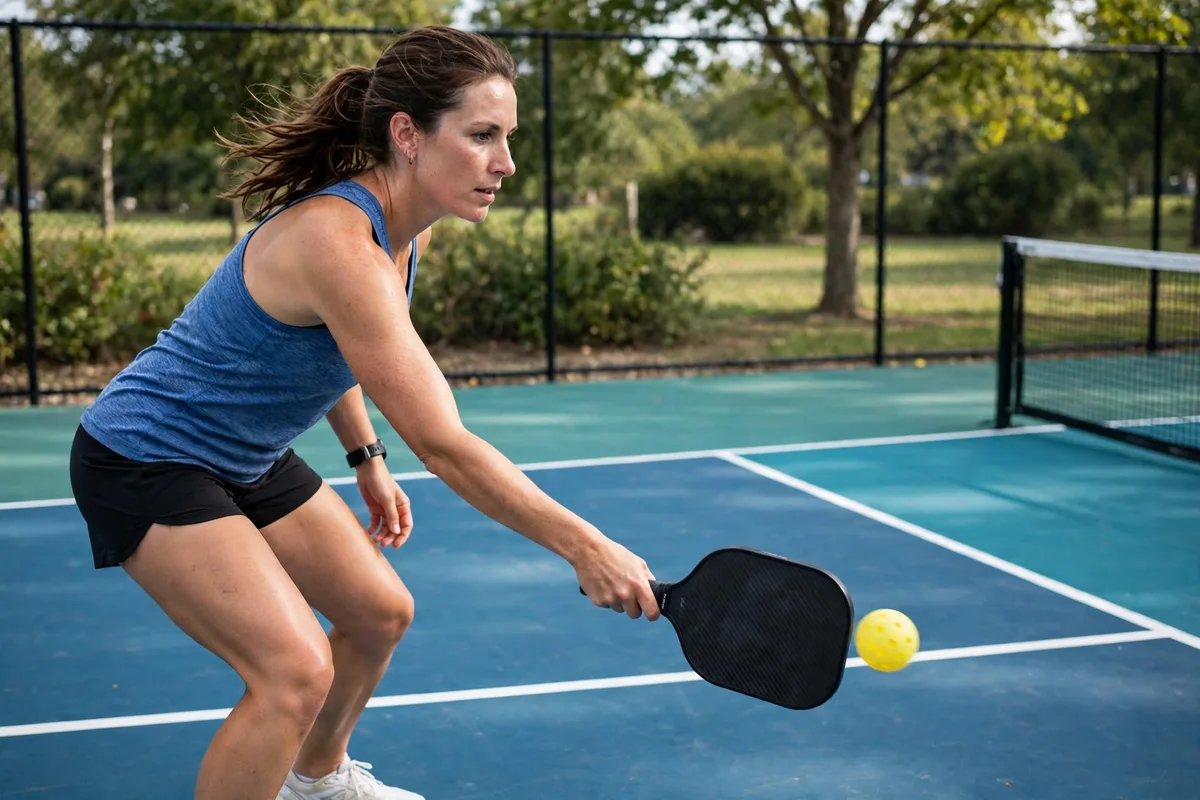
The serve starts every rally, and pickleball deliberately keeps it simple: this is not tennis, and nobody is allowed to blast it. USA Pickleball's rulebook sets the serve's shape so rallies start fair. Learn the four rules once and you will never think about them again — then spend your practice on the only serving skill that actually wins points: depth.
The rules, once and for all
One: the serve is hit underhand, with the paddle contacting the ball below your waist. Two: the highest part of the paddle head must stay below your wrist at contact. Three: you serve diagonally, into the service box kitty-corner from you, and the ball must land beyond the kitchen line — a serve that drops in the kitchen is short and a fault. Four: both feet stay behind the baseline and inside the imaginary extension of the sideline and centerline until the ball is struck. A drop serve — bouncing the ball first, then hitting it — is also legal, and for it the underhand restrictions do not apply, which makes it a friendly option for true beginners.
The technique: deep and boring wins
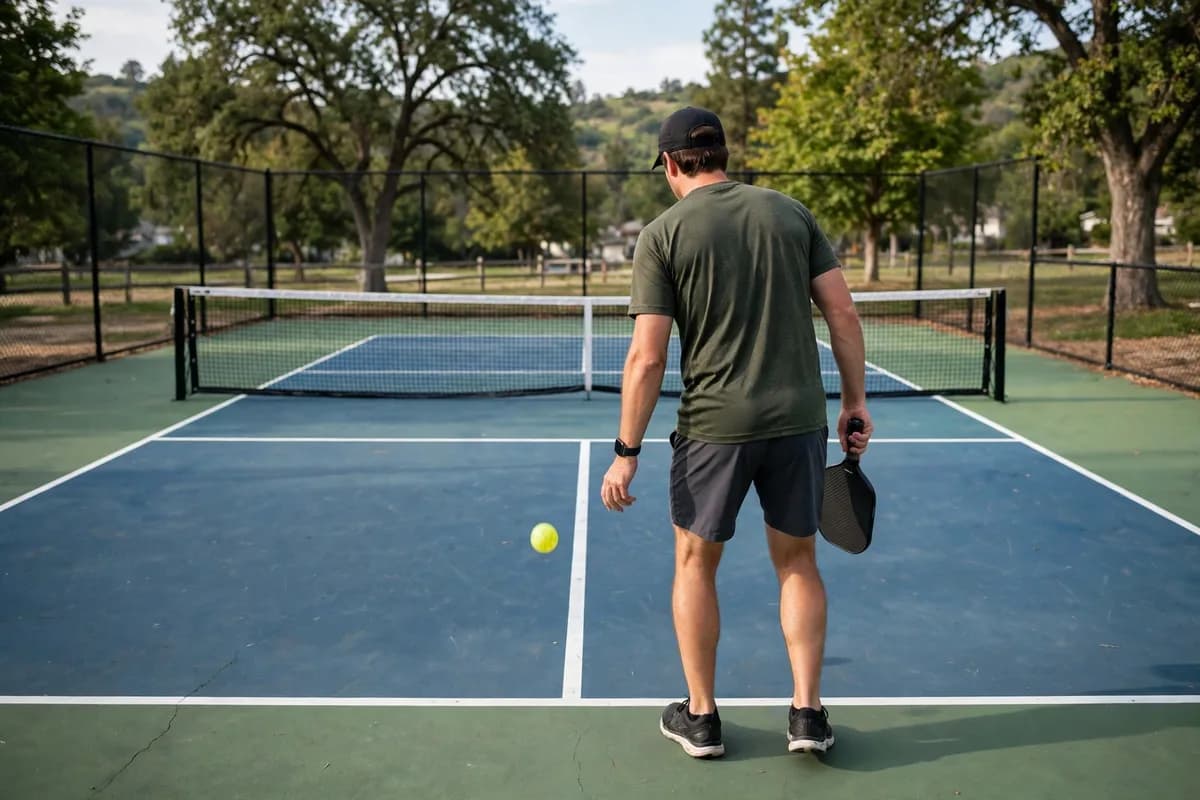
Stand a step behind the baseline, ball in your off hand, paddle low. Swing like you are bowling — smooth, upward, finishing toward your target — and aim for the back three feet of the service box. A deep serve pushes the receiver back, which buys your side the whole rally: their return comes from deeper, and your third shot gets easier. Speed is a distant second. A serve that lands in at medium pace beats a rocket that lands out one time in three, and every coach at every level will trade your pace for their depth.
Two habits to build this week
First, a routine: same bounce count, same breath, same swing, every serve — routines are what survive pressure. Second, watch where your misses go and fix the pattern, not the last ball: misses in the net mean your swing is too flat (lift through it), and misses long mean you are swinging tennis-hard (slow down and let the arc work). Our beginner walk-through shows the stance and the motion with pictures: the Serve page in the Basics series.
Serve with your partner in mind
In doubles your serve starts a two-person play: after you serve, both you and your partner stay back until the return bounces — the two-bounce rule again — then move up together behind your third shot. Serving deep makes that whole sequence easier, because a return struck from behind the baseline gives your side time. If you want the serve's role in the bigger picture, the serve, explained covers the shot itself, and the kitchen rules, explained simply covers where your serve may never land.
The serve is also one of the six shots the free skill check scores. If your serve leaks free points, the check will name it — and your plan can fix it first.