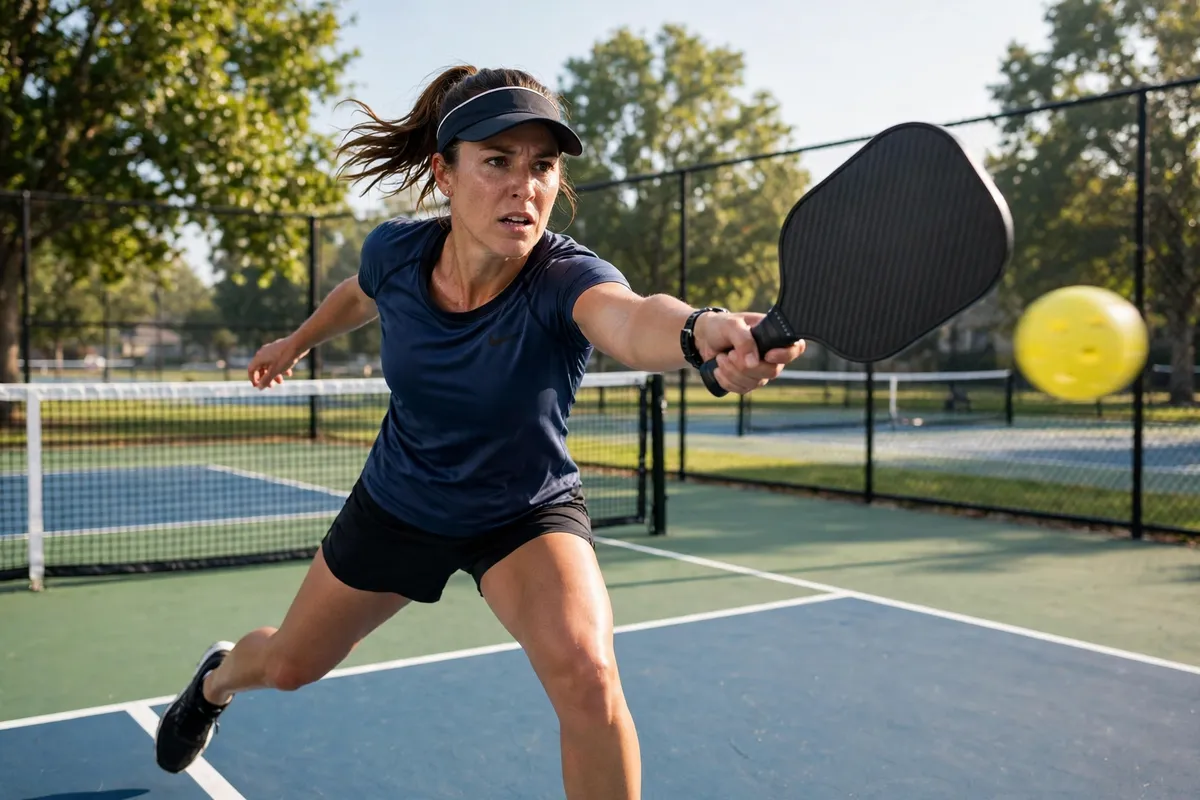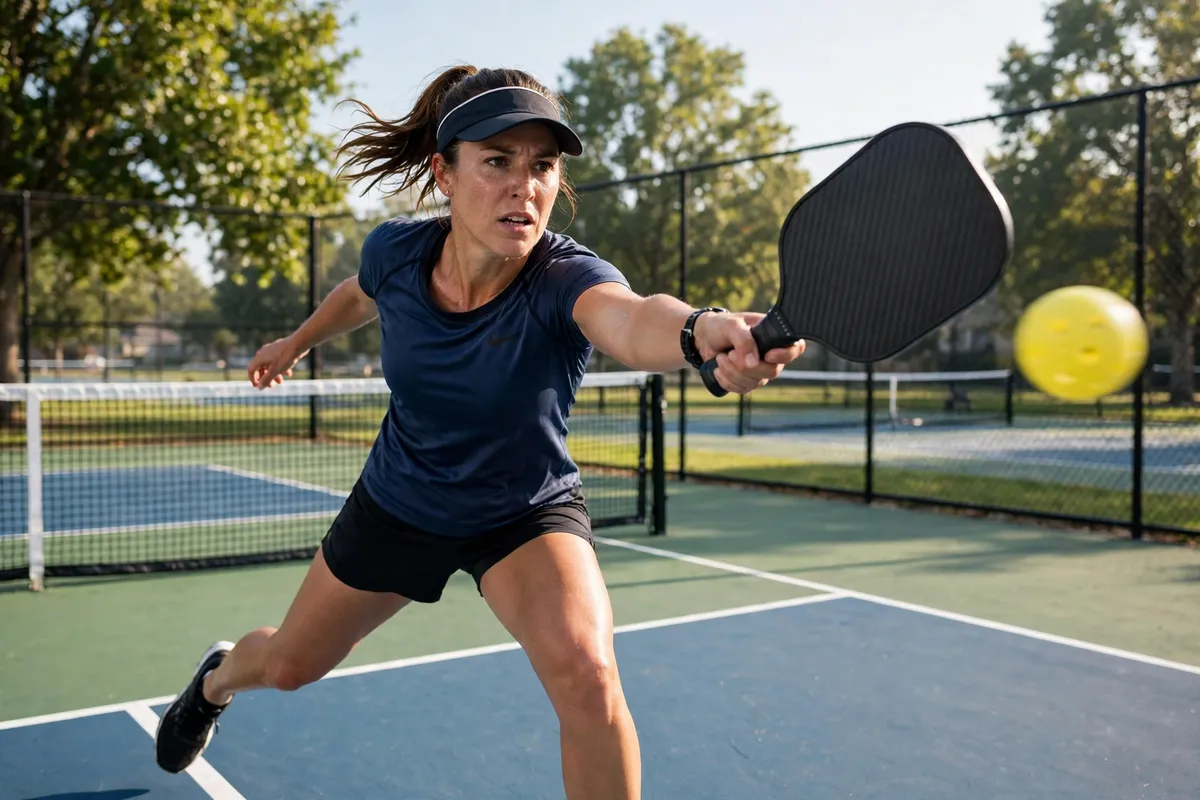
Strip the mystery out of pickleball ratings and six shots remain. Every level from 2.0 to 5.0 is the same half-dozen skills, performed to a higher standard under more pressure: the serve, the return of serve, the third-shot drop, the dink, the reset, and the footwork that holds them all together. Players plateau because one of the six lags the others — and opponents find it, every game, whether the player knows it is there or not. This guide walks the six in the order a point uses them, with the standard each level demands, so you can spot your own ceiling.
1 and 2: The serve and the return — the free shots
The serve starts every rally, and its job changes by level: at 3.0 it must simply land, deep-ish, most of the time; at 3.5 it is placed — at a backhand, at a weak returner, with depth on purpose; at 4.0 it is a small weapon that never donates a fault. The return of serve is the most undervalued shot in the sport. Its one job is depth: land it in the back third and buy your pair the walk to the kitchen line (the edge of the non-volley zone, 7 feet from the net). A 3.0 return floats mid-court and invites attack. A 3.5 return is deep often enough. A 4.0 return is deep essentially always — ask any strong player what they would buy with one wish and it is a return that cannot be attacked. The return, explained covers the mechanics.
3: The third-shot drop — the shot that changes the sport
The third shot is the serving team's first shot after the return, and it is where pickleball splits into levels. Below 3.5, it is a drive hit at two players already set at the net — brave, loud, and usually a donation. The drop plays the same moment softly: a high arc that lands in the kitchen and lets the serving pair advance together. A 3.5 owns a drop that works often enough to be the default plan. A 4.0 owns the choice — drop or drive, read off the return — and executes either under pressure. If you learn one shot this year, it is this one: the third-shot drop, explained. Nothing else moves a rating faster, because nothing else changes where every rally is played from.
4 and 5: The dink and the reset — the soft game

Once all four players reach the kitchen line, the dink takes over: the soft shot that clears the net and falls in the kitchen, too low to attack. Dinking is a rally discipline — move the ball to feet, wait out the other pair's patience, strike only at a ball above the net. At 3.0 dinks are accidents. At 3.5 they are a plan. At 4.0 they stretch past twenty balls with disguise on every swing. And when someone finally does attack, the reset answers: the soft block that takes a hard drive and drops it at the hitter's feet, restarting the rally from zero. The reset, explained shows the technique — and our diagnosis piece on why your reset is leaking points covers the failures. Between them, dink and reset decide more points at the improving levels than every power shot combined.
Which of the six is your ceiling right now? Check your level — free, 2 minutes — twelve questions that score each shot separately, so the answer is specific enough to practice.
6: Footwork — the shot that is not a shot
Footwork never appears on a scoresheet, and it holds veto power over the other five. The split-step (landing balanced as your opponent strikes), the shuffle along the kitchen line, moving as a pair so the middle is never open, recovering after a wide ball — every other shot's standard quietly assumes all of it. A drop hit while falling backward is not a drop, whatever your hands did. This is why ratings stall in puzzling ways: the hands grade 3.8, the feet grade 3.1, and games are played at the feet's level. Footwork, explained breaks down the patterns. The good news is that footwork is the most trainable of the six — it improves with nothing but attention and a few minutes of movement drills per session.
Six shots, one ladder. Pickleball ratings explained shows the levels from the outside; this is the same ladder from the inside — and the climb is never about all six at once. It is about the one that lags, drilled until it stops being the reason points end. Find yours — Check your level — free, 2 minutes — give it a month of honest work, and the number that has been describing you starts describing someone slightly better.
Source: level standards consistent with USA Pickleball's published skill definitions (usapickleball.org); shot roles and rally structure as described in our shot explainer series, linked throughout.