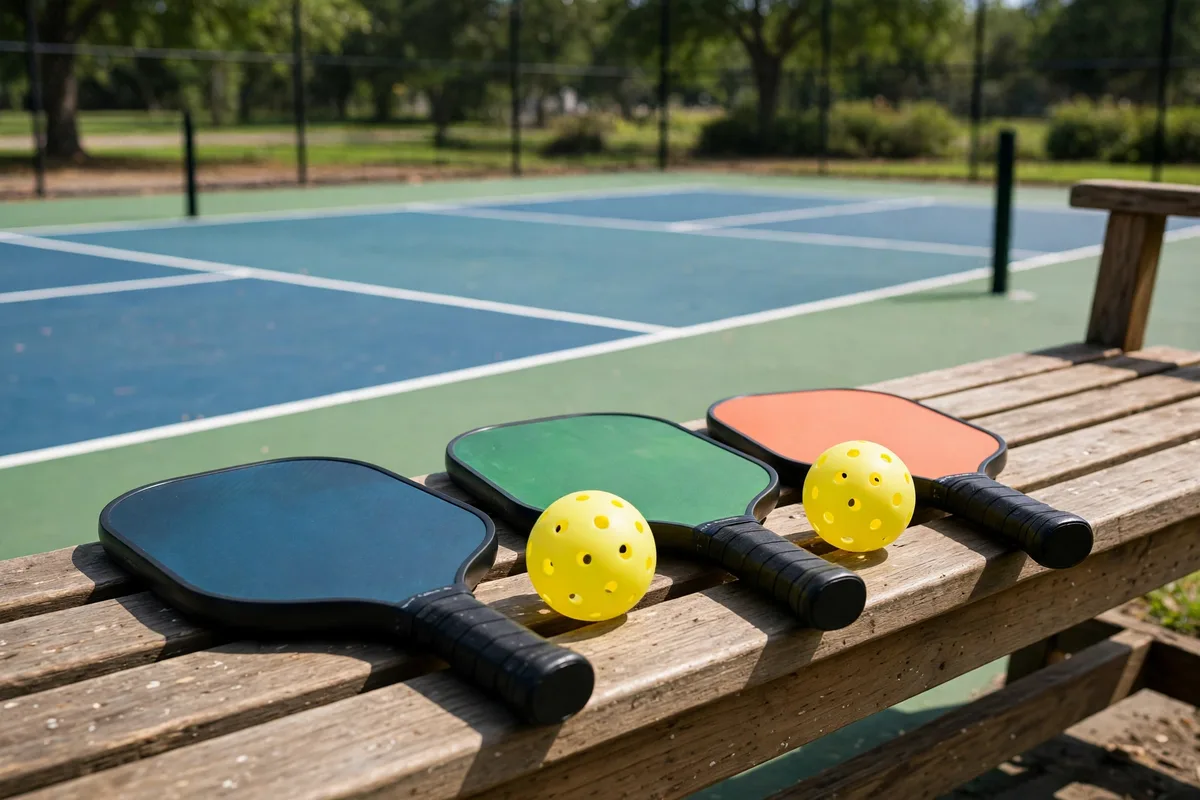
Walk into a sporting goods store and the paddle wall all looks the same: wide ones, long ones, quiet claims about power printed on every face. For a beginner, almost none of the marketing matters yet. Three things decide whether a first paddle helps you learn or fights you while you do: its weight, its grip size, and how thick and forgiving its core is. Get those right and a modest paddle plays beautifully; get them wrong and an expensive one feels awful.
Weight: start in the middle
Paddles are measured in ounces. Light paddles (under about 7.8 oz) are quick at the net but make you swing harder from the baseline, and they can bother a sore elbow or shoulder. Heavy paddles (above about 8.3 oz) give free power but slow your hands in fast net exchanges. Most beginners are happiest in the middle — roughly 7.8 to 8.3 oz — where the paddle does some work and your hands still win at the kitchen.
Grip: smaller than you think
Grip size is the handle's circumference, commonly 4 to 4.5 inches. Too big strains your forearm and freezes your wrist; too small makes you squeeze. The simple test: hold the paddle and check that your off-hand index finger fits in the gap between your fingertips and palm. Most adults land on a small or medium grip — and you can always build a grip up with an overgrip wrap, while a too-big grip can never shrink. When in doubt, go smaller.
Core and face: forgive me, please
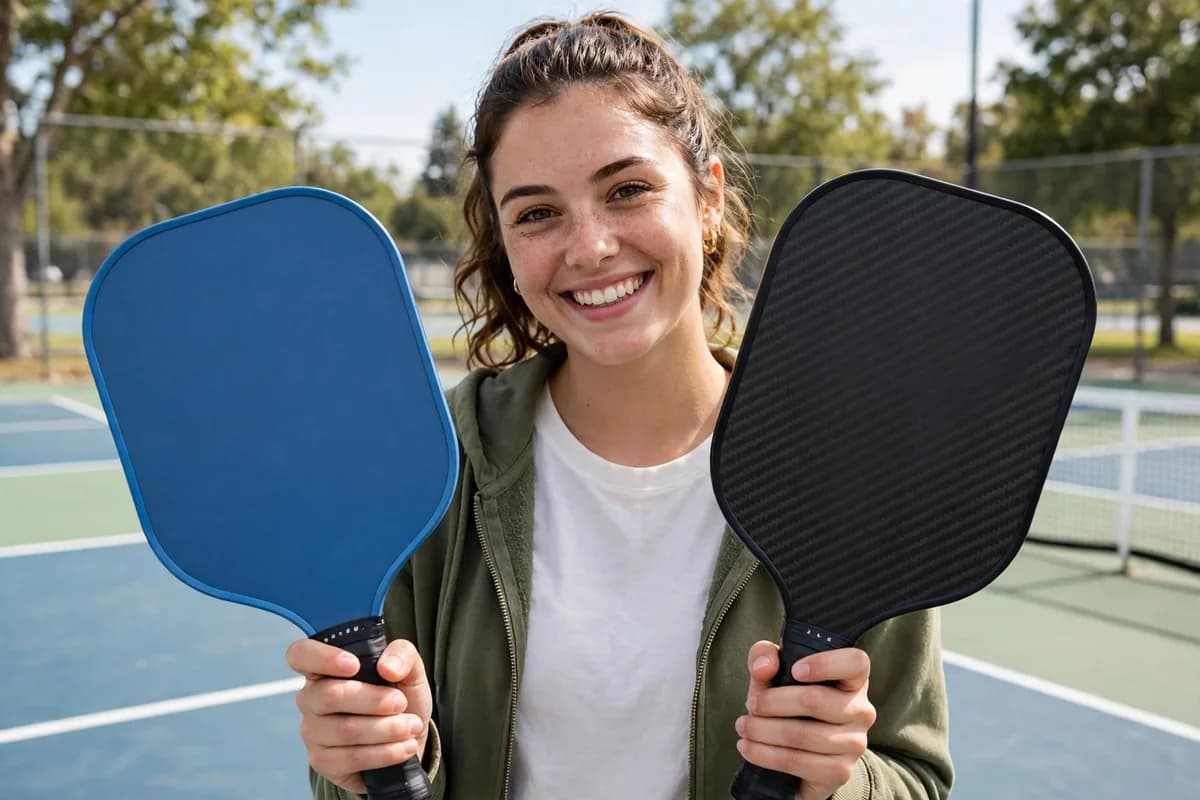
The inside of most paddles is a honeycomb core measured in millimeters — 16mm cores are thicker, softer, and more forgiving on off-center hits; 13-14mm cores feel firmer and livelier. Beginners live off-center, so thicker and softer wins. For the face, fiberglass feels springy and forgiving, raw carbon fiber feels firmer and grips the ball for spin; either serves a first year well. And skip the very cheapest wooden or no-name paddles — heavy, dead, and hard on the arm; a proper entry-level composite from a real maker costs little more.
Match yours in five questions
Rather than guessing from a wall of paddles, answer five questions about your hand, your arm, and how you play, and our Paddle Finder names the exact specs to shop for — weight range, shape, core, and grip — with links to the makers' own stores for paddles that fit them. It recommends specs, not sponsors: no paid placements, no fake review scores.
What should a first paddle cost?
Enough to be a real paddle, not so much that you're paying for a pro's priorities. Entry-level composites from established makers cover everything in this guide — the right weight window, honest grips, forgiving thick cores — and they are the paddles our Paddle Finder specs point to. Money spent past that buys spin texture, edge engineering, and pro endorsements, none of which a learning hand can feel yet. The better second purchase, once the first paddle is worn, is practice time: 7 beginner drills that actually work will move your game more than any upgrade — and what pickleball level am I? tells you when you've outgrown beginner gear altogether.
Once the paddle's sorted, the fastest upgrade is still your game itself — the free skill check shows which shot to work on first, and no paddle in the world fixes the wrong practice.