
A dink is the soft shot that arcs just over the net and lands in the kitchen — the 7-foot non-volley zone in front of the net — where it is too low to attack. Once all four players reach the kitchen line, rallies slow into a chess match of dinks, and that chess match is where most recreational games are quietly won and lost. The good news is that dinking errors are rarely about talent. They come from five habits, and each one has a plain fix.
Mistakes 1 and 2: Flicking the wrist and reaching for the ball
Mistake 1 is the wrist flick. Under pressure, players scoop at the ball with a quick snap of the wrist, and the ball pops up — high enough for the other side to smash. A dink should come from a quiet hand and a small lift from the shoulder, the paddle face barely moving. Think of carrying a full cup of coffee across the kitchen without spilling it; that is the motion. Mistake 2 is reaching. Players lean, stretch, and stab at balls a full step away, which pulls them off balance and lifts the ball again. Your feet are part of the shot: take the small step, get behind the ball, and let some wide balls bounce so you can play them comfortably. If you are reaching on most dinks, you are standing too far from where the ball lands — shuffle sideways along the line and stay light on your toes between shots.
Mistakes 3 and 4: Autopilot angles and hanging back
Mistake 3 is hitting every dink cross-court on autopilot. Cross-court (diagonally across the net) is the safest dink because the net is lowest in the middle, but if it is your only shot, opponents camp on it and start attacking early. Mix in an occasional dink straight ahead at the player in front of you, and aim some cross-court balls at the feet of the player farthest from the net. You are not hunting winners — you are making them move. Mistake 4 is standing a step too far off the kitchen line. From a step back, every dink has to travel farther and climb higher to clear the net, and high dinks get attacked. The fix is to live right at the line: toes a few inches behind it, paddle out in front, close enough that low balls can be taken early, before they drop below your knees.
Mistake 5: Rushing the finish
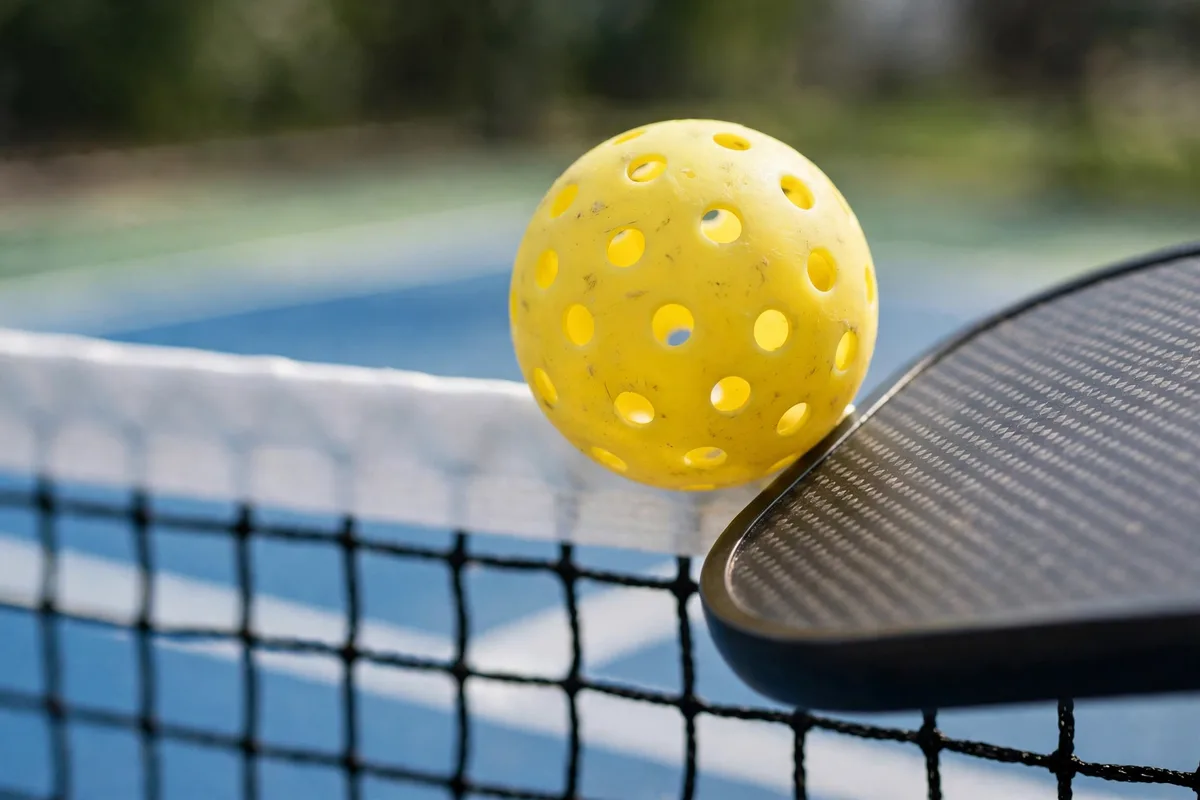
This is the expensive one. The rally is going well — six, eight, ten patient dinks — and then a ball sits slightly higher than the rest and a player tries to end it. If that ball is below the top of the net, a hard swing almost always fails: into the net, out the back, or up as a gift. The fix is a rule for yourself: below the net, soft; above the net, you may attack. Waiting is a skill, and it is trainable — most points at the kitchen are lost by the impatient player, not won by the brilliant one. When a pop-up does come to you, that is different: a ball above net height that you can hit down is yours to take, and the reset shot covers what to do when the speed comes back at you.
Here is a five-minute practice that builds all five fixes at once. With a partner, dink back and forth and play a quiet game: the rally only counts if every ball bounces in the kitchen, and the first player to pop one up or rush an attack loses the point. Play to five, then switch who you are facing. The game forces soft hands, moving feet, and patience all at once, and because a mistake ends the rally right away, your body learns the lessons faster than any lecture. Do it at the start of every session for a month and watch your unforced errors fall.
Before your next game, try one honest test: in warm-up dinking, count how many of your dinks bounce in the kitchen without popping up. Ten in a row with a quiet wrist and moving feet is a better foundation than any fancy shot. If you are new to the shot itself, the dink, explained starts from zero, and our shot videos show the quiet hands up close. Want to know how your dink scores against the other five core shots? Take the free skill check and see which soft-game skill deserves your next practice session.