Two players walk into open play. One announces she is a 3.8 — that is her DUPR, calculated from two seasons of recorded league matches. The other says he is about a 3.5, based on the level descriptions he read and how his games usually go. Both numbers sound precise. They were produced in completely different ways, they fail in completely different ways, and knowing which one a situation calls for will save you embarrassment at check-in and confusion in your training. Here is the honest comparison.
What a self-rating is
A self-rating is a judgment: you read the published skill descriptions for each level — USA Pickleball, the sport's national governing body, publishes them for exactly this purpose — and place yourself where your game honestly fits. It costs nothing, needs no matches, and works for a player who picked up a paddle last month. Its weakness is built in: it is you, grading you. The common failure is rating your best day instead of your typical one — remembering the drop shots that landed and forgetting the score. The fix, when self-rating, is to grade each shot separately and let the weakest ones pull the number down, because in real games, they do. Our guide to what your skill level is walks through that shot-by-shot method.
What DUPR is
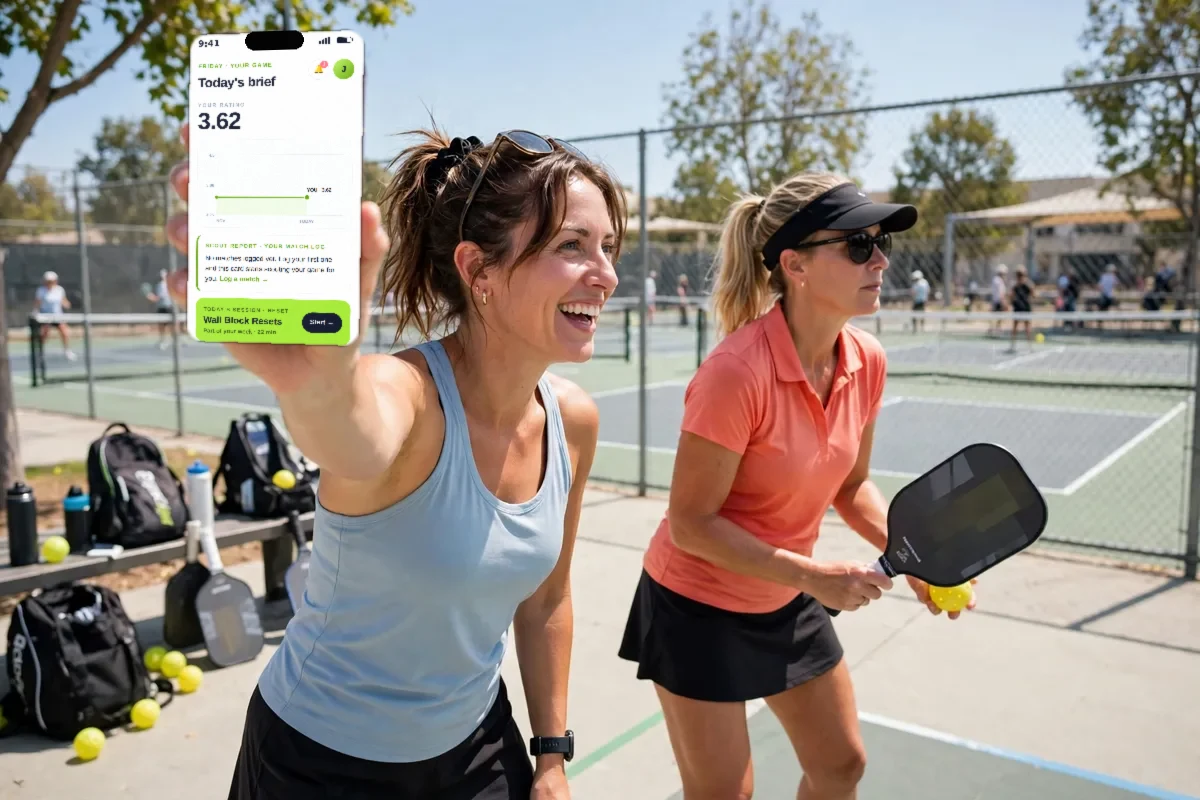
DUPR (Dynamic Universal Pickleball Rating) is a calculation, not a judgment. You record match results — the players, the winner, the score — and the system rates you on a scale from 2.0 to 8.0 based on who you played and how the games went. Beat a team rated above you and your number climbs more than it would for beating a team below you; the margin matters too. Because it is built from results, a DUPR built on many matches is the most objective number in recreational pickleball, and it is the one competitive events increasingly trust. Its limits are just as real: it needs recorded matches (a new player has none, and a few games produce a shaky number), and it is silent about causes. What DUPR is and how it treats new players covers the system in full.
Not sure where your self-rating honestly lands? Check your level — free, 2 minutes — it scores your six shots individually, which is the part of self-rating most players skip and the part that makes it accurate.

Where the two numbers disagree — and why it is useful
When a player's DUPR and self-rating differ, the gap itself is information. Self-rating higher than results usually means the skills are ahead of the decisions: the shots exist, but shot selection, positioning, or patience gives the points back — the classic strong 3.5 who attacks balls below the net. Results higher than the self-rating usually means the opposite: an unspectacular toolkit wielded with excellent judgment, the player nobody enjoys facing. Neither gap is a scandal; both are a training plan. One player needs decision drills and dink patience. The other needs to build one missing shot. A match rating alone cannot tell you which player you are — which is why serious improvers keep both numbers and watch the gap.
Which one should you use, when
Use DUPR where results are the question: entering a rated event, finding a league at your level, proving a seeding. Use a careful self-rating where improvement is the question: deciding what to drill, choosing a lesson or a course level, setting a goal for the season. And expect the two to converge as both get more honest — more recorded matches on one side, more shot-by-shot grading on the other. The players who improve fastest treat ratings the way good pilots treat instruments: checked often, believed appropriately, and never confused with the flying itself.
Start with the number you can get today — Check your level — free, 2 minutes — then record your matches and watch your two numbers meet. When they agree, you will know it is real — and our breakdown of how a rating is calculated shows the machinery behind both.
Source: DUPR's published description of its rating system (dupr.com) — results-based calculation on a 2.0–8.0 scale; USA Pickleball's published skill-level definitions for self-rating (usapickleball.org).