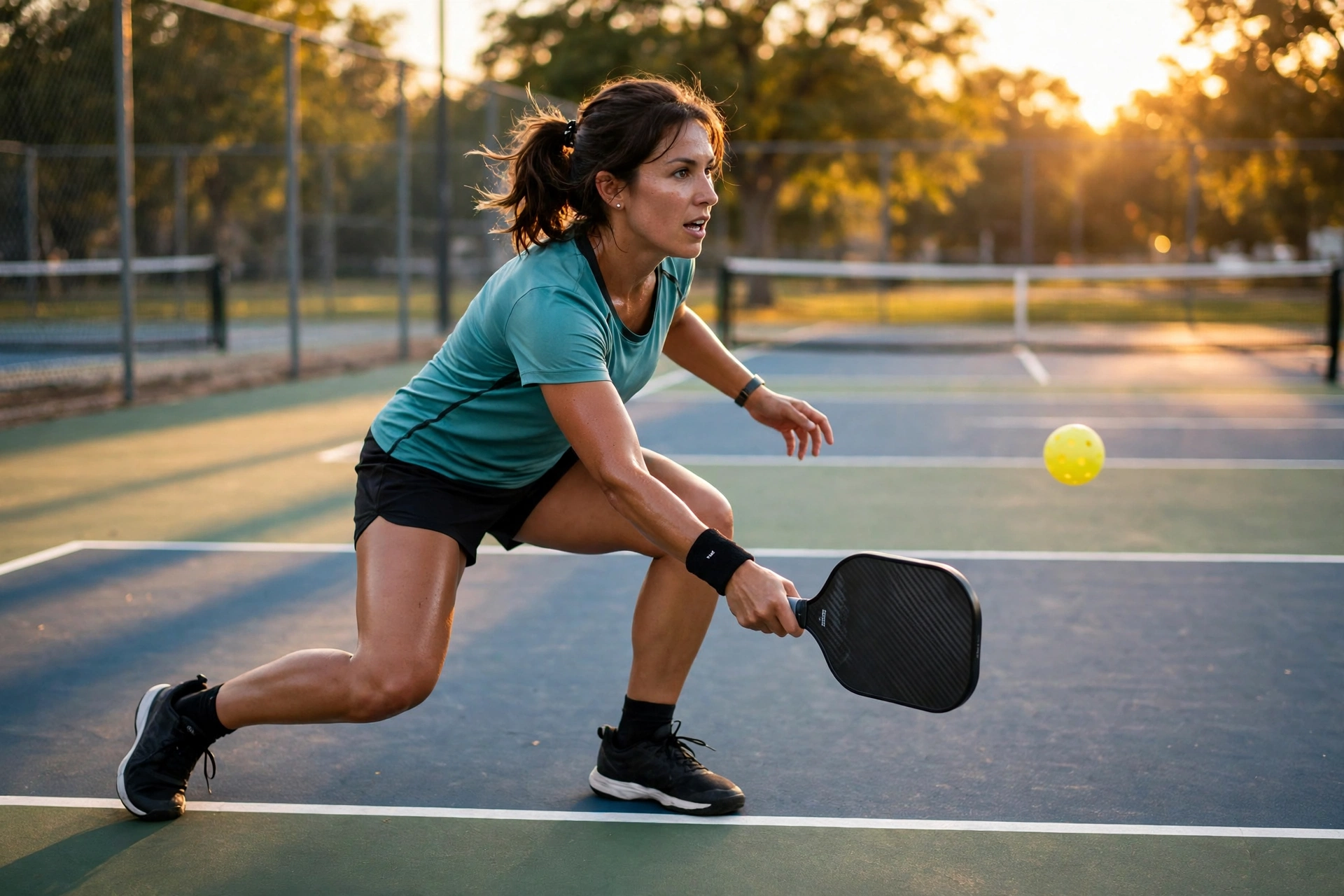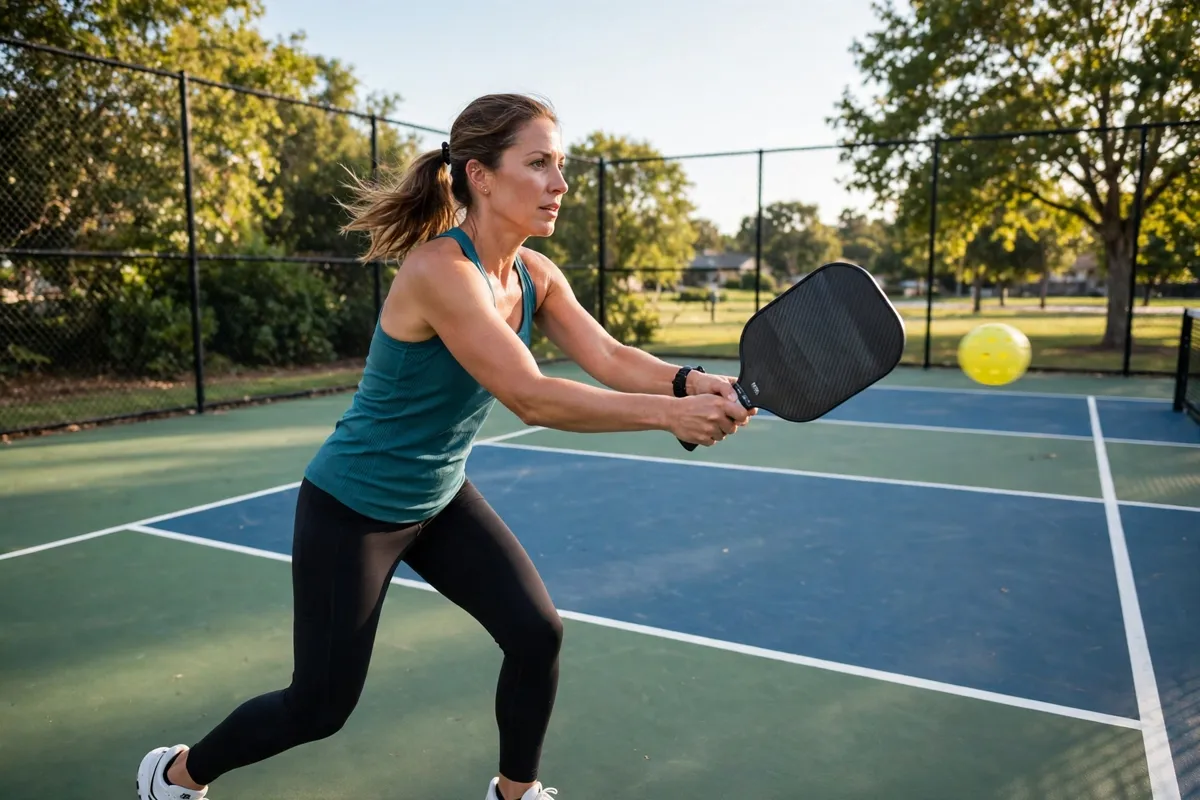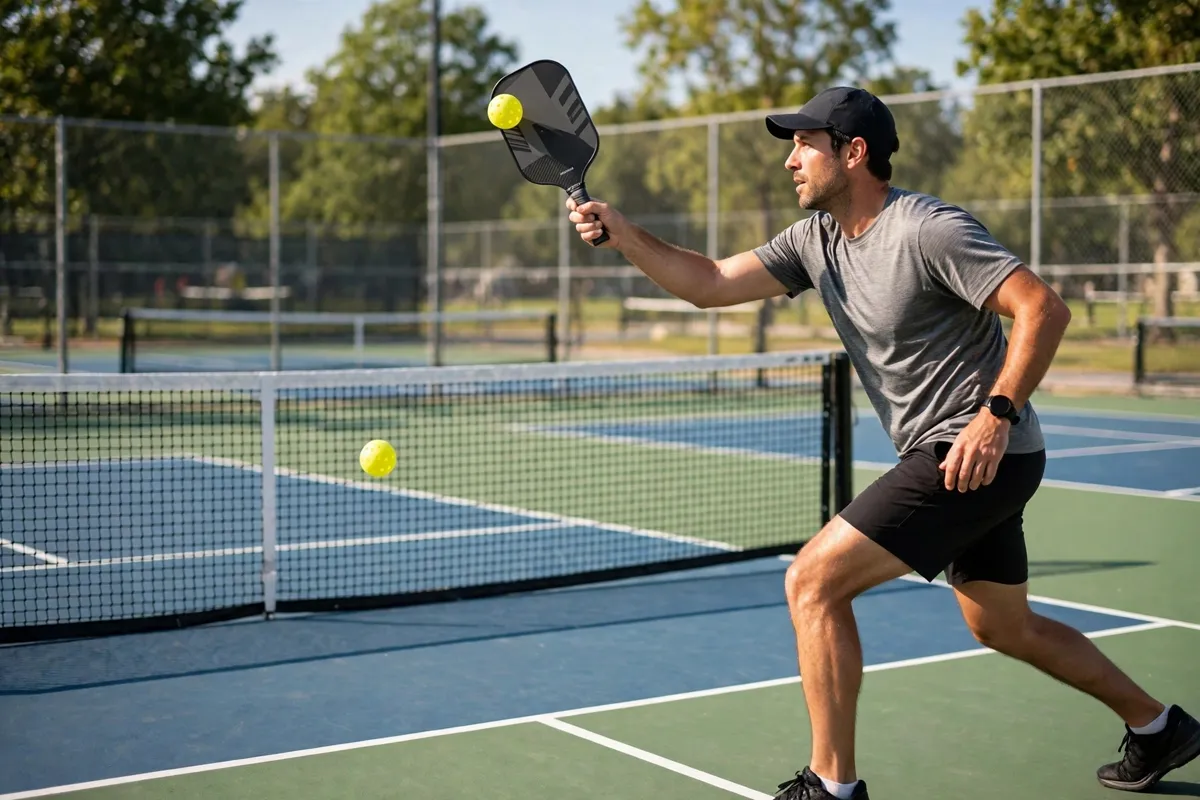
Topspin is spin that makes the ball rotate forward, top over bottom, as it flies. That rotation pushes the ball downward in the air, so a topspin shot dives toward the court instead of floating long. It is the reason better players can swing hard and still keep the ball in: the spin bends the flight down. Learning to add even a little topspin changes what your shots can do — drives dip at your opponents' feet, serves kick up off the bounce, and balls that used to sail out start dropping in. Here is how to build it without rebuilding your whole game.
The motion: low to high, brushing the ball
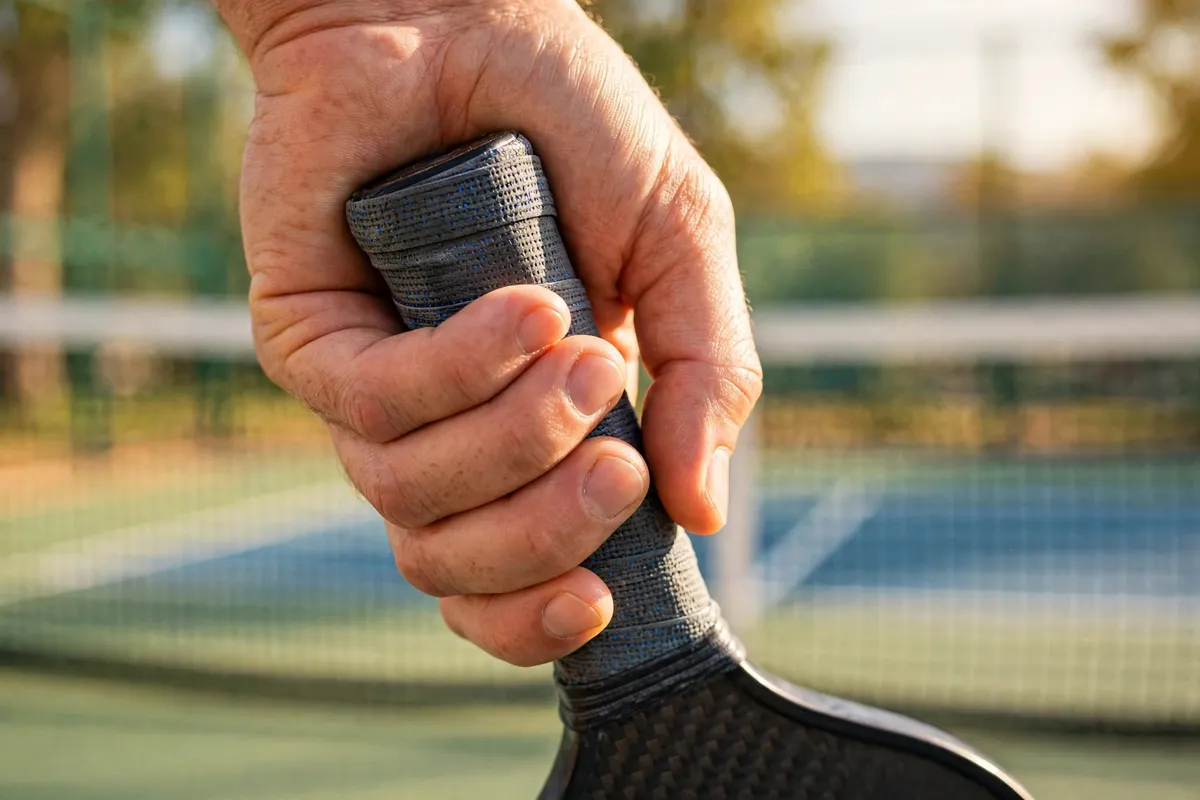
Forget hitting through the ball for a moment. Topspin comes from brushing it. Start the paddle low, below the ball, and swing upward so the face grazes up the back of the ball at contact. That upward graze is what sets the ball rolling forward. Two adjustments make the brush work. First, turn your grip a small step from the basic handshake hold so the paddle face sits slightly closed — tilted a little toward the ground — which keeps the brushed ball from popping straight up. Second, finish high, with the paddle ending near your opposite shoulder. If your swing finishes low, you swung flat, and flat swings float.
Where topspin helps most
Start where the payoff is biggest and the touch is easiest: the serve and the drive. A serve with topspin can be hit firmer and still drop into the service box, and it bounces a little livelier, which pressures the returner. Our serve guide covers the serve motion this spin plugs into. On drives — hard groundstrokes hit from the back of the court — topspin is what lets you swing with real pace at a ball below net height and still bring it down. Without spin, that same swing is a donation: the ball clears the net and keeps going. With spin, it dives at feet and forces a weak, defensive reply. The backhand side benefits just as much: a brushed two-handed backhand drive dips the same way, which is one more reason the shot in our backhand guide rewards a low-to-high path.
Where topspin does not belong
Leave spin out of your soft game while you learn. The dink — the soft shot that lands in the kitchen, the seven-foot zone by the net — works because it is gentle and low; brushing up on it lifts the ball into your opponents' strike zone. The same goes for drop shots and resets, the soft shots you play to calm a rally down. Those need a flat, quiet paddle face. A simple rule: topspin is for balls you are attacking or driving, hit from behind the kitchen line with room to swing. If the ball is low, close to the net, or you are defending, keep the face flat and the swing small.
A practice progression that works
Build the spin in layers. First, shadow the motion with no ball: low start, brush upward, finish over the opposite shoulder, until the path feels automatic. Second, drop-feed yourself balls at the baseline and hit gentle drives at half speed, watching whether the ball dips — if it floats or sails, your face is open or your swing is flat. Third, aim at a target near your practice partner's feet and slowly add pace, keeping the dip. Two mistakes will follow you through every layer, so watch for them: scooping with the wrist instead of lifting with the whole arm, which sprays the ball, and trying to add spin to low, close-range balls where a flat face belongs. The players in our video library show the brushing path clearly if you watch their paddle finish rather than the ball.
Topspin is a multiplier: it makes the shots you already own more dangerous. Add it to your serve and your drive first, keep it away from your dinks, and you will feel the difference within a few sessions. And if you are not sure which shot in your game would gain the most from better technique, our free skill check scores all six core shots and points you at the one to work on next.