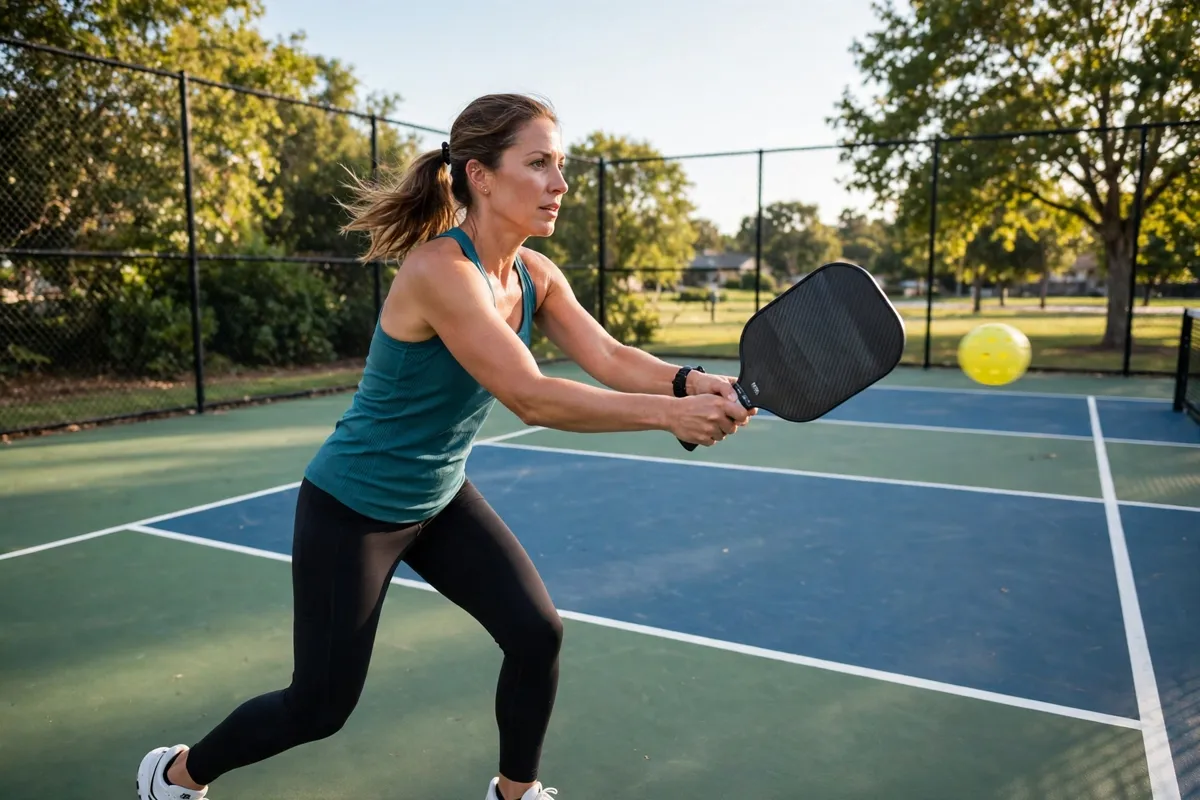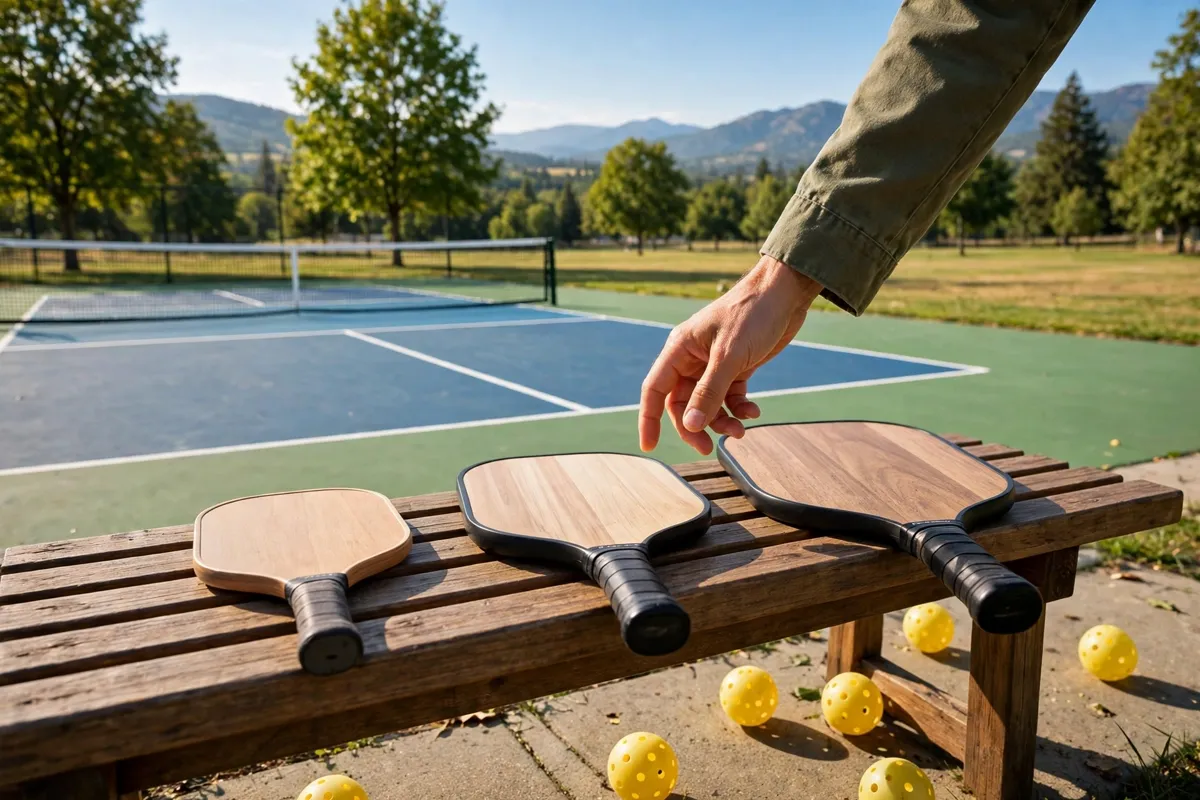
Your grip is the connection between your hand and every shot you hit, and in pickleball it matters more than most beginners expect. A wrong grip quietly caps your level while looking exactly like a technique problem. There are three grips you will hear named on court — continental, eastern, and western — plus one habit worth building and one trap worth avoiding. The honest summary first: most coaches start every new player on continental, and most players should stay there longer than they think. Here is what each grip does and how to find it in your hand.
Continental: the home-base grip
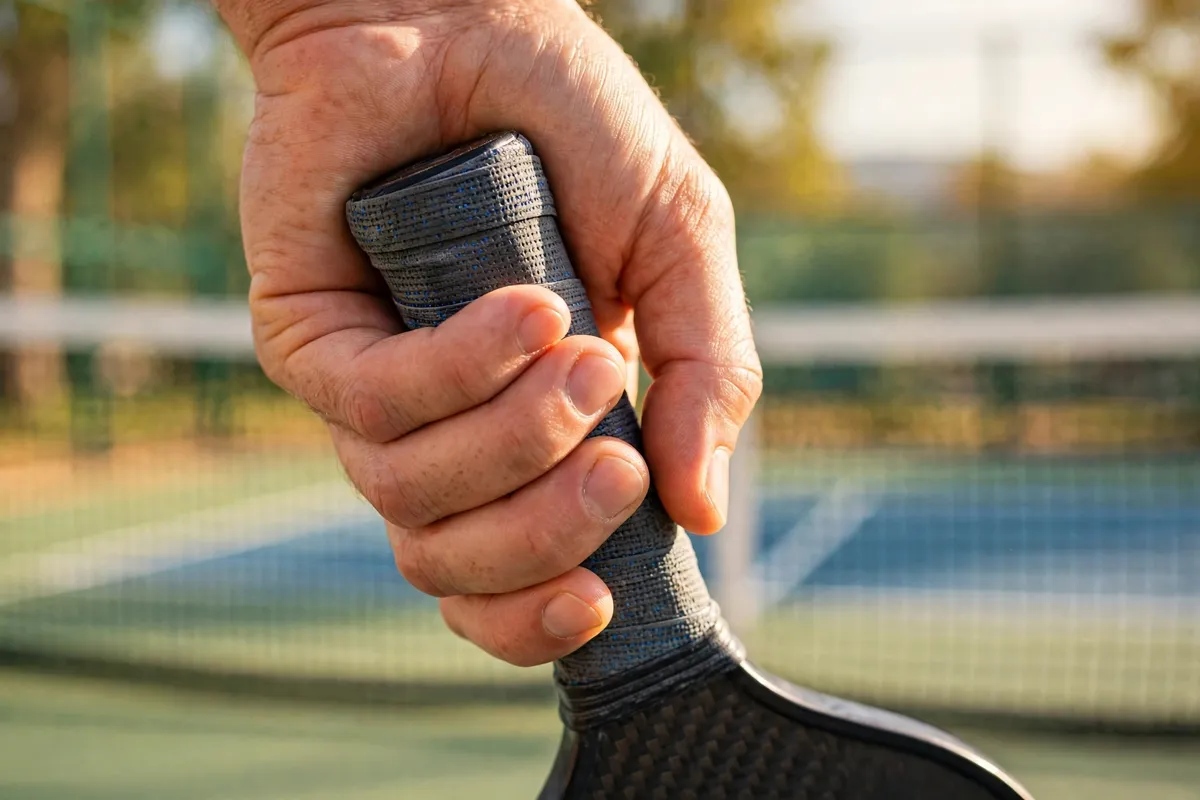
Continental is sometimes called the hammer grip or handshake grip, and handshake is the fastest way to find it: hold the paddle out and shake hands with the handle, so your palm sits mostly on the side of the grip and the V between your thumb and index finger lines up near the top edge. Your index knuckle rests on the narrow top bevel — the angled flat strip running along the top of the handle. From here you can hit forehands, backhands, volleys, and dinks without changing anything, which is exactly why it rules the kitchen line, where balls come too fast for adjustments.
Eastern and western: the spin grips
Roll your hand a quarter turn further around the handle from continental, so more of your palm sits behind it. Players call this the eastern forehand grip, and the classic cue is that it feels like your palm is flat against the back of the paddle. That extra support makes forehand drives feel natural, and it can help the paddle brush up the back of the ball for topspin. The trade shows up on the other side: backhands and quick net exchanges get awkward, because the grip that powers your forehand leaves your backhand cramped and late. Keep rolling from eastern and your palm ends up under the handle — the western grip. It can whip extreme topspin onto a drive, and highlight clips love it, but it turns your backhand into a contortion, makes volleys at net height genuinely difficult, and asks your wrist to do work it will complain about. Advanced players with grooved strokes sometimes visit western for one specific shot. If you are still building your basics, skip it entirely.
The trap: changing grips mid-rally
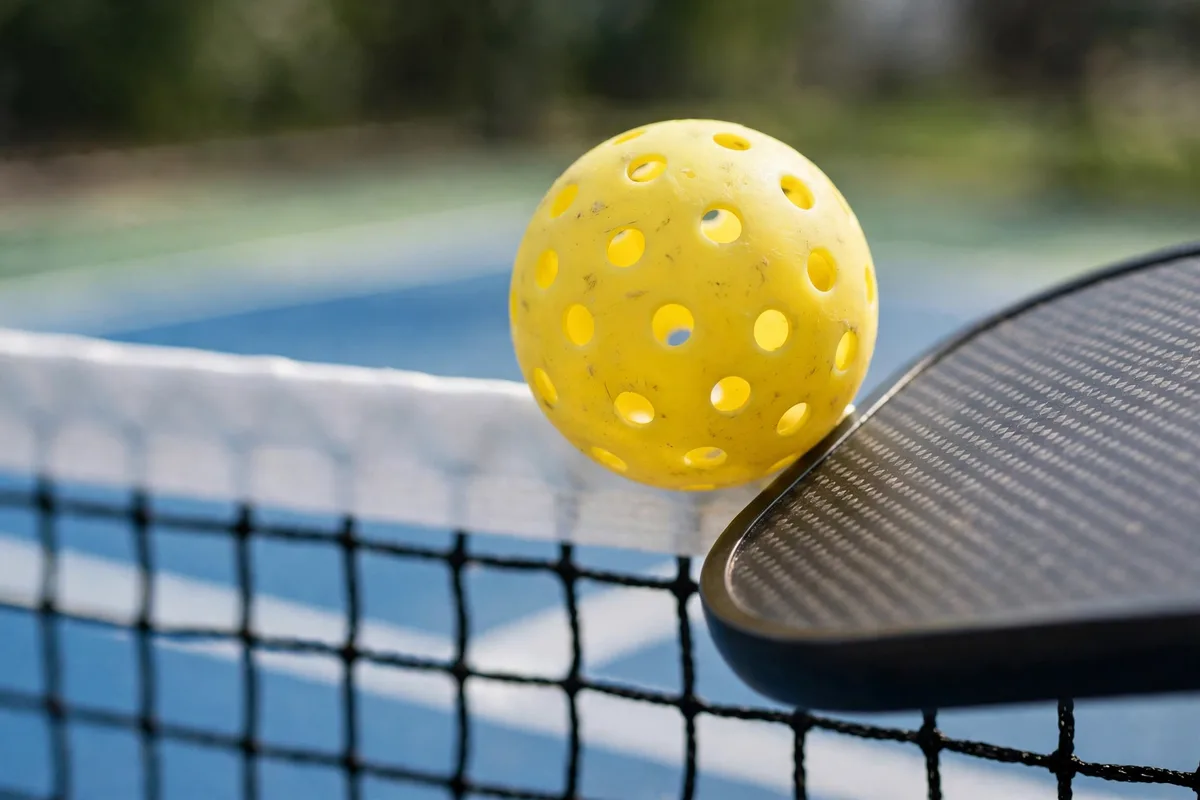
Watch a beginner rally closely and you will see it: a tiny shuffle of the fingers before every backhand, a quick regrip before every drive. At the baseline there is time for that. At the kitchen line — the area right at the net where the fastest exchanges happen — there is not. Hands battles are won and lost in fractions of a second, and a player mid-regrip is a player not swinging. This is the real argument for continental early on: one grip that is never wrong, so your hands can stay quiet and your eyes can do the thinking. Coaches spot the trap instantly: the fingers start moving before the feet do. Grip changes are a refinement for players whose volleys are already automatic.
A quick grip check you can do on court
Between rallies, look down. If you cannot remember the last time you checked your grip, it has probably drifted — grips creep during play, especially after hard drives. Make the handshake check a habit: after any point where a shot felt strange, reset to continental before the next serve. The same goes for your backhand, which quietly suffers most when the grip wanders toward eastern. And match the grip to the paddle itself: if the handle size fights your hand, no technique fix will hold for long. Our Paddle Finder sorts handle and grip sizing along with the rest of your specs.
Grip is one of those small things that touches every ball, so it is worth ten quiet minutes of practice at home: pick the paddle up, find continental, put it down, repeat. Then see how your shots score with our free skill check — it breaks your game into serve, return, dink, drop, volley, and reset, so you can tell whether your grip work is paying off where it counts.