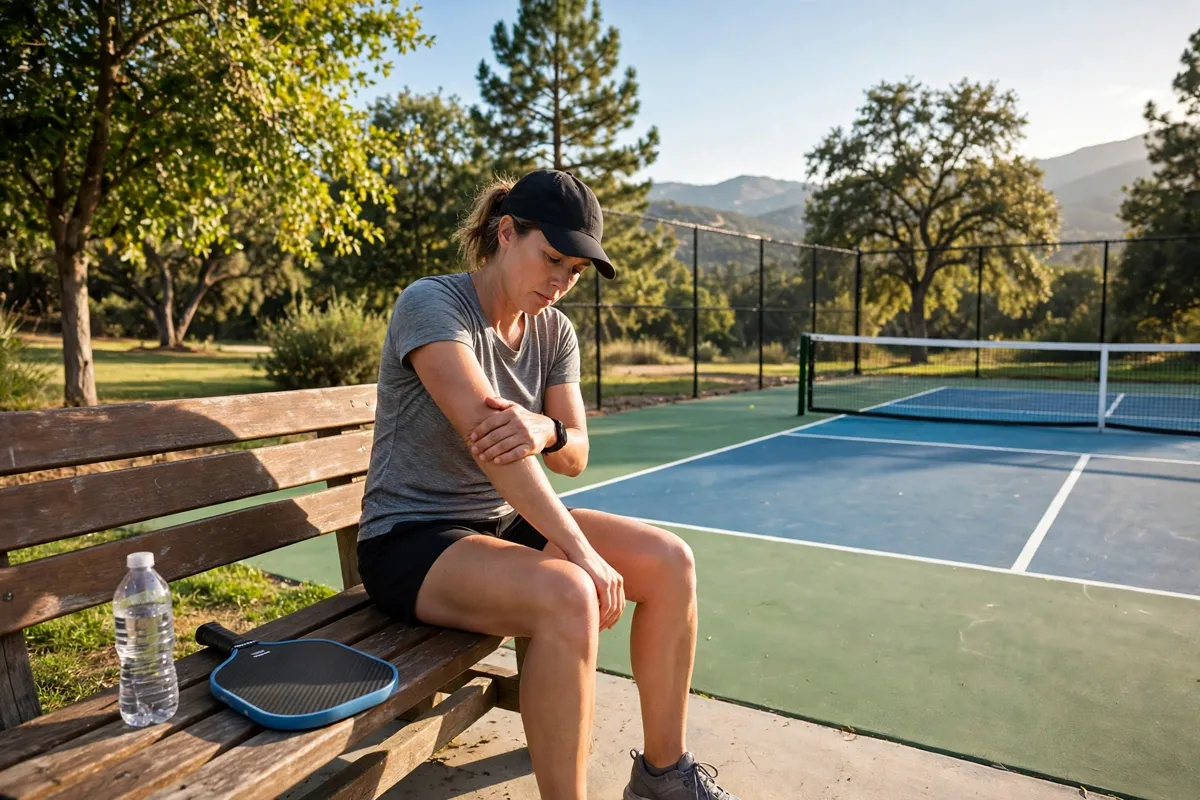
Two paddles can cost the same and look the same, yet feel completely different in your hand. The difference usually comes down to two simple numbers: how much the paddle weighs and how thick its handle is. Get both right and the paddle disappears into your game. Get them wrong and you end up fighting your gear, sometimes literally, in the form of a sore elbow.
Paddle weight: quick hands or free power
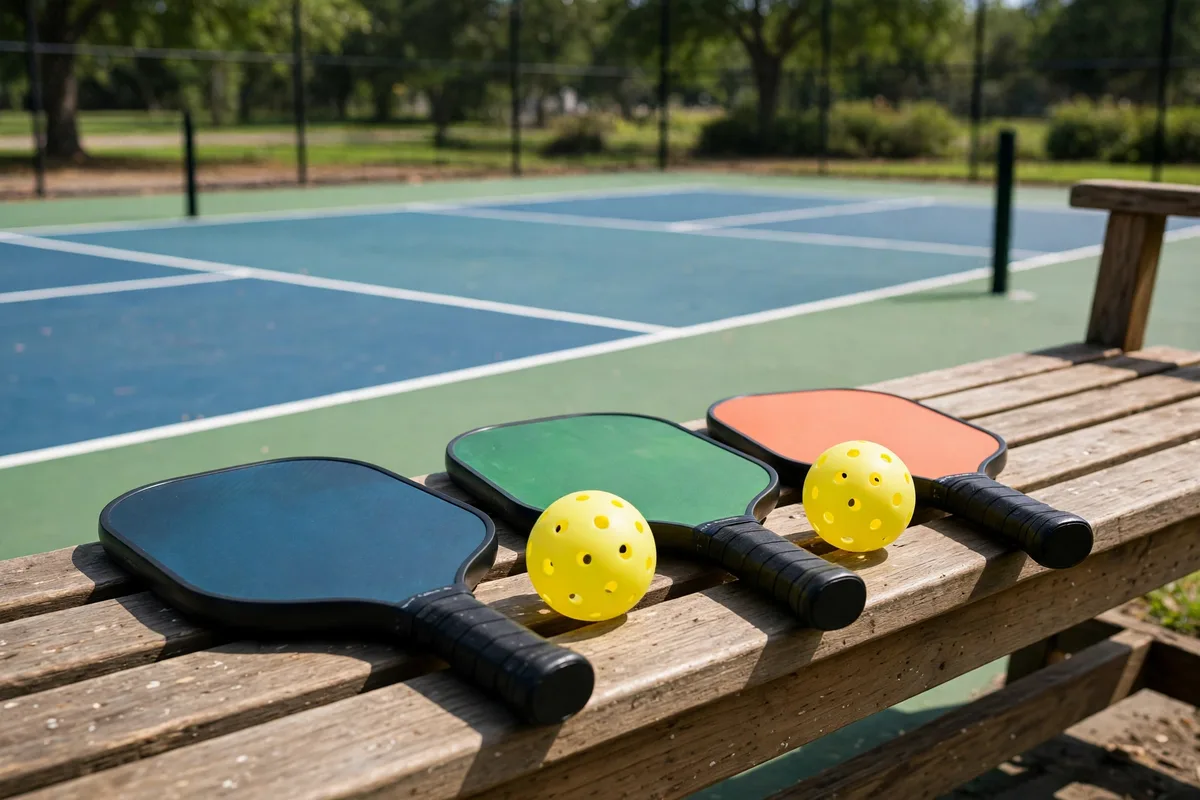
Paddle weights are usually grouped in three rough ranges. Lightweight paddles run under about 7.3 ounces. Midweight paddles sit around 7.3 to 8.4 ounces. Heavy paddles are above about 8.5 ounces. Think of weight as a trade between speed and mass. A light paddle gets around fast, which is gold at the kitchen line (the non-volley zone close to the net) where volleys are won by quick hands, and it is the gentlest choice for a tender arm. A heavy paddle is slower to move but puts more mass behind every ball, so drives and serves gain power without a bigger swing, and the paddle twists less when you block a hard shot off-center. Midweight is the honest middle and the right starting point for most players. If your arm starts complaining, weight and stiffness are suspects worth checking, as we explain in pickleball elbow: causes and fixes.
One more reassurance: your first choice is not a life sentence. Thin strips of lead tape, made for paddles, can be added along the edge later to nudge a light paddle heavier or shift its balance, and an overgrip changes feel without changing the paddle at all. Buy for how you play today and adjust as your game tells you more.
Grip size: the measurement that matters most
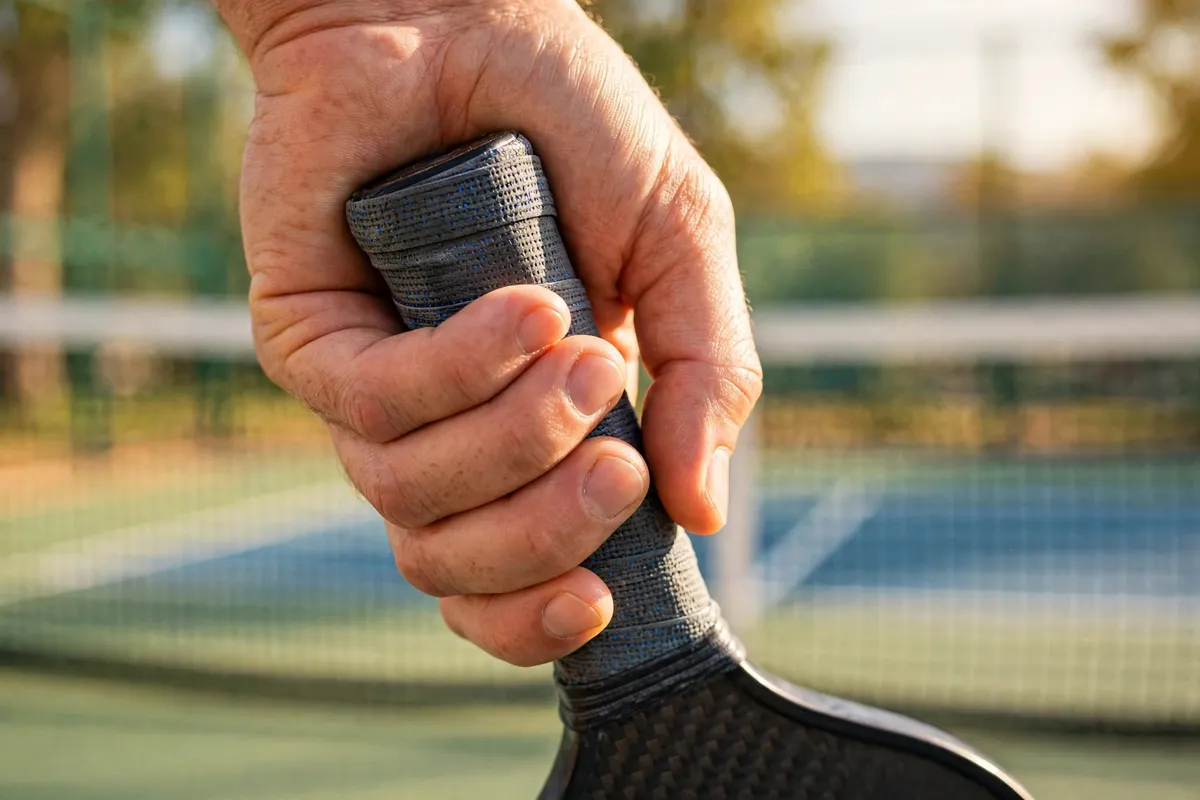
Grip size is the circumference of the handle, and it controls how hard your hand has to work. Too small, and you squeeze tightly to stop the paddle twisting. Too large, and your fingers and forearm strain to close around it. Both roads lead to tired forearms. There are two easy ways to find your size. The ruler method: open your paddle hand flat and measure from the middle crease of your palm to the tip of your ring finger. That measurement in inches is a good estimate of your grip size. The finger test: grip a paddle normally, then try to slide the index finger of your other hand into the gap between your fingertips and your palm. It should fit snugly. If it will not fit at all, the grip is too small; if there is loose extra room, it is too big.
Balance point and trying before you buy
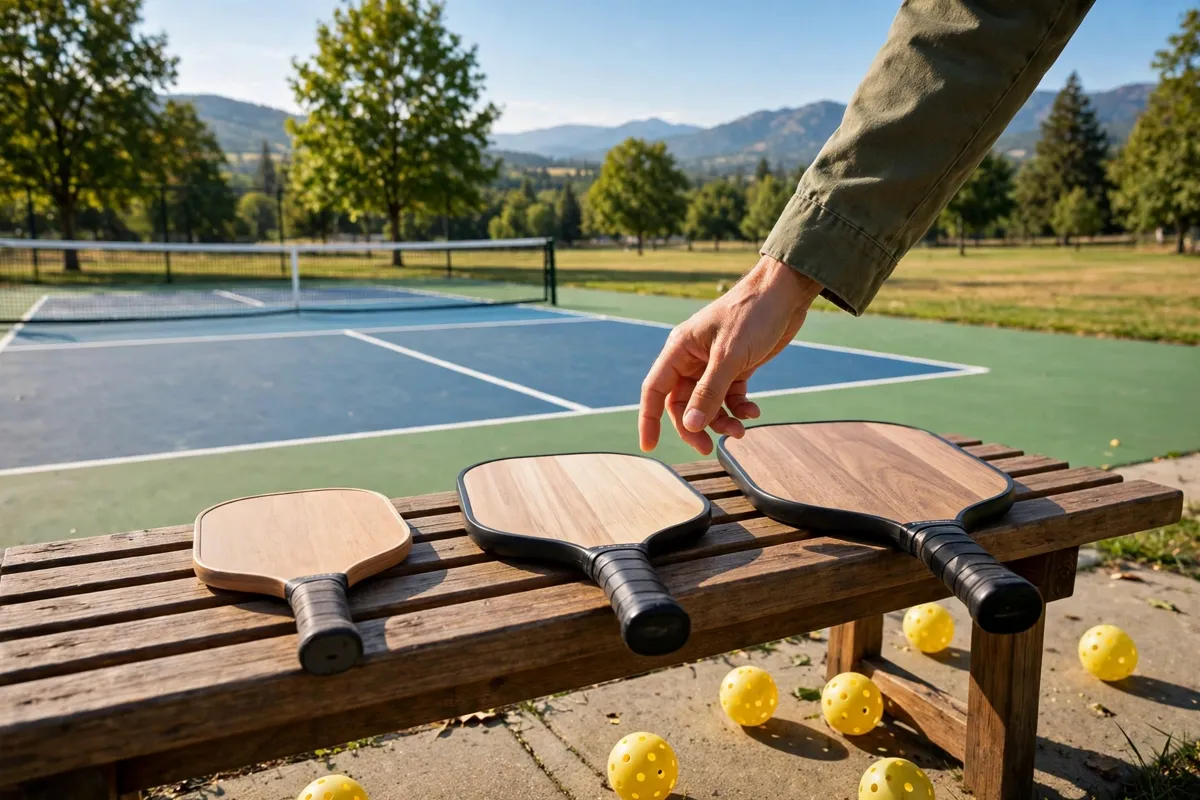
Weight on a spec sheet is only half the story; where the weight sits matters too. A head-heavy paddle carries more of its mass toward the top, which adds punch to drives but makes the paddle feel slower in fast exchanges at the net. A head-light paddle feels quicker and gentler but gives up some of that free power. If you can, hit with a paddle before buying: many clubs and shops run demo programs or have loaner paddles, and ten minutes of real rallies will tell you more than any chart. Notice your hands in fast volleys and your arm an hour later. Quick and fresh beats powerful and sore for almost every recreational player. Trust how a setup feels across a full session over how it feels on three practice swings in a shop aisle, because grip fatigue and arm strain only show up with repetition, and repetition is exactly what a real game gives you.
If you land between two sizes, choose the smaller one. An overgrip, a thin wrap you can add in two minutes, builds a small grip up slightly and also gives you a fresh, tacky surface to hold. There is no practical way to make a too-big grip smaller. Our beginner paddle guide covers the rest of the buying decision in the same spirit: fit first, fashion last.
Still unsure how a paddle's weight and grip should match your hand, your arm, and your style of play? Answer a few questions in the Paddle Finder and it will narrow the specs for you. And when the gear fits and you want to measure the player holding it, our free skill check will rate your shots and point to the one worth improving first.