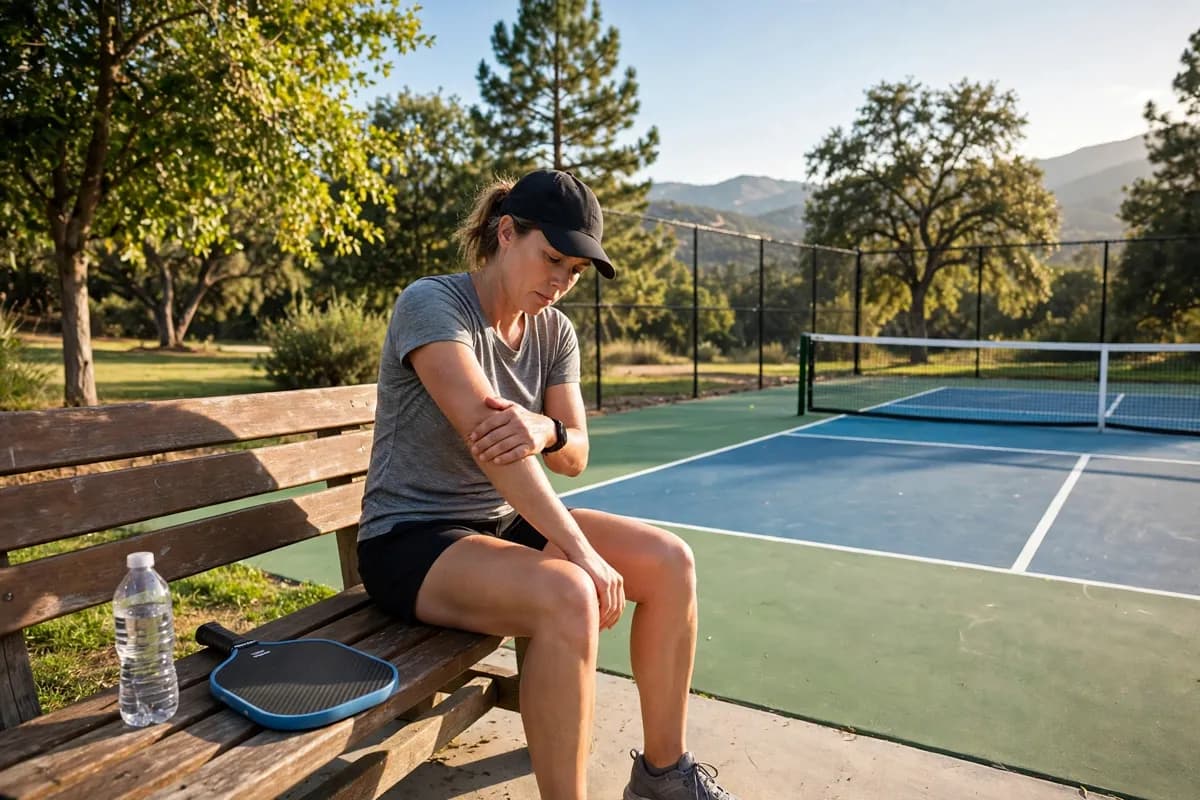
It starts as a dull ache on the outside of your elbow after a long session. Then it shows up when you lift a coffee mug. Players call it pickleball elbow, and it is an overuse problem: the tendons on the outer elbow, the ones that steady your wrist and power your grip, get irritated by more strain than they can recover from. The good news is that most of its causes are things you can actually change.
The causes you can fix
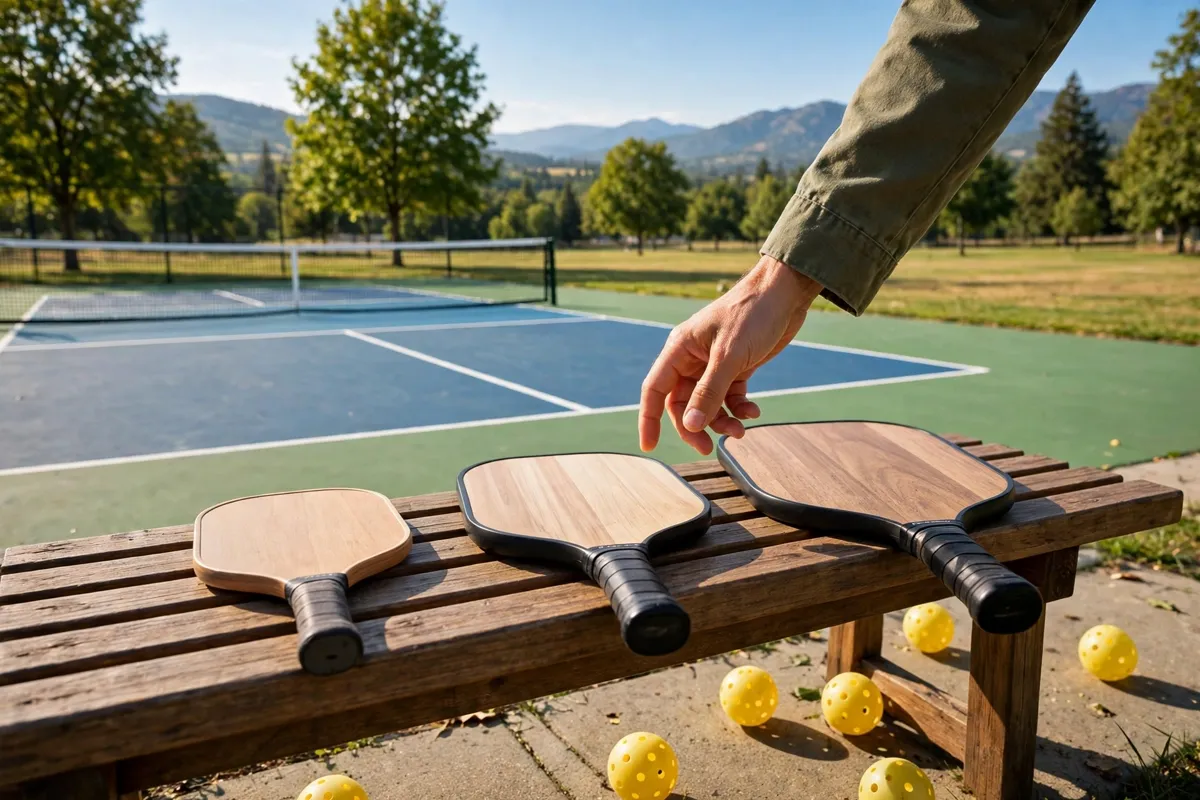
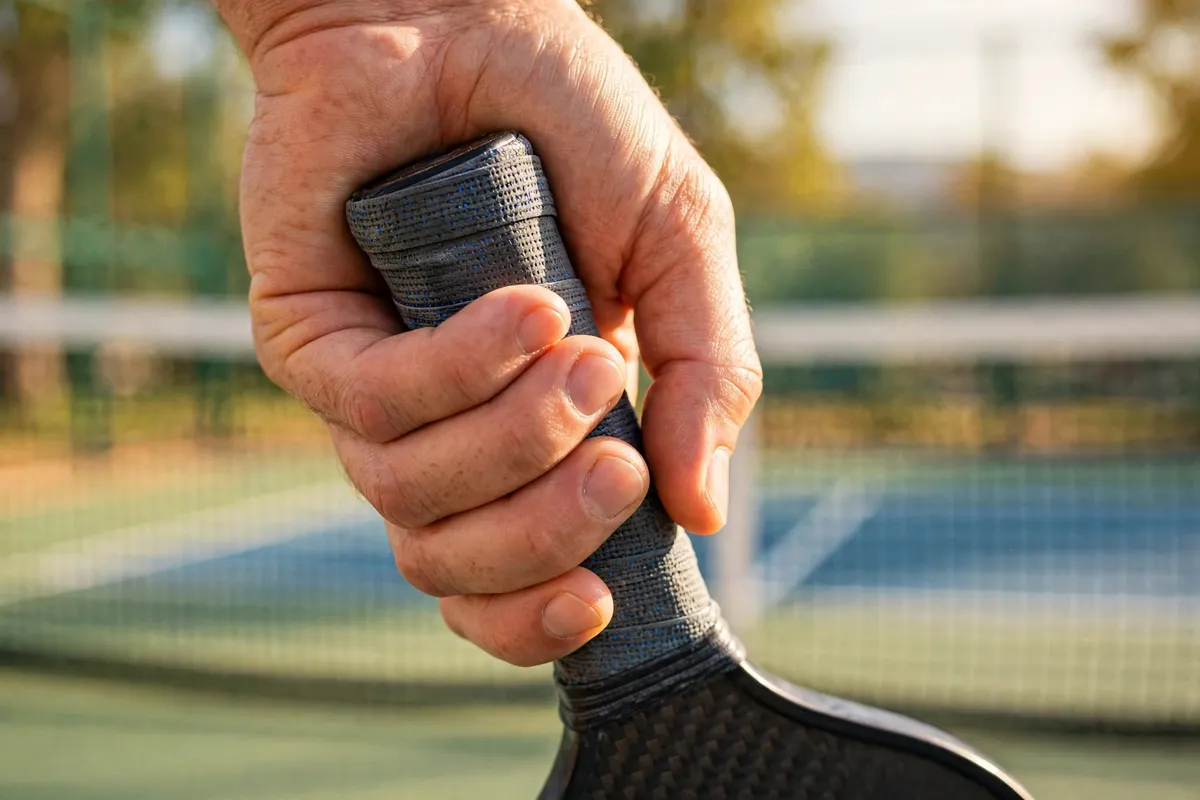
The first suspect is your grip on the paddle, in both senses. Squeezing the handle hard on every shot keeps your forearm muscles working nonstop, and they pull on exactly the tendon that hurts. Many players grip far tighter than the shot needs. The second suspect is grip size. A grip that is too small forces you to squeeze harder just to keep the paddle stable, while a grip that is too large strains your fingers and forearm the other way. Our guide to paddle weight and grip size shows how to measure your hand in a minute. Third is the paddle itself: very light or very stiff paddles can send more vibration and shock up your arm, and fourth is a sudden jump in playing time, when a twice-a-week player suddenly plays five days in a row.
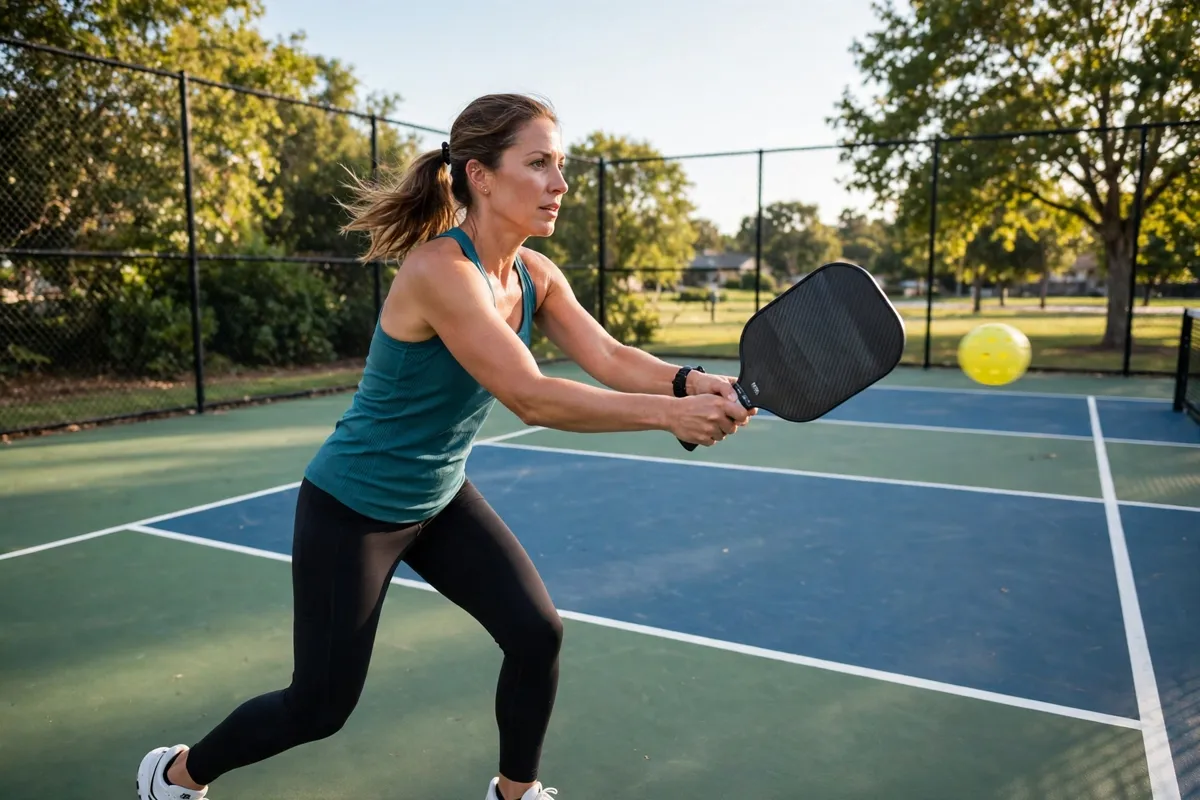
The last cause hides in technique. On a late backhand, many players flick at the ball leading with the elbow and wrist instead of turning their shoulders and stepping into the shot. That flick loads the outer elbow on every ball. If your pain is mostly a backhand-day pain, read how to hit a backhand in pickleball and rebuild the swing around your shoulder, not your forearm.
Fixes that help most players
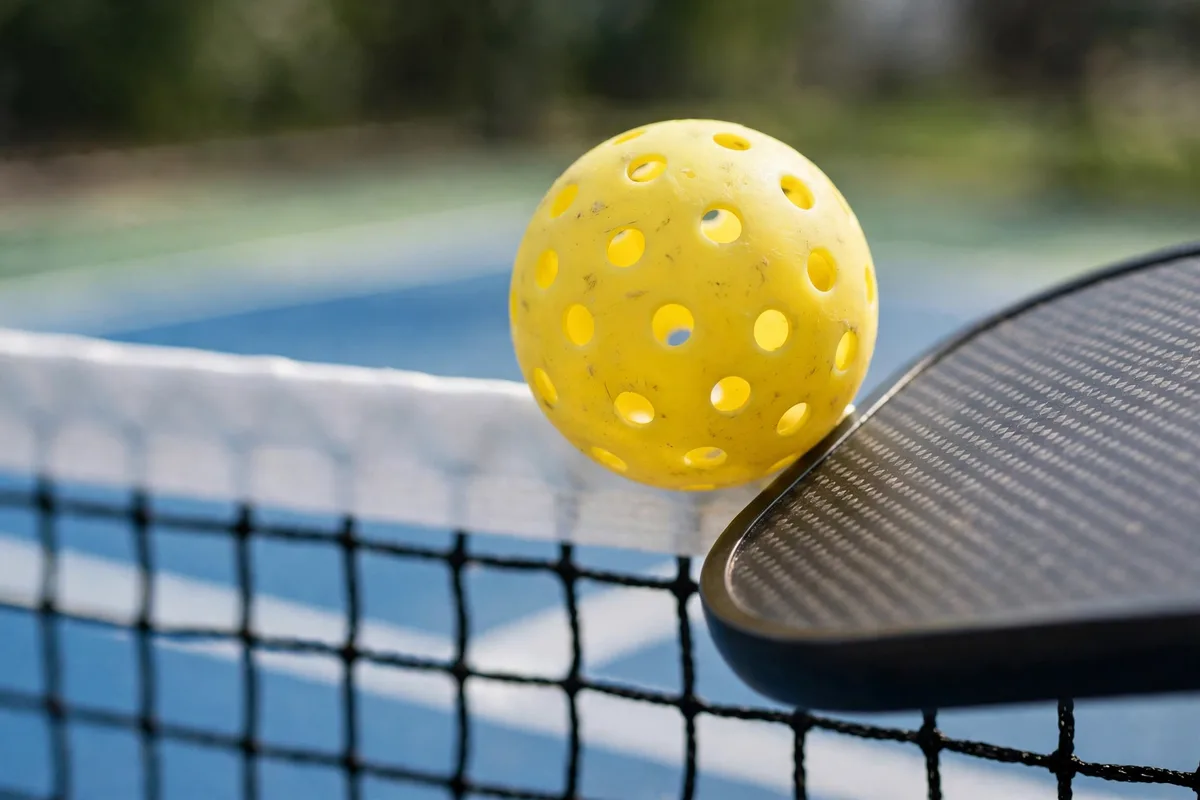
Start with rest and ice: give the elbow days off from play and ice it after sessions while it calms down. Then loosen your grip. Between shots, your fingers should be relaxed enough that you could almost open your hand; tighten only as the ball arrives. Confirm your grip size fits, and wrap an overgrip on if you are between sizes. If your paddle is extremely light or stiff and your arm hates it, a slightly heavier, softer-feeling paddle is worth a try; the Paddle Finder can point you to options that suit your hand and style. Finally, rebuild your time on court gradually, adding a session at a time rather than jumping straight back to your old schedule, and add gentle forearm strengthening as the pain fades. Some players also find a simple forearm strap helpful during play, because it changes where the load on the tendon lands; treat it as a support, not a cure, since the habits above do the real work.
Habits that keep it from coming back
A few small habits protect the elbow once you are playing again. Warm up your forearms before games with a few minutes of easy rallying instead of launching into hard drives cold. During play, check your grip pressure every few games: if your knuckles are white, you are squeezing too hard. Rest a rally's worth of effort between hard shots where you can, and pay attention to which days hurt. Pain that follows marathon sessions is information, not weakness, and trimming the longest days is often all it takes to stay ahead of it. A simple squeeze test before you play tells you where you stand: if gripping the paddle firmly already aches, make it a light-session or no-session day, because honoring that signal early keeps a small irritation from becoming a month on the sidelines.
One warning belongs in plain language: home fixes are for the common, mild overuse ache. If your pain is sharp, keeps getting worse, comes with weakness, numbness, or swelling, or simply does not improve with rest over a couple of weeks, see a medical professional. Elbows have other problems that look similar, and only an exam can sort them out.
Prevention, once you are back, is mostly habit: a relaxed grip, gear that fits your hand, a backhand powered by your shoulder, and playing time that grows in steps. If you want a wider check on how your game treats your body, our free skill check scores your shots and can flag the technique habits, like that flicky backhand, that are worth fixing before they hurt.