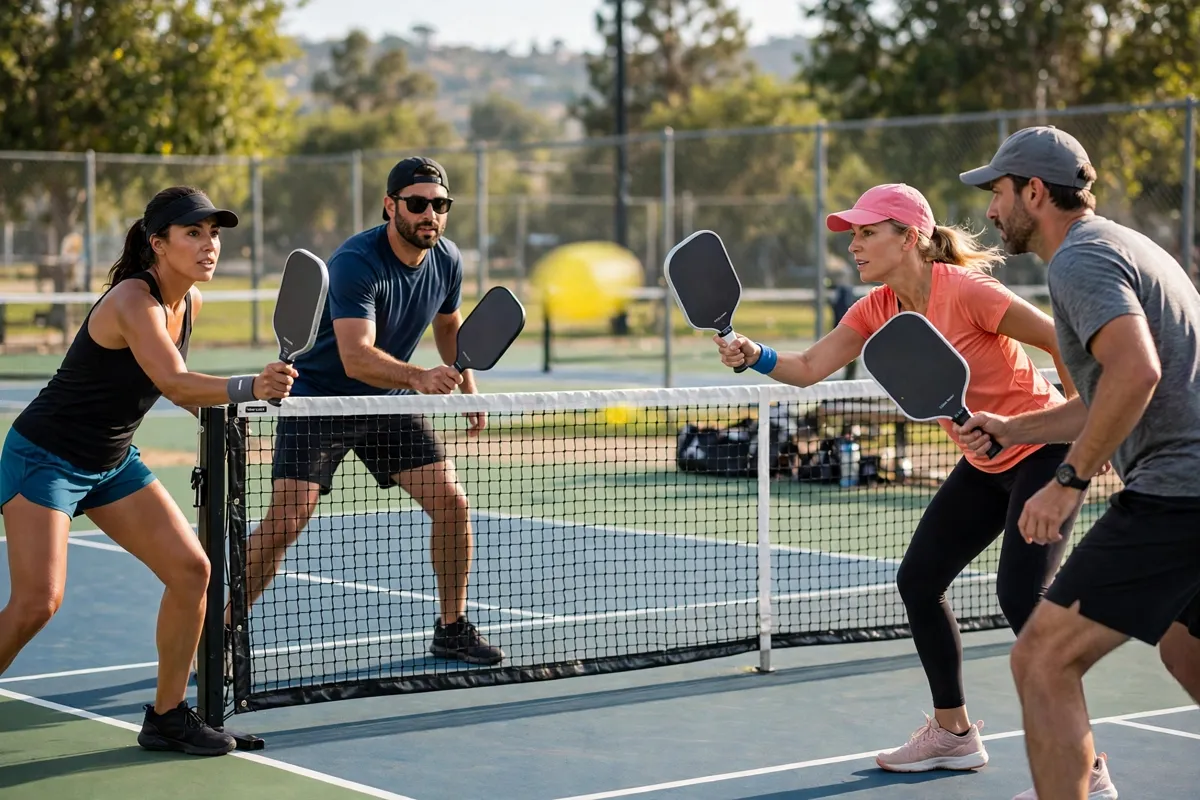
A volley is any shot you hit out of the air, before the ball bounces. In pickleball the volley lives at one address: the kitchen line. The kitchen is the seven-foot non-volley zone on each side of the net, and the rule is simple — you may not volley while standing in it or touching its line. So players crowd just behind that line, close enough to hit balls out of the air, far enough back to be legal. If you are hazy on the zone itself, our kitchen rules guide walks through it in plain words. Everything below assumes your feet are set behind that line, because from there the volley is the fastest weapon in the game.
Start ready, or do not bother
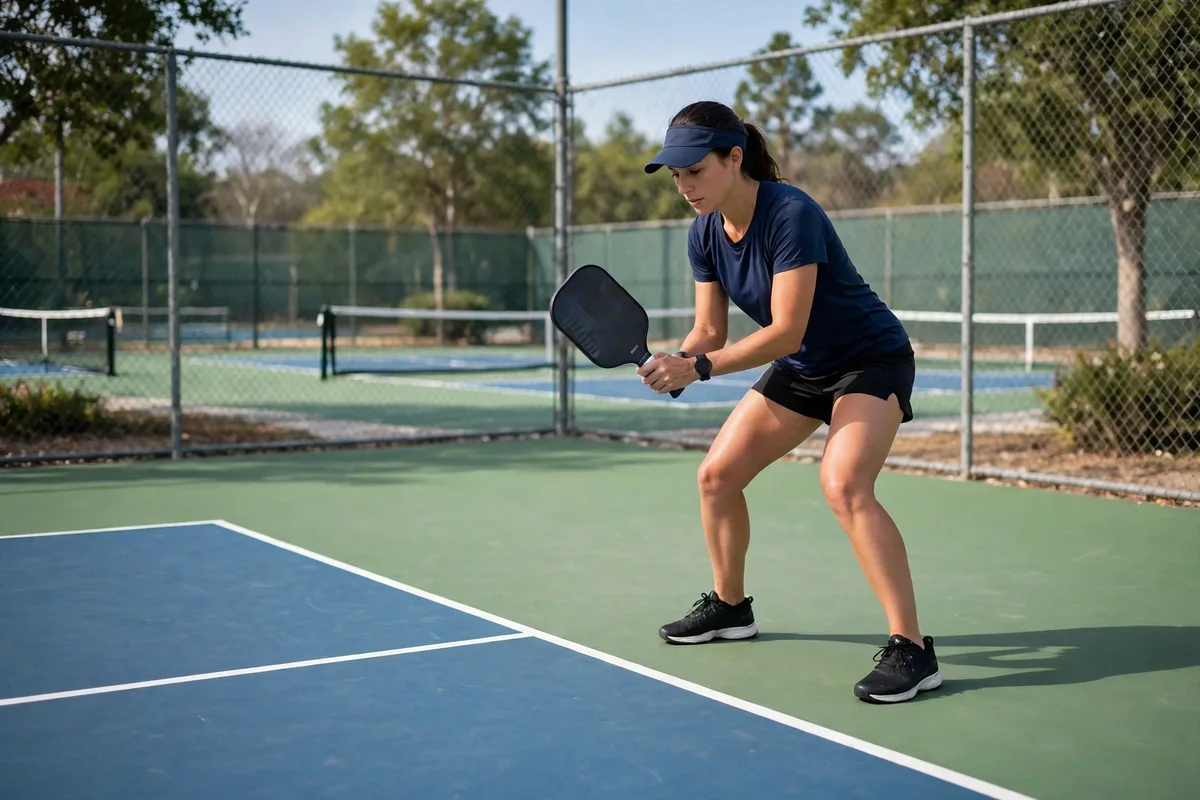
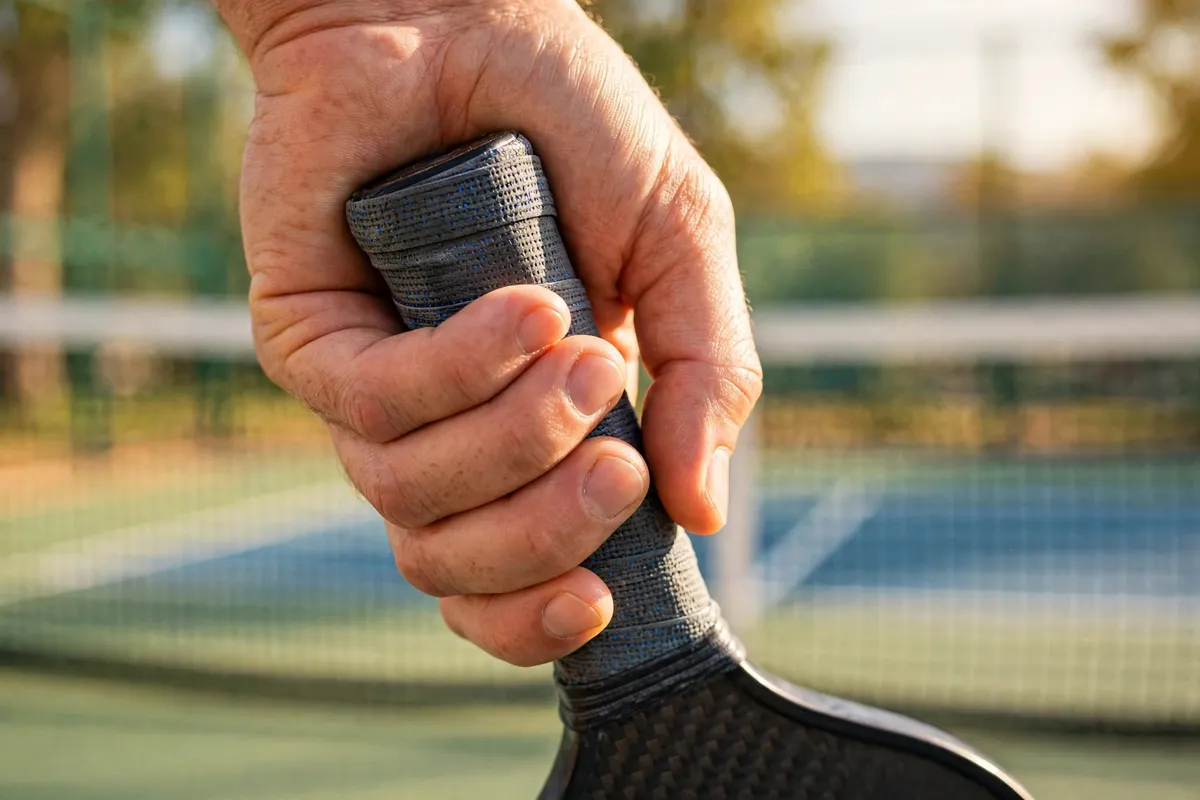
Net play is too quick for a wind-up, so the volley begins with a stance, not a swing. Stand with your feet about shoulder-width apart, knees bent, weight forward on the balls of your feet. Hold the paddle up in front of your chest, head of the paddle above your wrist, tipped a little toward your backhand side — most fast balls at the net come at your body or backhand, and this angle covers both. Use a continental-style grip, the handshake grip, so one hold works for forehand and backhand without a mid-rally shuffle. If your paddle starts down by your hip, you have already lost the exchange.
The block: let their power do the work
The block volley is your answer to a hard shot aimed at you. The strange truth is that the harder they hit it, the less you do. Hold the paddle still out in front of you, face slightly open — tilted a touch toward the sky — and simply meet the ball. Its own speed rebounds it back over the net, low and hard to attack. Soften your hand at contact so the ball drops short rather than rebounding deep. Aim it, too: a block angled cross-court pulls the hitter wide, and a block dropped straight down lands in the kitchen where nobody can attack it. A good block turns an opponent's best drive into a weak reply, and it is the single most valuable volley for players moving up from the beginner levels.
The punch: a jab, not a swing
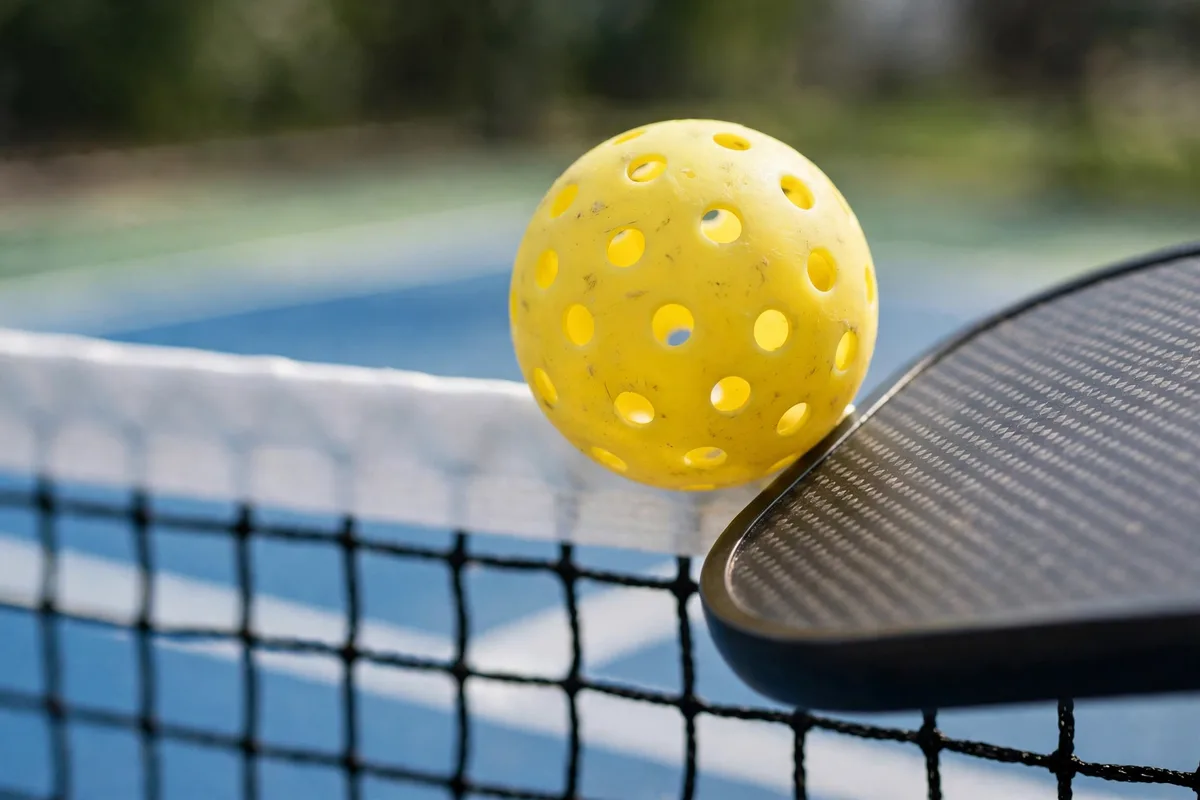
When a ball floats up above net height, blocking is too gentle — that is a ball to finish. The punch volley is a short, firm push: from the ready position, jab the paddle forward a few inches, driven by the shoulder, with the face angled slightly down. Aim at your opponents' feet or through the middle of the court, where partners hesitate over whose ball it is. The punch is controlled aggression. If your paddle travels more than a short push, it is not a punch anymore — it is a swing, and swings at the net cause the next problem.
Why long swings fail at the net
Tennis players bring a full groundstroke with them, and it betrays them at the kitchen line. A long backswing takes time you do not have, so you make contact late and beside your body instead of in front. A long follow-through leaves the paddle stranded out wide when the next ball comes — and at the net, there is always a next ball, arriving in well under a second. Long swings also send the paddle face through a wide arc, so small timing errors become big misses: into the net, or sailing long. Short and quiet beats big and loud, every rally. Watch the hands battles in our video library and notice how little the best players' paddles actually move.
Volleys reward players who prepare early and swing small. Set your feet behind the line, keep the paddle up, block the rockets, punch the floaters, and get ready again. If you want to know how your net game stacks up against the rest of your shots, our free skill check scores all six core shots and shows you which one deserves your next practice session.