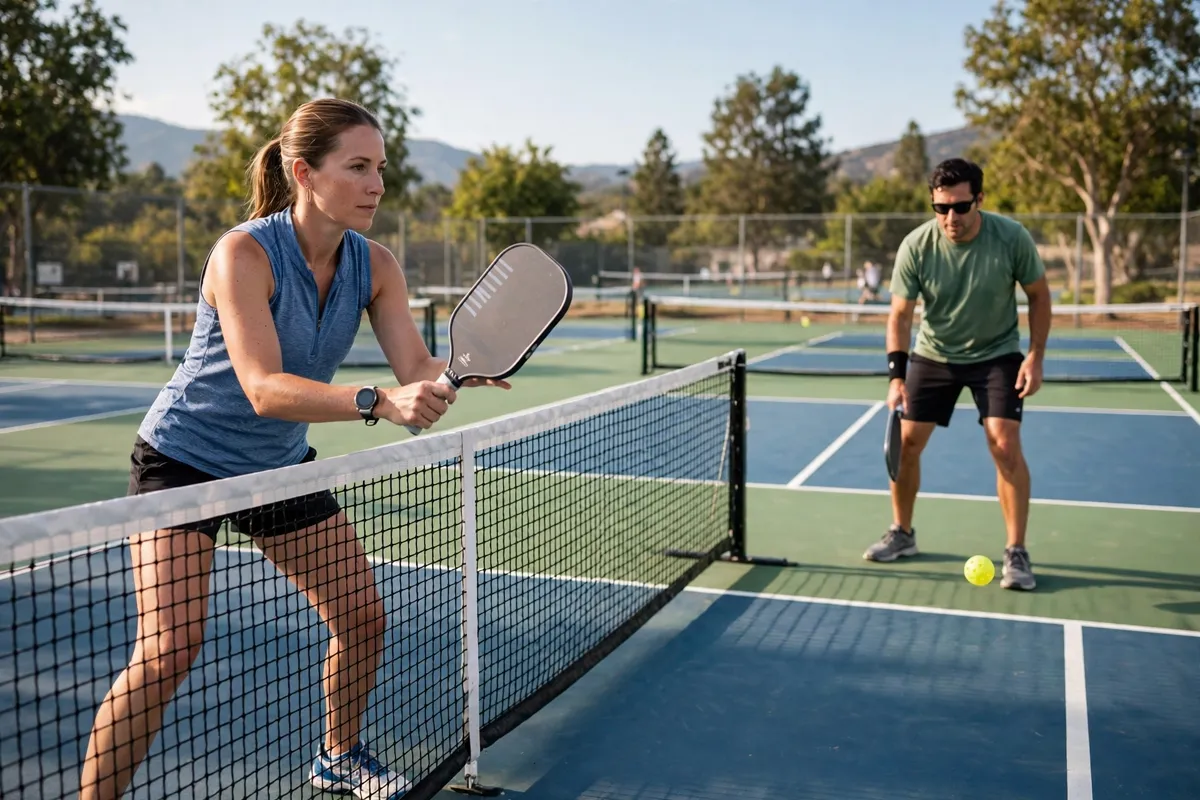
Every club has one: the player who hits the ball as hard as they can, as often as they can. Players call them bangers, and against beginners the act works — pace rushes you, and rushed players make mistakes. But bangers carry a hidden flaw: their game depends on you cooperating. Stop cooperating, and the same power that won the first game starts donating points. Here is the calm playbook, piece by piece.
First weapon: let the out balls go
A drive (a hard, flat shot) hit from a low position has a physics problem — to clear the net from down low, it must be aimed up, and a hard ball aimed up keeps rising. That is why so many banger drives from mid-court or below net height sail past the baseline. Your job is to recognize them early — hard swing, low contact point, ball rising — and get out of the way. Duck, sidestep, and let it fly. It feels wrong the first few times, and then you will start collecting free points every game. Judge with your eyes up: a drive that is still rising as it crosses the net, hit from behind the kitchen line, is very often long.
Block it soft, right back at their feet
For the drives that are actually on target, do not swing. A block — meeting the ball with a still paddle out in front — borrows their pace instead of fighting it. Angle the face slightly open and aim the block low, at their feet, so the ball drops into the kitchen (the 7-foot non-volley zone) on their side. The fuller version of this idea is the reset (a soft defensive shot that neutralizes an attack and restarts the rally), and it is worth studying properly in our guide to the reset, explained. What you are really doing is refusing to feed them another comfortable ball: a banger who has to bend and lift a soft ball at their feet is a banger disarmed.
Dink them into boredom and errors
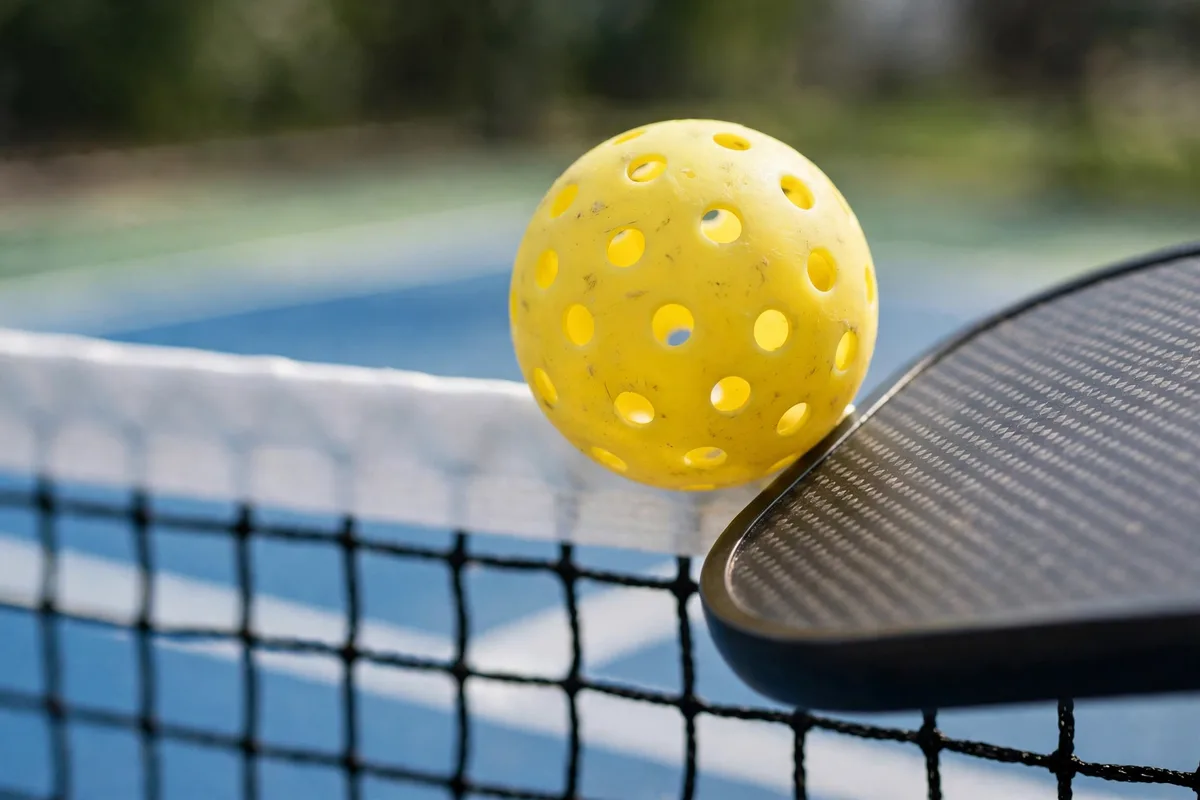
Once the rally reaches the kitchen line, keep it there. Dink patiently — soft shots that bounce low in their kitchen — and watch what happens. Bangers are at their worst hitting up: a player whose whole game is swinging down and through suddenly has to produce touch, and most cannot do it for long. They will pop one up (your chance to finish), drive one into the net, or try a low-percentage attack off a ball below the net and miss. Patience is not passive here; every dink you hit is a small trap. If you want the technique, our third-shot drop guide shows how to start these soft rallies from the very beginning of the point.
Take away their runway
Bangers hit their biggest drives when they have time and space, so shrink both. Serve deep, so their return starts from behind the baseline. Return deep and get to the kitchen line quickly — every step closer to the net cuts the time their drive has to trouble you, and this is a truth worth underlining: the same drive that bullies you at the baseline is much easier to block at the kitchen line, where your paddle is already up and their swing has to hurry. The pattern is the backbone of going from 3.0 to 3.5: get forward, get set, and let power come to you.
Mind games, played politely
Finally, understand the banger's fuel: rhythm. They want every rally to feel the same — hard ball, harder ball. Break it. Vary your pace, drop a soft shot after two firm ones, lob (a high shot over their heads) once in a while if they crowd the net, and slow down between points within the rules. Nothing about this is unsporting; it is shot selection. And when you do get a ball sitting up high, finish it firmly — one confident put-away after ten patient blocks does more damage to a banger's confidence than a whole game of swinging back. Slow-motion examples of blocks and resets live in our video library if you want to see the touch up close. Want to know whether your own defensive shots are solid enough to run this playbook? Take the free skill check — it grades your reset and your dink, the two shots bangers hate most.