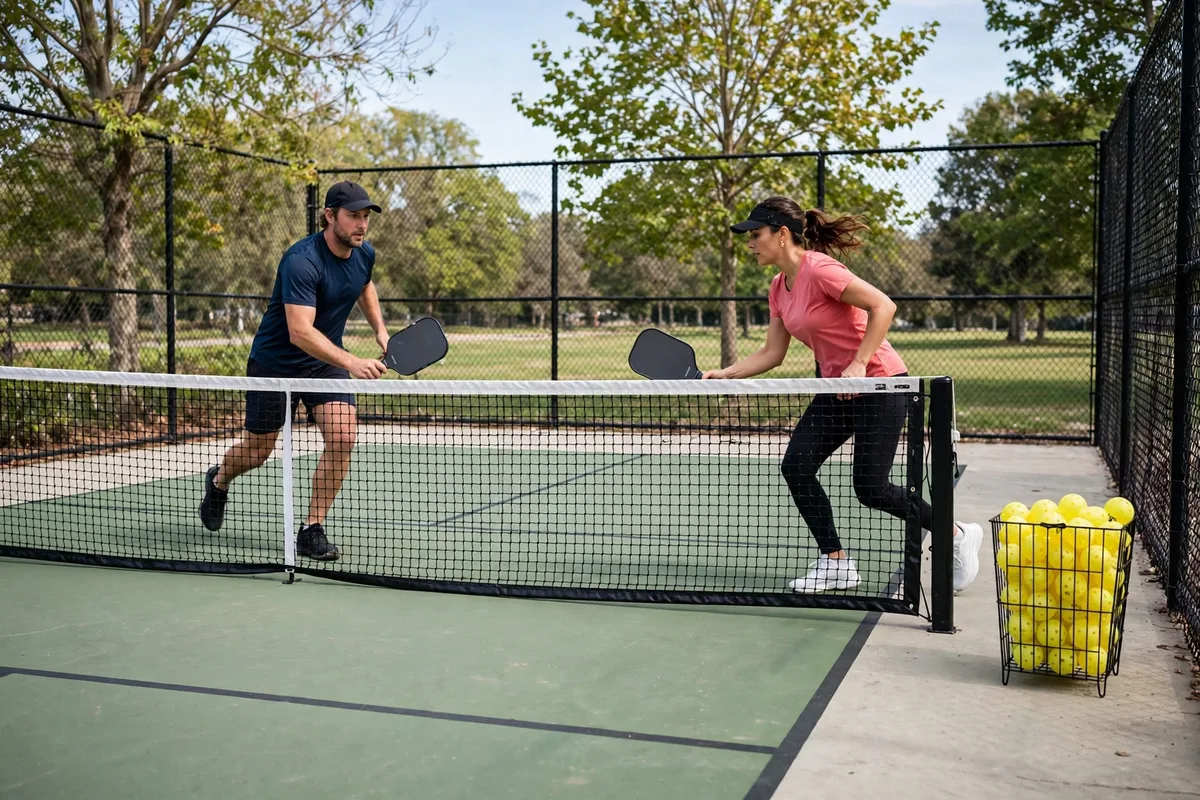
Pickleball is a social game, which is exactly why practice dies so often: your partner cancels, the courts are full, or nobody is free at your hour. Here is the part nobody tells beginners — most of what makes you better is simple, repeated touches, and a wall can give you more of them in 20 minutes than a friendly game gives you in two hours. Solo practice is not a lesser version of training. For dinks, serves, and footwork, it might be the best version.
What you need
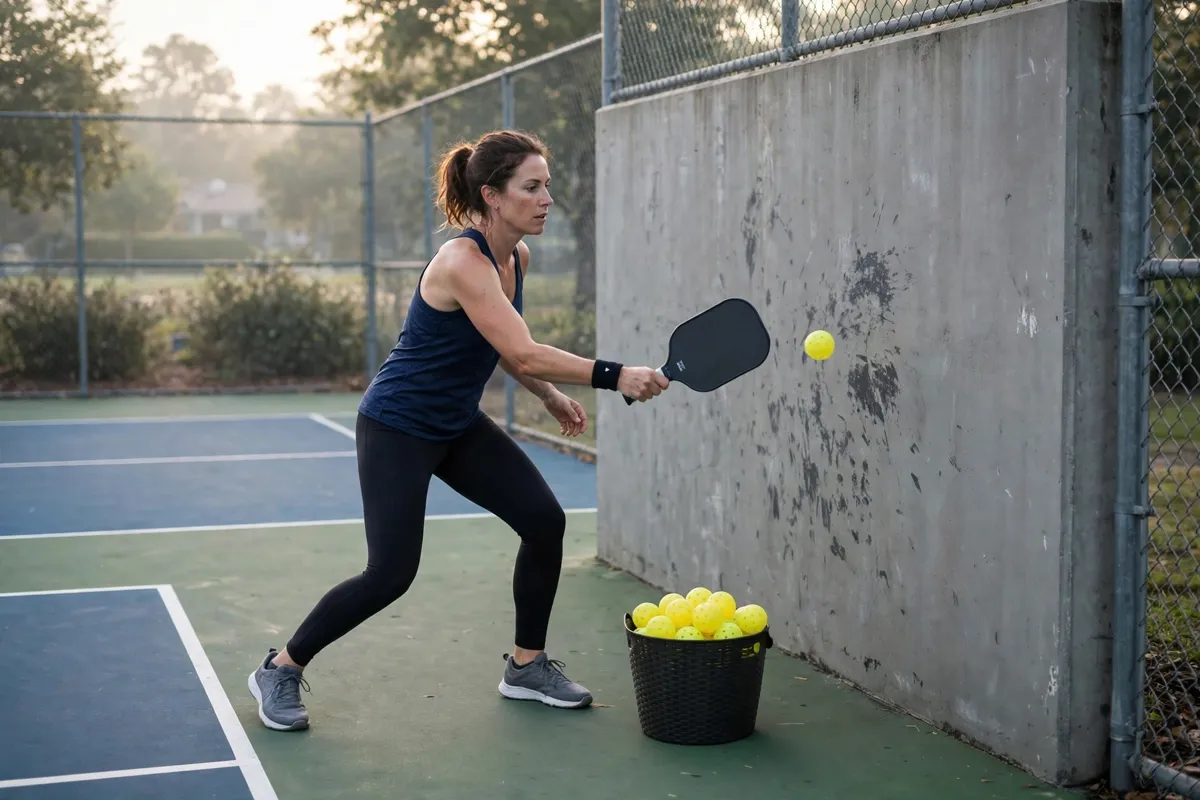
Almost nothing. A firm wall, a garage door, or a chain-link fence becomes your partner. You want a handful of balls so you are not chasing one after every miss, a paddle, and a strip of tape or a chalk line on the wall at net height — a pickleball net is 34 inches high in the middle — so your soft shots have a target to clear. If you can get to an empty court, great, but the driveway version works fine and removes every excuse about travel.
The 20-minute plan
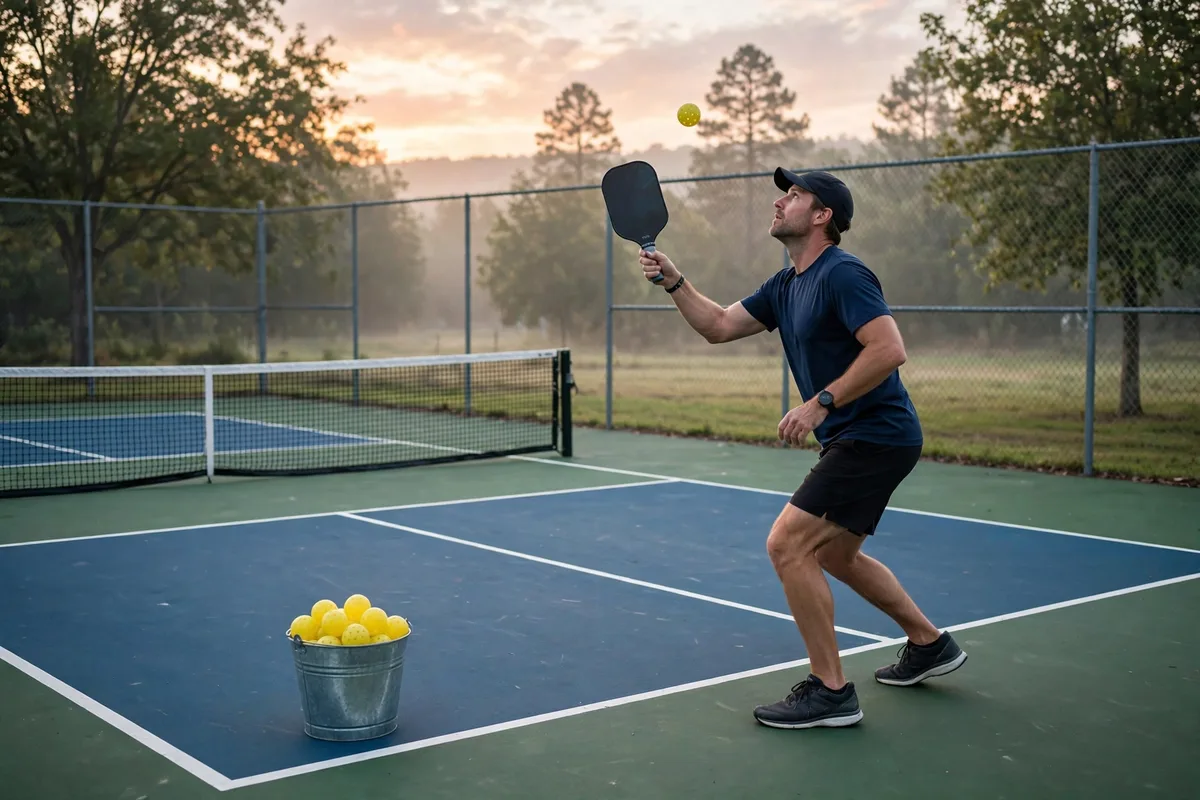
Start with five minutes of wall dinks: stand about 10 feet out, hit softly so the ball bounces once and comes back, and keep the same gentle arc. Then step closer and volley for a few minutes, keeping your hand quiet and your paddle in front. Next, serves. If you are on a court, lay a towel in the back third of the service box and hit 20 serves at it. Off court, serve against a fence with a taped box and chase depth the same way. Depth is the skill that matters most here, because a deep serve changes every rally that follows it.
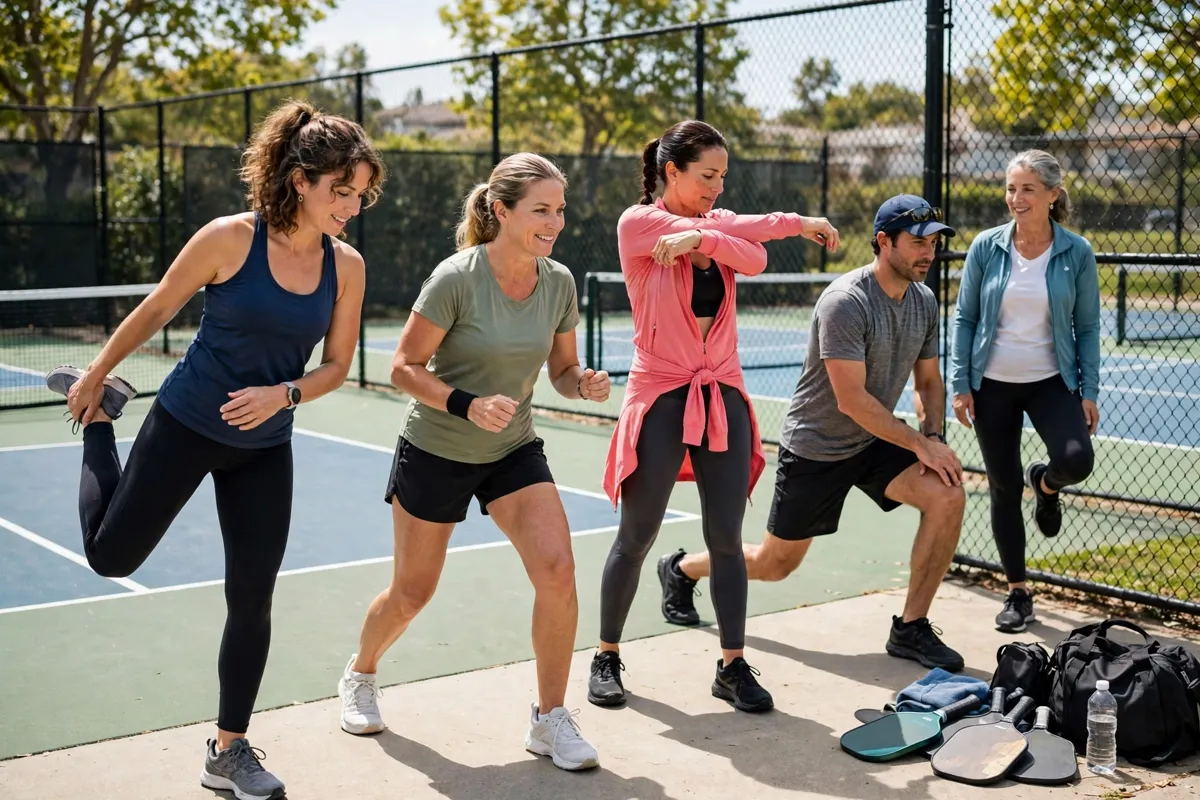
Spend the next few minutes on footwork without a ball — shadow swings with sideways shuffles and split-steps (small hops so you land balanced and ready). It feels silly for exactly one session, then your feet start doing it in games without asking. After that, try the drop-shot ladder: soft drops against the wall from close range, stepping one pace farther back every five balls, keeping the arc low and gentle as the distance grows. Finish with a self-scoring game — your best streak of clean wall volleys, say — and try to beat it.
Track your numbers
Solo practice has one trap: it is easy to drift, hit a few balls, and call it training. Counting fixes that. Write down three numbers each session: how many of 20 serves landed deep, your longest streak of wall dinks, and your longest volley streak. The numbers will jump around at first, then climb. Seeing 14 become 23 is what brings you back on the days a partner would have flaked — and it shows you exactly which shot still needs the wall most.
If motivation dips after a week or two — and it usually does around day ten — shrink the session rather than skipping it. Five easy minutes of wall dinks keeps the habit alive and the hands soft, and a short session done beats a perfect one postponed. Stack the odds your way: leave the paddle and balls by the door or in the car, tie practice to something you already do (right after a walk, before dinner), and keep the same two days each week. Habits survive on cues and small wins, not on willpower, and the climbing numbers in your notebook supply the wins.
Twenty minutes, twice a week, is enough to feel the difference within a month: calmer hands at the kitchen, deeper serves, feet that arrive before the ball does. For partner versions of many of these drills, see pickleball drills for beginners, and when you want people again, a round robin is the friendliest way to find them. To find out which shot your solo sessions should target first, take the free skill check — it scores all six core shots and points at the weakest one.