Here is a scene every pickleball player knows: someone walks from the parking lot straight into a game, lunges for the third ball of the day, and spends the rest of the morning rubbing a calf. Pickleball feels gentle because the court is small and the ball is light, but the game is full of sudden lunges, quick stops, and sideways shuffles — exactly the movements cold muscles handle worst. Eight minutes of warming up fixes that, and it is the cheapest performance upgrade in the sport.
Why it matters more with every year
Muscles and tendons warm up more slowly and forgive less as we age, and pickleball's crowd skews older than most sports. A cold muscle asked to sprint and stretch in the first rally is simply more likely to complain — sometimes loudly, and for weeks. Warming up also has a quieter benefit: your first fifty touches of the day set your timing. Players who warm up hit their fifth game better than their first; players who skip it often spend game one donating points while their hands wake up. Think of the warm-up as buying your best pickleball at a discount.
The routine, in plain order
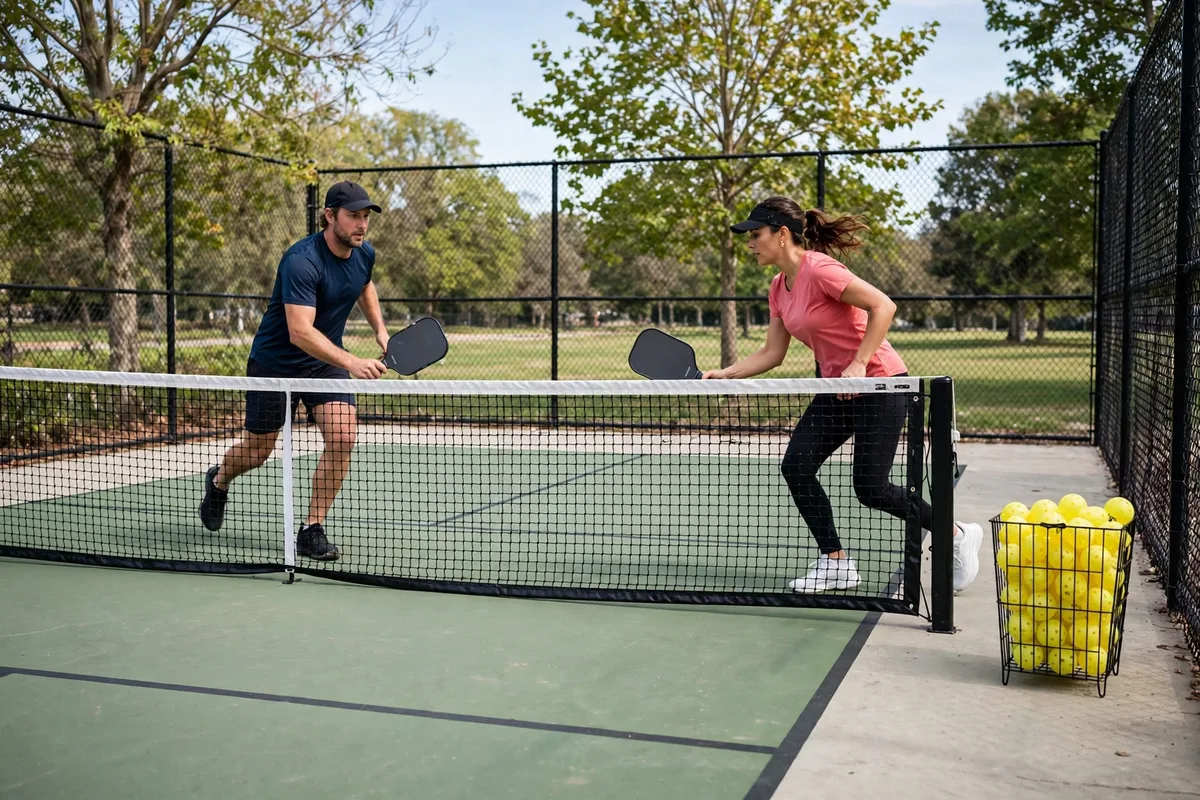
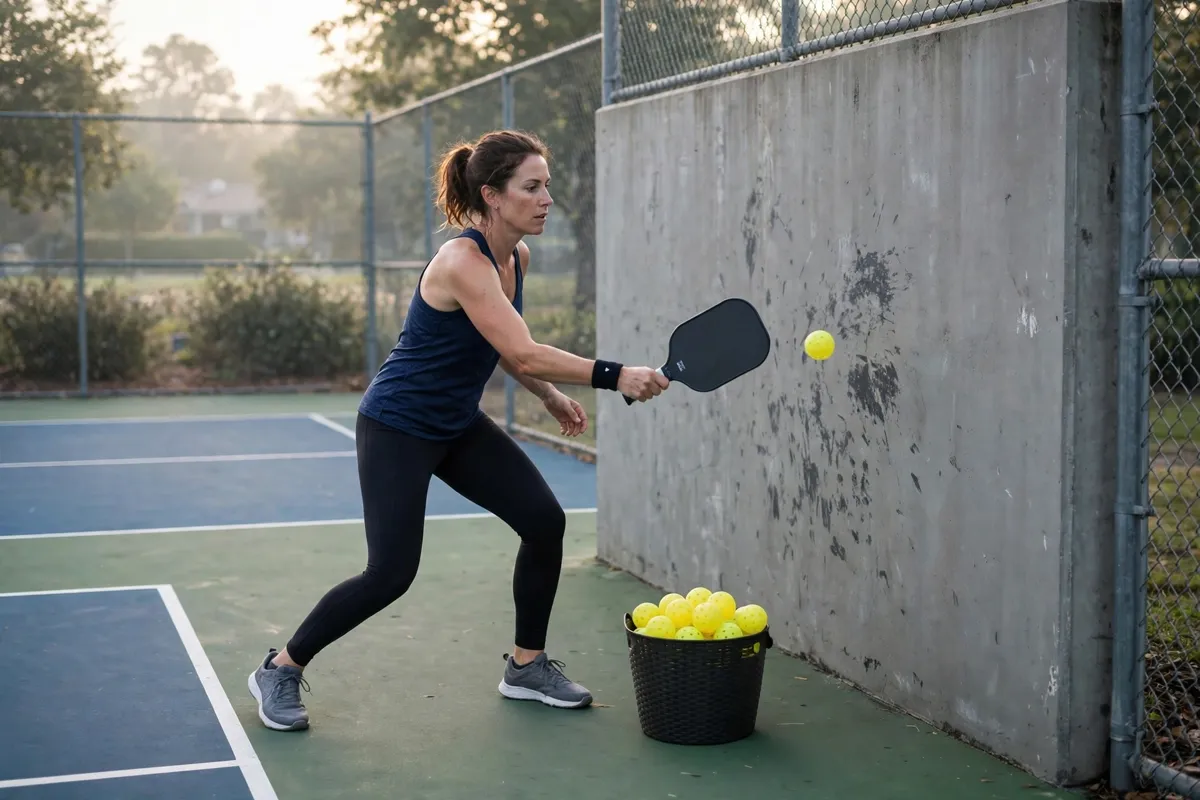
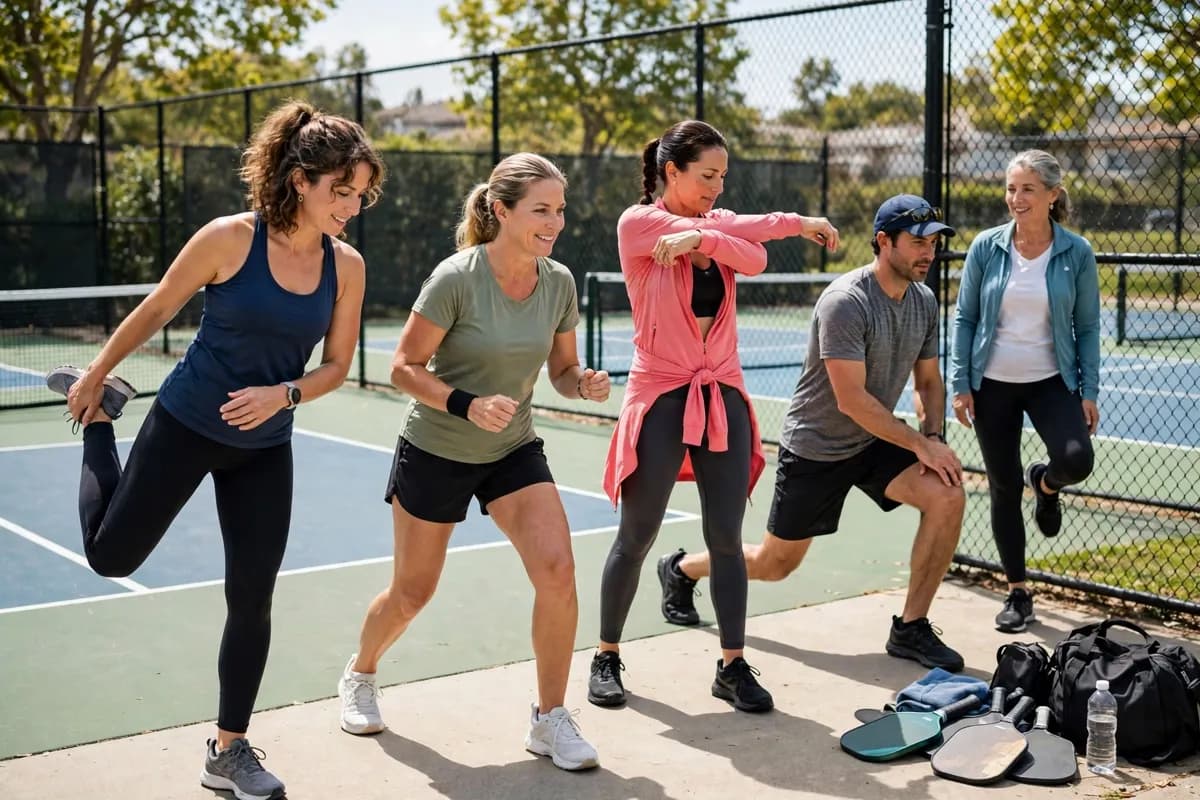
The order matters more than the details. First, raise your temperature with a minute of light jogging or brisk walking — you should feel slightly warm, not tired. Then loosen the joints you are about to use: leg swings and arm circles, easy and rhythmical. Next, move the way the game moves: lateral shuffles along the kitchen line (the line at the edge of the 7-foot non-volley zone) with small split-steps, because pickleball is played sideways far more than forward. Only then pick up the paddle against a partner: mini-court dinks that slowly grow in distance, then a few drives and volleys at half pace. Finish with five practice serves from each side so your first real serve is a repeat, not a debut.
If eight minutes feels impossible on a busy morning, protect the order and shrink the doses. Two minutes of walking and swings, two minutes of shuffles, three minutes of easy rallying, and a few practice serves still cover every stage — a short warm-up done beats a perfect one skipped. Cold mornings deserve an extra minute of walking, since stiff hands and slow feet are the last to arrive. And if you are returning from time away, treat your first session back as all warm-up: easy rallying, cooperative games, and no lunging heroics until your body has a few sessions under it again.
What to skip before you play
Long, held static stretches — touching your toes and holding for 30 seconds — belong after play, not before. Muscles held in a long stretch right before effort are temporarily less springy, and spring is what your calves and shoulders are about to need. Gentle movement that gradually grows is the better warm-up; save the deep stretching for the cool-down, when it can actually help you recover. And one firm rule: a warm-up is not a place to push through pain. A twinge that sharpens as you move is your cue to stop, rest, and — if it lingers — check with a doctor or physical therapist before your next session.
Build this into your routine until it is automatic, the same way you would never skip tying your shoes. If you play with a regular group, starting together also makes the social part easy — eight minutes of catching up while you loosen up. For more ways to use your first minutes on court well, our beginner drills build naturally on a warm body, and the practice videos show the movements up close. Not sure which part of your game needs the warm-up touches most? The free skill check will tell you where to aim them.