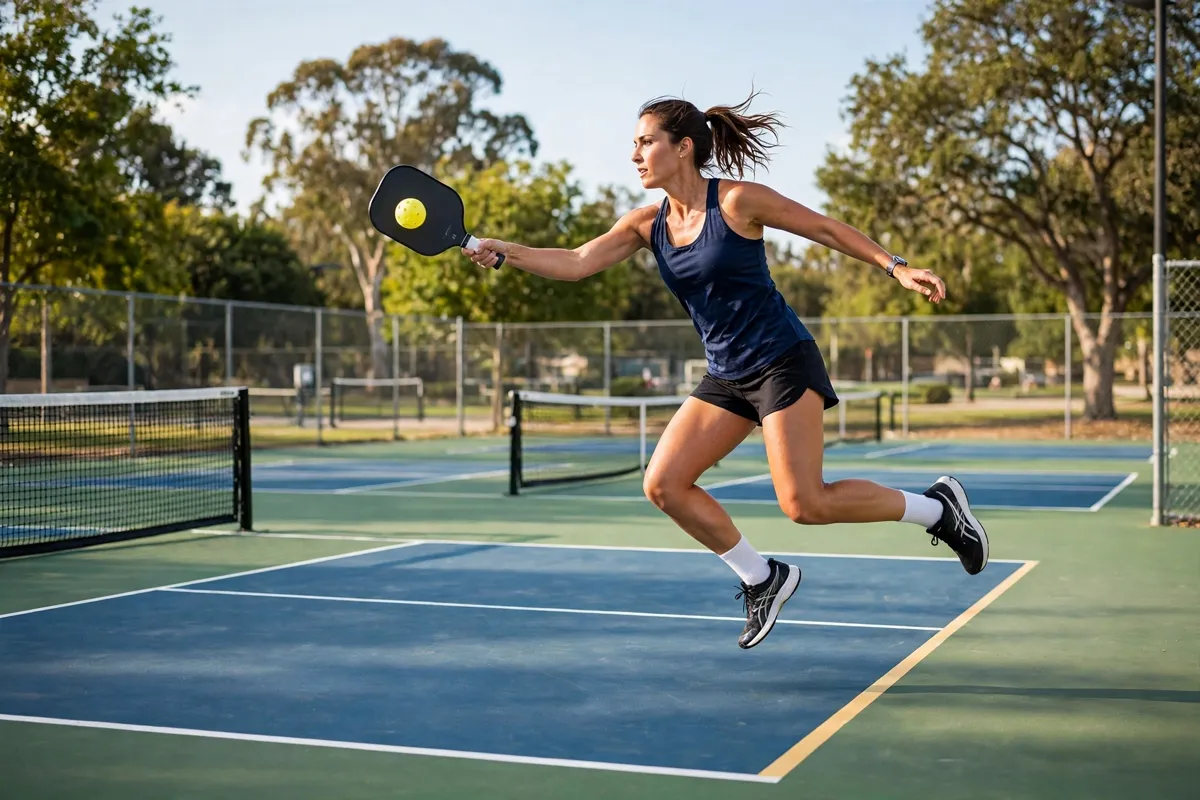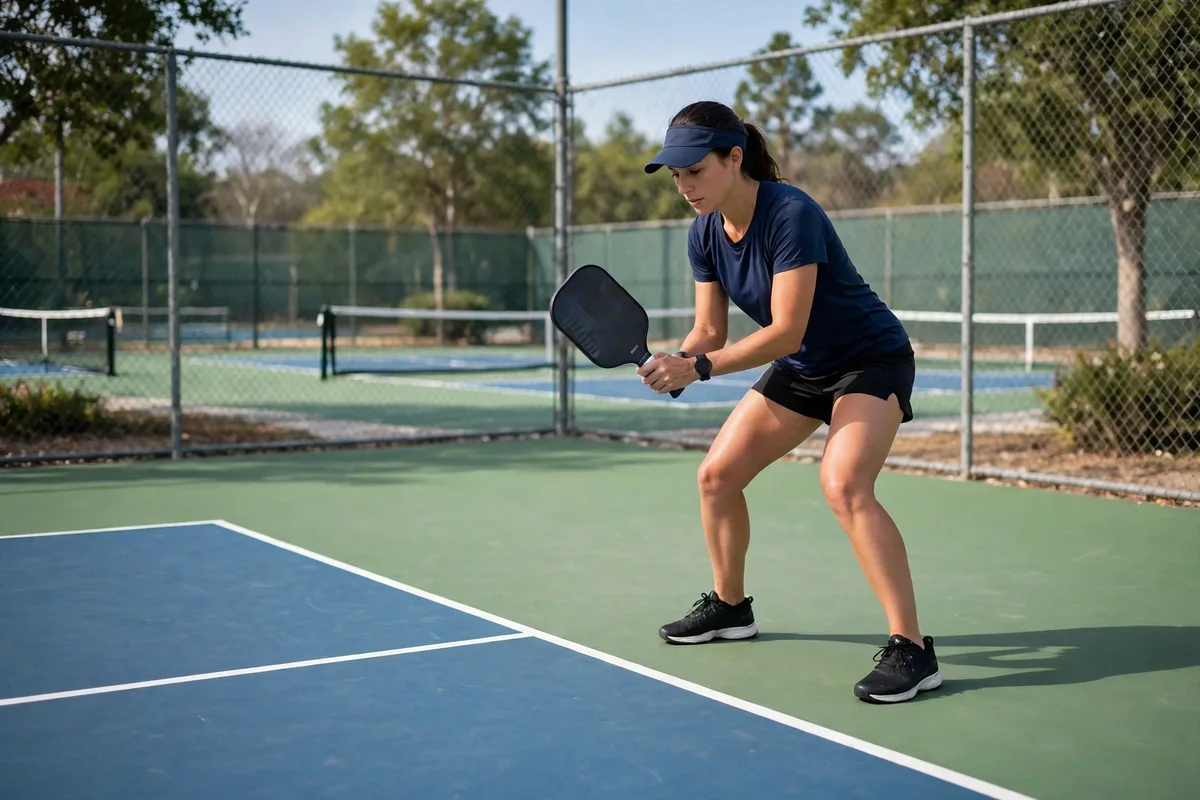
A rally at the kitchen is drifting along nicely when an opponent slides a dink (a soft shot that drops into the kitchen, the 7-foot non-volley zone by the net) at a sharp angle. You chase it wide, well past your sideline, and now you are stuck — the net is between you and the court, and the ball is low. Except you are not stuck. You hit the ball around the outside of the net post, it skims past the post below net height, and it lands in. That is an ATP, short for around the post, and it is one of the most satisfying shots in the game.
Why the shot is even possible
Most players assume every return has to cross over the net. It does not. The rulebook only cares that the ball lands in the correct court. When a ball passes outside the net post, there is no requirement for it to travel over the net at all — it does not even need to rise as high as the net. The post stands 36 inches tall at the sideline, so a ball driven low and hard around it can stay well below the tape and still be a clean, legal winner. This is the same family of rules that governs the kitchen; if the zone itself still feels fuzzy, the kitchen rules, explained simply is the place to firm it up.
How the chance shows up
Nobody plans an ATP from the baseline. The opening appears at the kitchen line during dink rallies (exchanges of soft shots at the net), when an opponent gets cute with an angle — a dink aimed so it crosses the net diagonally and keeps traveling toward your sideline. As you move wide to reach it, your body leaves the court but the ball is still playable, low and outside the post. From there the geometry flips in your favor: instead of the hardest shot on the court, you suddenly have a straight, open lane into the far corner of their court, with both opponents usually leaning toward the middle, watching the wrong place.
Hitting it: low, flat, and patient
The technique is simpler than the highlight reels suggest. First, wait. The ball needs to travel far enough wide that your swing path truly clears the post; rushing is how paddles meet metal. Second, aim low and flat — a firm, flat drive or a guided push, not a big looping swing. The ball does not need height, so do not give it any; height is what turns an ATP into a long, hopeful miss. Third, pick the far corner and commit. If the ball sits up higher, you will have time for a fuller swing; if it is dropping, a compact push with an open paddle face still works. Expect to clip the post or miss wide a few times while learning the spacing. That is the tuition every ATP hitter pays.
Defending against one
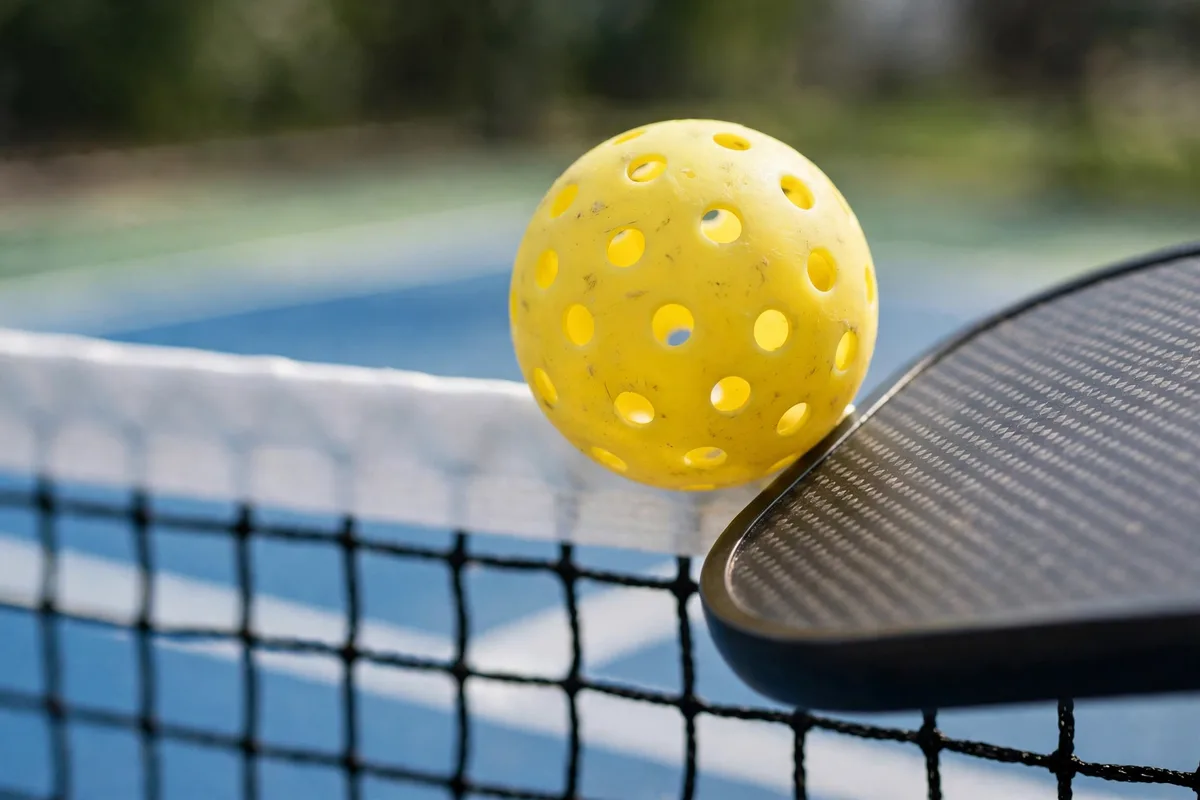
If you love hitting angled dinks, you will occasionally feed an ATP. Two habits keep the risk down. Angle with margin: a dink that lands closer to the net and bounces twice quickly gives the chaser far less room than one that floats wide and sits up. And after hitting a sharp angle, recover toward the sideline side rather than drifting happily to the middle — the ATP's favorite target is the open court behind a team that turned to watch. If an opponent still pulls it off, applaud honestly and note the setup for next time; the shot takes real nerve.
Its flashier cousin
The ATP is often mentioned in the same breath as the Erne, and they do share DNA: both exist because the kitchen rules wall off the direct route, and both reward players who understand exactly where the legal space is. The difference is simple. An Erne is a volley (a shot hit out of the air) played while leaping around the kitchen's edge. An ATP is played from outside the sideline, usually off the bounce, around the post. One attacks; the other rescues.
Worth practicing?
An ATP might appear once in several sessions, so it should never eat real practice time. But the skills underneath it — chasing wide balls without quitting on them, staying balanced outside the court, hitting a firm low drive from a stretched position — pay off every single game. They are the same defensive roots taught in our explainer on the dink and its role at the net. Curious which of your shots actually needs the work? The free skill check measures your game shot by shot and shows you where your next real gain is hiding — no post required.