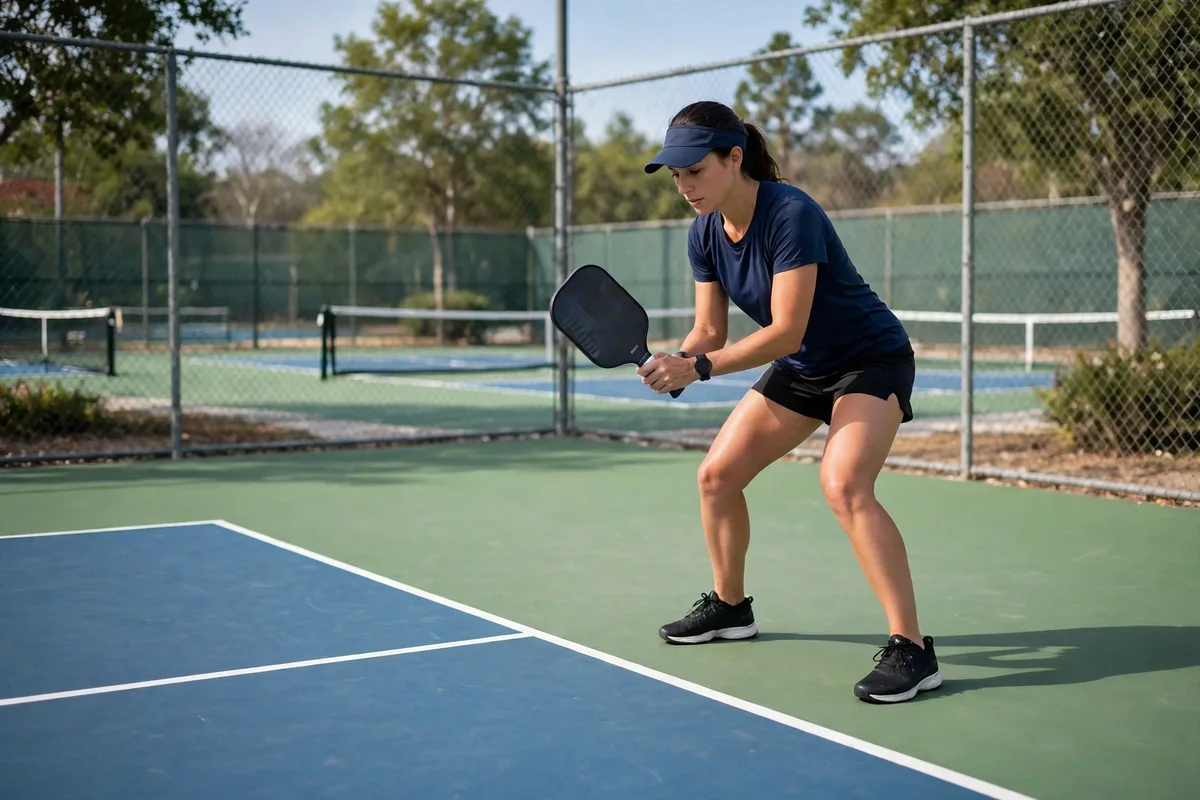
Sooner or later you will see it: a player at the kitchen line suddenly leaps sideways, hangs in the air outside the court, and smacks a volley (a shot hit before the ball bounces) from somewhere beside the net post. The crowd noise alone tells you something unusual happened. That shot is an Erne — one of the most athletic plays in pickleball, and completely legal when it is done right.
The problem an Erne solves
To follow the Erne, you need one rule. The kitchen — properly called the non-volley zone, the 7-foot area on each side of the net — cannot be stepped in while volleying. If your foot is in the zone or on its line when you hit the ball out of the air, it is a fault (a mistake that loses the rally). That rule stops players from camping at the net and smashing everything. But it creates a puzzle: when a soft shot drifts toward the sideline, right at the corner of the kitchen, can you attack it without your feet ending up in the zone? The Erne is the answer — go around the zone instead of through it.
How the shot actually works
The hitter reads that a ball is heading toward their sideline, close to the kitchen corner. Instead of backing off, they move along the kitchen line, then jump — or take a quick step — outside the sideline, past the edge of the zone. While airborne, or after landing outside the zone's sideline, they volley the ball down into the opponents' court. The jump matters because it keeps their feet off the ground inside the zone: they take off from legal ground, strike the ball, and land on legal ground on the other side of the kitchen's corner. Some players do a running version along the line; the leaping version is the one that draws the gasps.
What makes it legal (and what makes it a fault)
The whole shot hangs on your feet. During the volley motion, no part of you — feet, paddle, hat, anything — may touch the kitchen or its lines, and your momentum afterward cannot carry you into the zone either. You also have to respect the net: reaching over the net to hit the ball is not allowed, though the Erne rarely tempts that because the ball is off to the side. If any of that goes wrong, the crowd-pleaser becomes a fault and the rally is lost. If you want the zone rules in full, our guide to the kitchen rules, explained simply walks through every line of them.
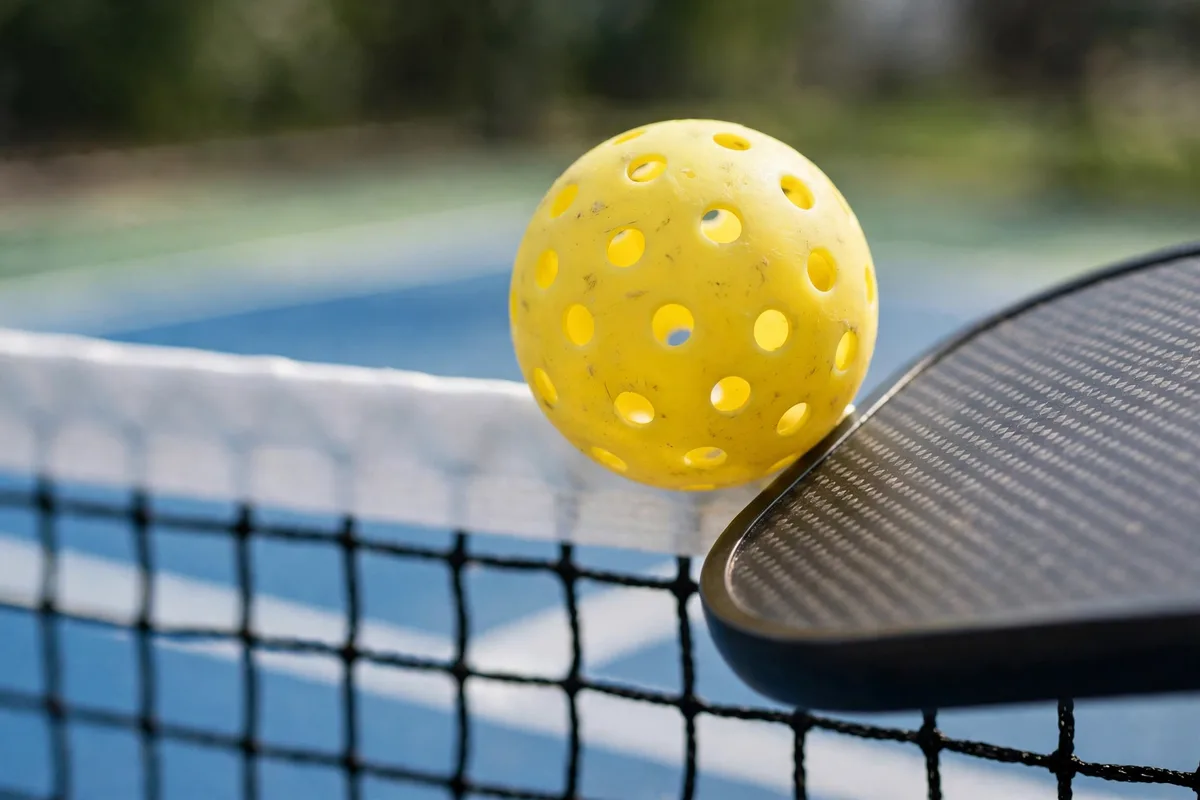
How the shot got its name
The Erne is named after Erne Perry, one of the sport's early top players, who is commonly credited with making the shot famous in high-level play. Plenty of pickleball's vocabulary is pure description — a dink is soft, a drive is hard — but the Erne is a little monument: one player's signature move, still carrying his first name every time a rec player shouts it at the local courts decades later.
Spotting an Erne before it happens
You do not need to hit Ernes to benefit from understanding them, because defending one is mostly about seeing the setup early. The ingredients are consistent: your side hits a shot that pulls an opponent wide toward their sideline, that opponent keeps drifting toward the kitchen corner instead of recovering to the middle, and their paddle stays up, ready. When you see that shape, the fix is simple — send your next ball back toward the middle of the court or low at their feet, away from the sideline they are hunting. No wide ball, no Erne. Its close cousin, played on defense from even wider, is the ATP, or around-the-post shot, and the two are worth learning as a pair.
Should you try one?
Honestly, most players should file the Erne under fun, not fundamentals. It demands quick feet, timing, and a partner covering the big space you leave behind — the same footwork foundations covered in our footwork guide. Attempt one a session in a friendly game, expect a few faults while you learn where the line is, and never build a game plan around it. The steadier route to winning more net rallies is shot selection and positioning. If you want to know which parts of your game deserve practice time first, the free skill check will point you at your biggest gain in about two minutes.