Your shoes are the most important safety gear in pickleball, and the pair most beginners wear is the wrong tool for the job. If you are playing in running shoes, you are playing in shoes designed for the exact opposite of what pickleball asks your feet to do.
Pickleball moves sideways
Watch any rally from the side and you will see it: shuffle steps left and right, quick plants, sudden stops, and short lunges toward the net. Almost nothing in pickleball happens in a straight line. Court shoes, the family that includes tennis and pickleball shoes, are built for exactly that. They have a wide, stable base that resists tipping, firm support through the sides of the shoe, and a tough toe area that survives being dragged along the court during lunges. That sideways support is the whole point of the design.
Running shoes are built to go forward. Their soles are curved to roll you from heel to toe, their uppers are soft mesh meant to flex in one direction, and many have tall, soft heels for cushioning miles of straight-line pounding. In a hard side-step or a sudden stop, that tall soft heel can roll, and the soft upper lets your foot slide over the edge of the sole. That is how ankles get turned. It does not happen every game, which is why plenty of people get away with it for a while, but the shoe is working against you on the exact moves pickleball makes most.
What to look for in a pickleball shoe
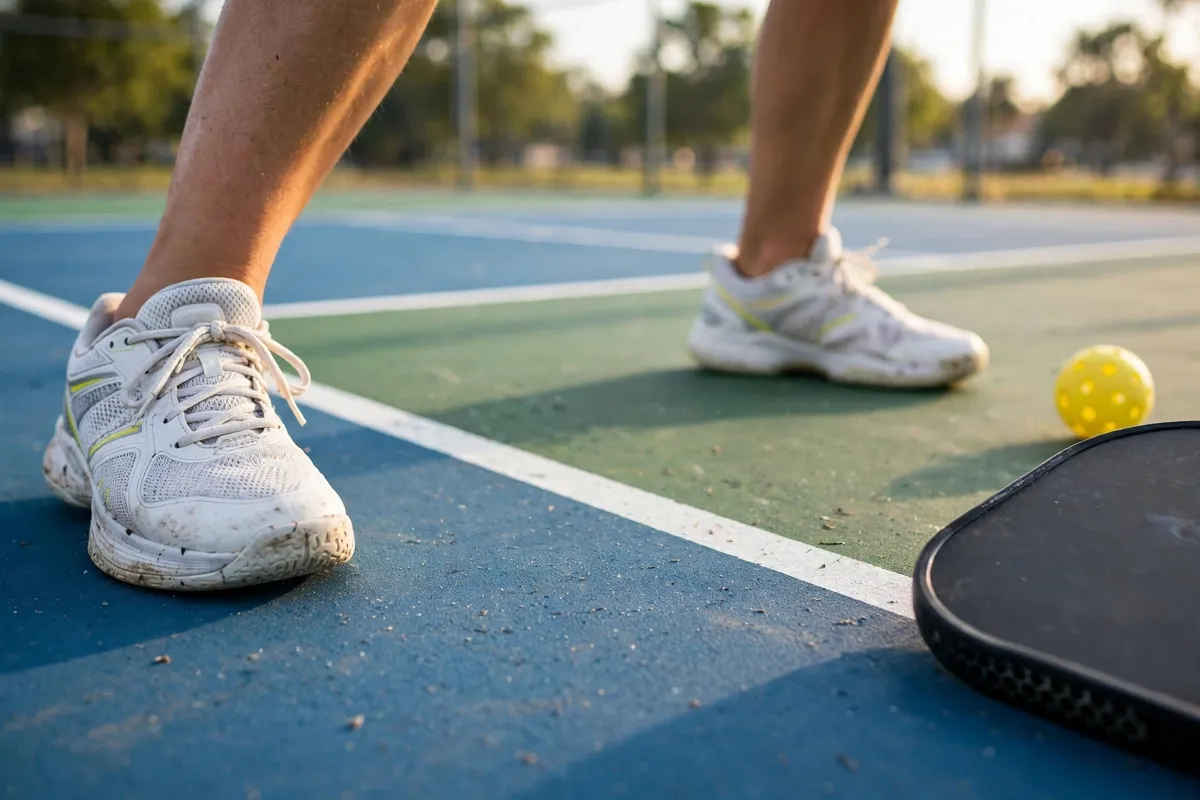
Start with the category: buy a court shoe, sold for tennis or pickleball, not a runner, trainer, or walking shoe. Then check four things. The heel counter, the stiff cup at the back of the shoe, should feel firm when you squeeze it, because that cup holds your heel steady in side steps. If you drag your toe when you lunge or serve, look for a reinforced toe guard, a patch of tougher material over the front that keeps you from wearing a hole in a month. Fit matters more than features: snug through the heel and midfoot so your foot does not slide, with a thumb's width of room in front of your toes so hard stops do not jam them. Finally, glance at the outsole, the rubber on the bottom. Indoor courts call for smooth gum rubber soles that grip wood or sport flooring without marking it, while outdoor hard courts want a tougher, more patterned rubber that stands up to rough surfaces.
Shoes also wear out in ways that are easy to miss. The cushioning and support can be tired long before the shoe looks destroyed, and the clearest signal is the outsole: when the tread pattern under the ball of your foot smooths out, grip goes with it, and slipping starts. If you play several times a week, check the bottoms every few months and replace the pair when the pattern is gone or your feet and knees start complaining after sessions that used to feel fine. A worn-out court shoe is still better than a fresh running shoe for this sport, but fresh grip is what lets you stop and change direction with confidence. Our equipment basics page covers the rest of your starter kit the same practical way.
Trying them on the right way
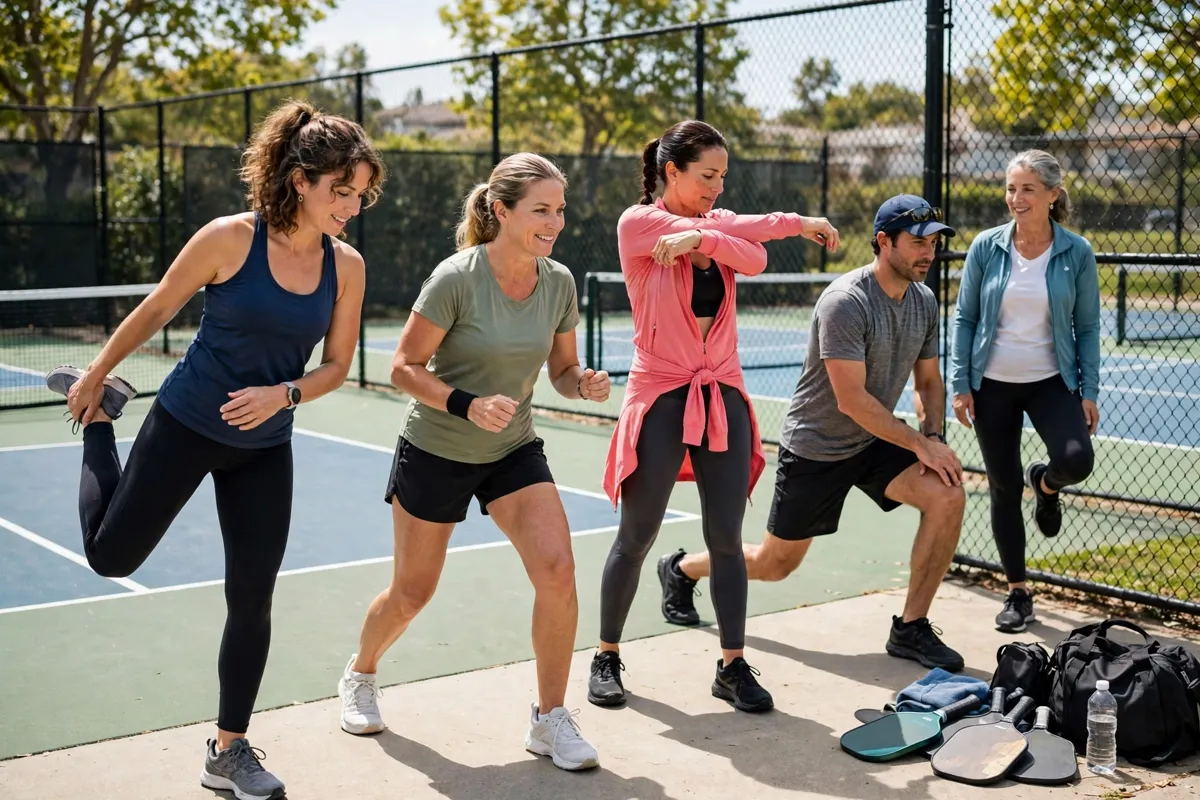
Shop for shoes later in the day, when your feet are at their largest, and wear the socks you actually play in. In the store, do the moves the court will demand: shuffle hard to each side, plant and stop, and take a quick lunge forward. Your heel should stay seated without lifting out, your toes should not slam the front when you stop, and the shoe should flex at the ball of your foot, not in the middle of the arch. If you play both indoors and outdoors, one pair can cover both for a while, but players who log serious indoor hours usually end up preferring a dedicated gum-soled pair for grip on gym floors. None of this needs to be expensive or complicated. One true court shoe that fits well, matched to the surfaces you play on, will do more for your confidence and your ankles than any paddle upgrade. Pair it with a few minutes of warming up, like our warm-up routine, and your feet will be ready for the sideways game. Once the gear side is settled, the next step is the game itself: take our free skill check to see your level and the first shot worth working on.