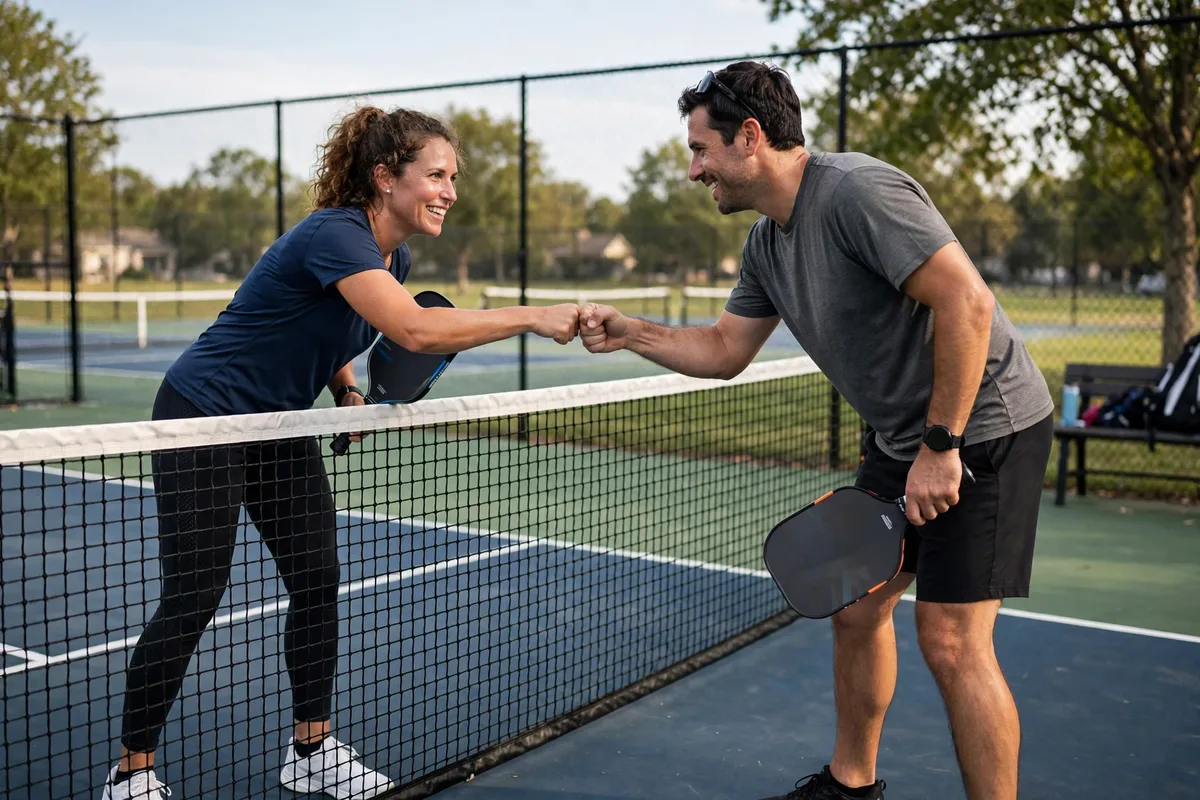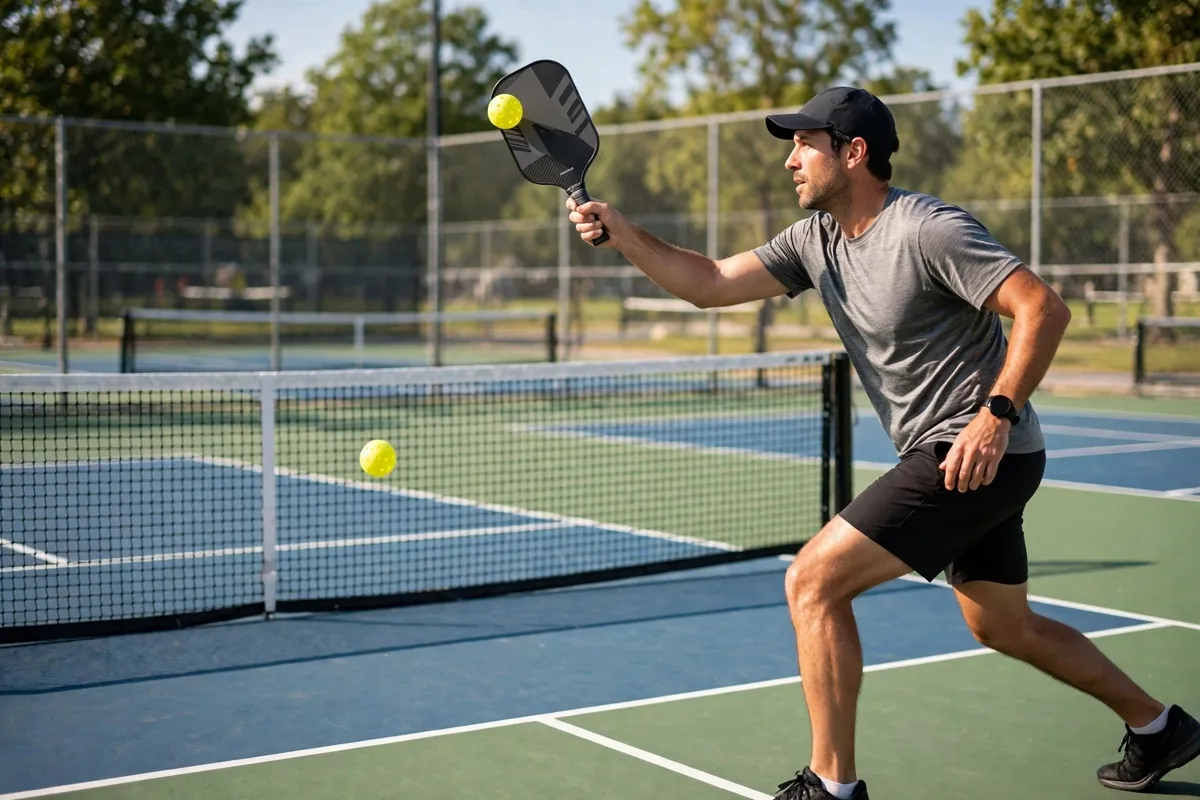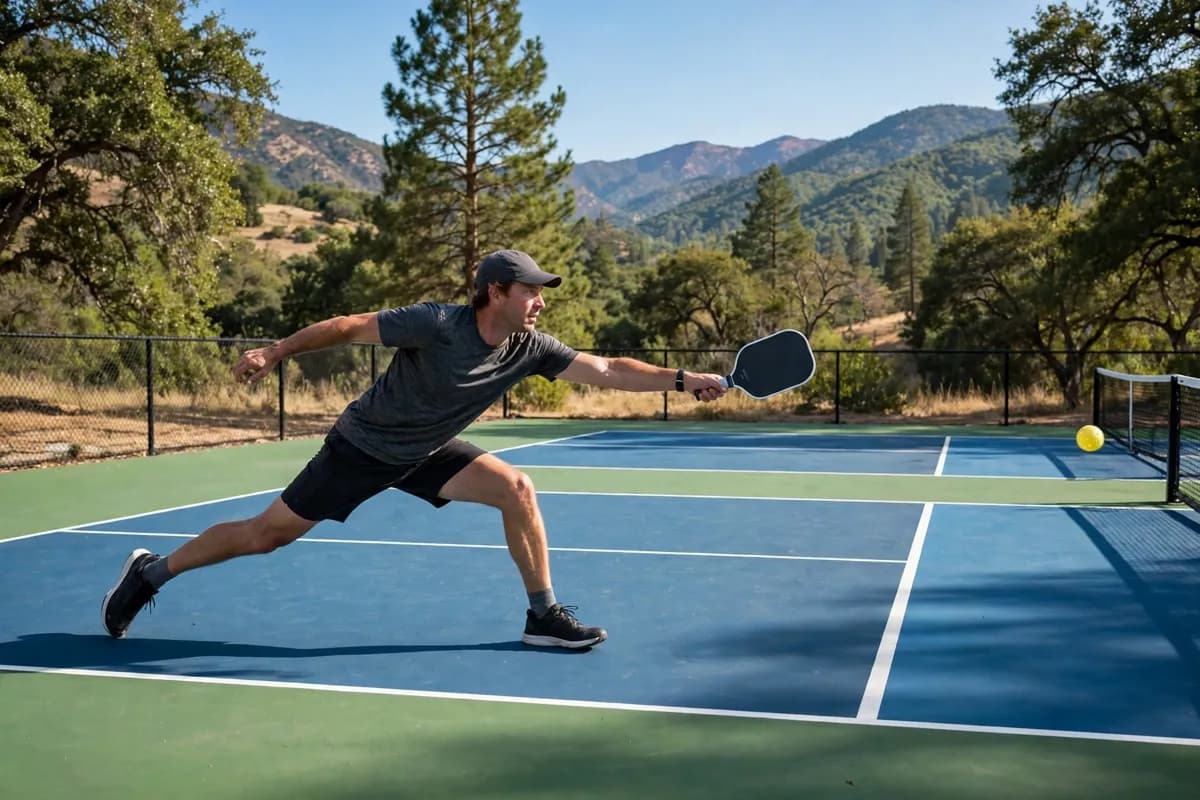
Singles pickleball uses the same court, the same net, and the same rules as doubles — and then quietly removes the person who covers half of it. There is no partner at the kitchen line, no one to take the middle ball. Every shot is yours, every gap is yours, and the game rewards a different set of skills. If you have only played doubles, your first singles session will feel like a related sport. Here is how it works and how to play it well.
Space and depth run the whole game
In doubles, you defend half a court and attack a wall of two players. In singles, you defend all 20 feet of width and aim at open space a single opponent cannot reach. That one fact flips the strategy. Angles matter more, because a sharp crosscourt that a doubles team would smother can be a clean winner, and shots that would be greedy in doubles are bread and butter here. Depth is your other best friend. A deep serve pushes your opponent back and slows their approach; a short one lets them step in and take control. The return matters even more: return deep, ideally to a corner, and use the ball's flight time to move in behind it. A short return in singles is an invitation to drive it at your feet.
Passing shots replace the dink battle
Doubles rallies often end in long, patient exchanges at the kitchen line — the kitchen being the non-volley zone, the seven-foot area by the net where you cannot hit the ball out of the air. Singles still visits the kitchen, but the exchanges are shorter and sharper. The signature singles shot is the pass: a firm, low drive or a rolled topspin shot hit past an opponent who has come to the net. That is why topspin earns its keep in singles — a dipping ball at a net player's feet is hard to handle alone. Expect more drives, more passes, and fewer twenty-dink rallies.
Come to the net on your terms
The kitchen line is still where singles points are controlled, but you cannot charge it on anything. In doubles, a shaky approach shot gets bailed out by your partner half the time. In singles, a weak approach is a passing lane with your name on it. Approach behind shots that are deep, low, or wide — balls that make your opponent hit up or hit while moving. Then hold your position a step off the line and make them thread the pass. If the approach is not there, stay patient and build the point from the baseline. And when you do get passed anyway, shake it off fast — in singles the next point starts within seconds, and the player still replaying the last pass usually loses two points for the price of one.
Fitness is the quiet skill
There is no way around it: singles is a workout. You cover every ball, recover to the middle after each shot, and do it again thirty seconds later. Points are shorter than in doubles, but the effort per point is far higher, and legs decide third games. This is also why singles burns noticeably more energy than doubles for most players — there is simply no standing still. Newer singles players do best aiming for consistency over winners: a ball you chase down and return deep beats a highlight attempt that finds the net. One more singles-only wrinkle: if you track your level with DUPR — the rating system most clubs and tournaments use — it keeps separate singles and doubles ratings, because the two games measure different things. A patient doubles specialist and a quick singles mover can sit far apart, as our explainer on what DUPR is and how it works walks through.
Whichever format you play, the shots underneath are the same six: serve, return, dink, drop, volley, and reset. Curious which of those shots would hold up with nobody covering for you? Take our free skill check. It scores each shot on its own, so you can see whether your singles ceiling is your serve depth, your passing game, or your reset — and what to drill first.