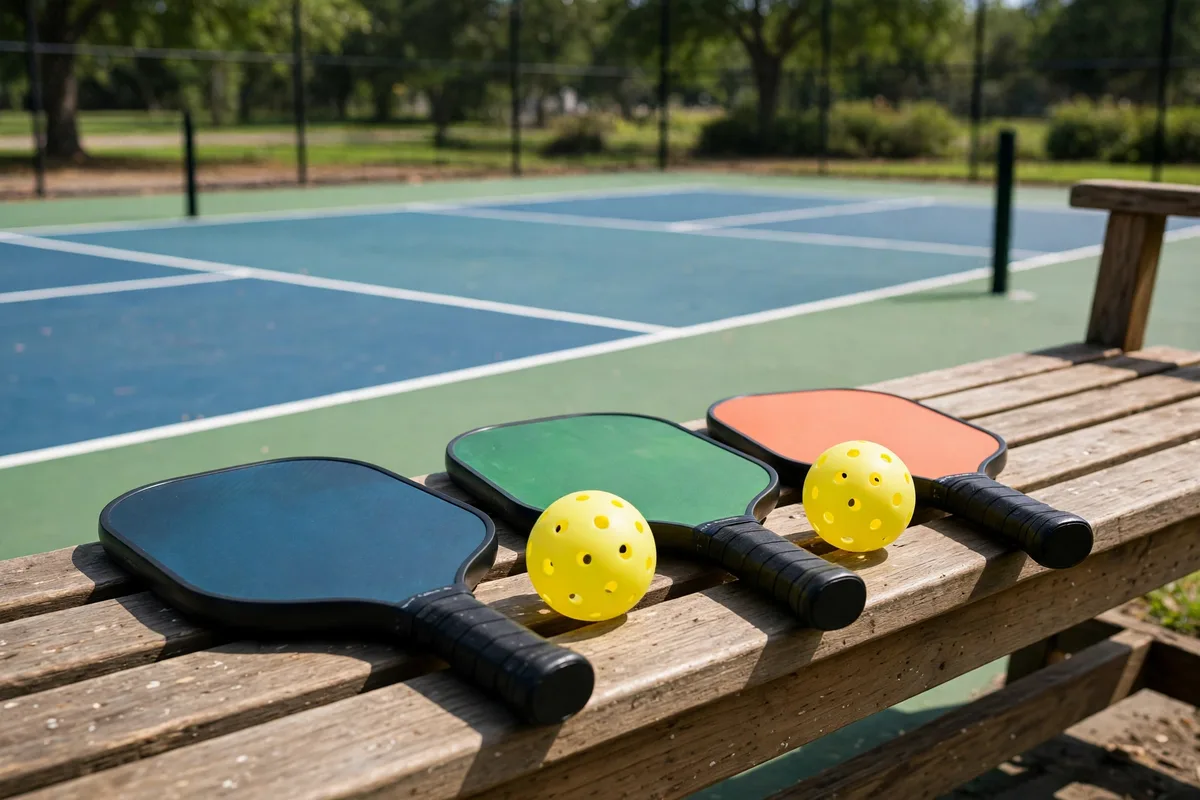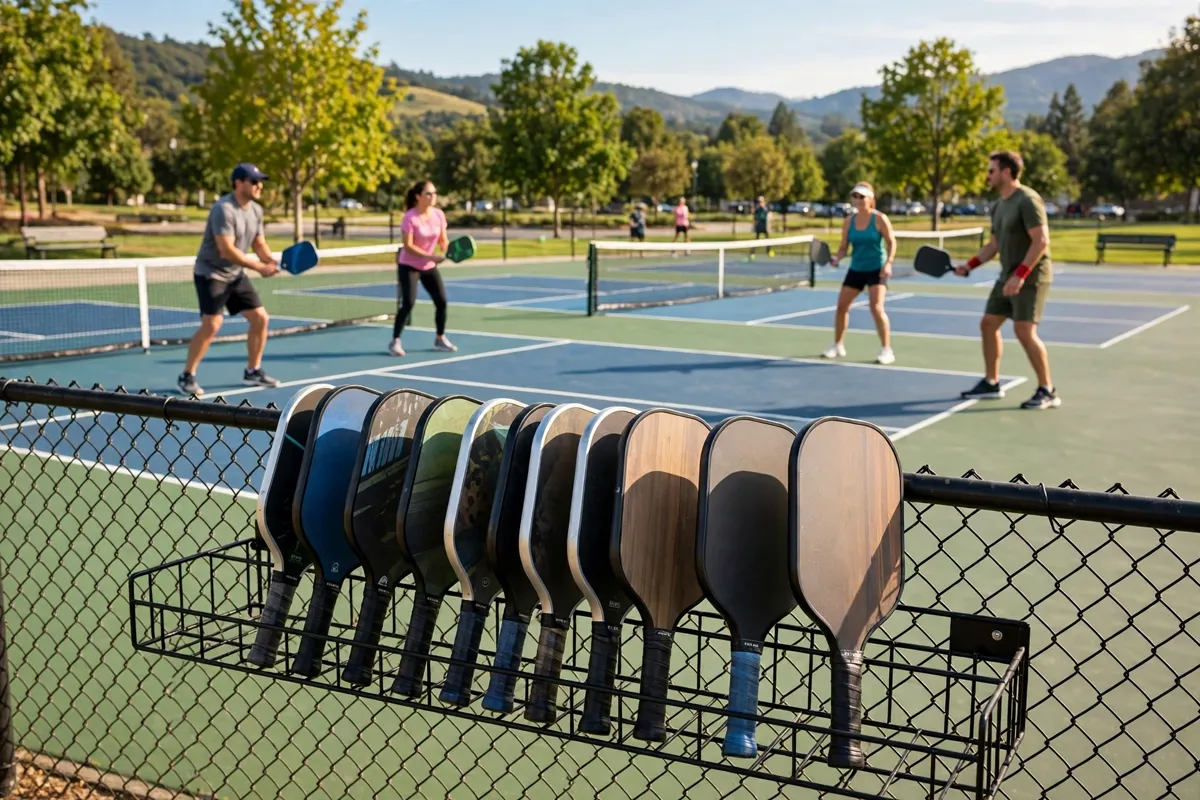
Walk into any sporting goods store and you will see two kinds of pickleballs that look almost identical. Same bright colors, same round shape, same holes. Most new players buy whichever three-pack is on sale, then wonder why the ball behaves differently from one week to the next. Indoor and outdoor pickleballs are built for two very different places to play, and using the wrong one changes your game more than a new paddle would. The good news: once you know the three clues — holes, hardness, and feel — you will never grab the wrong bucket again.
The easiest clue: count the holes
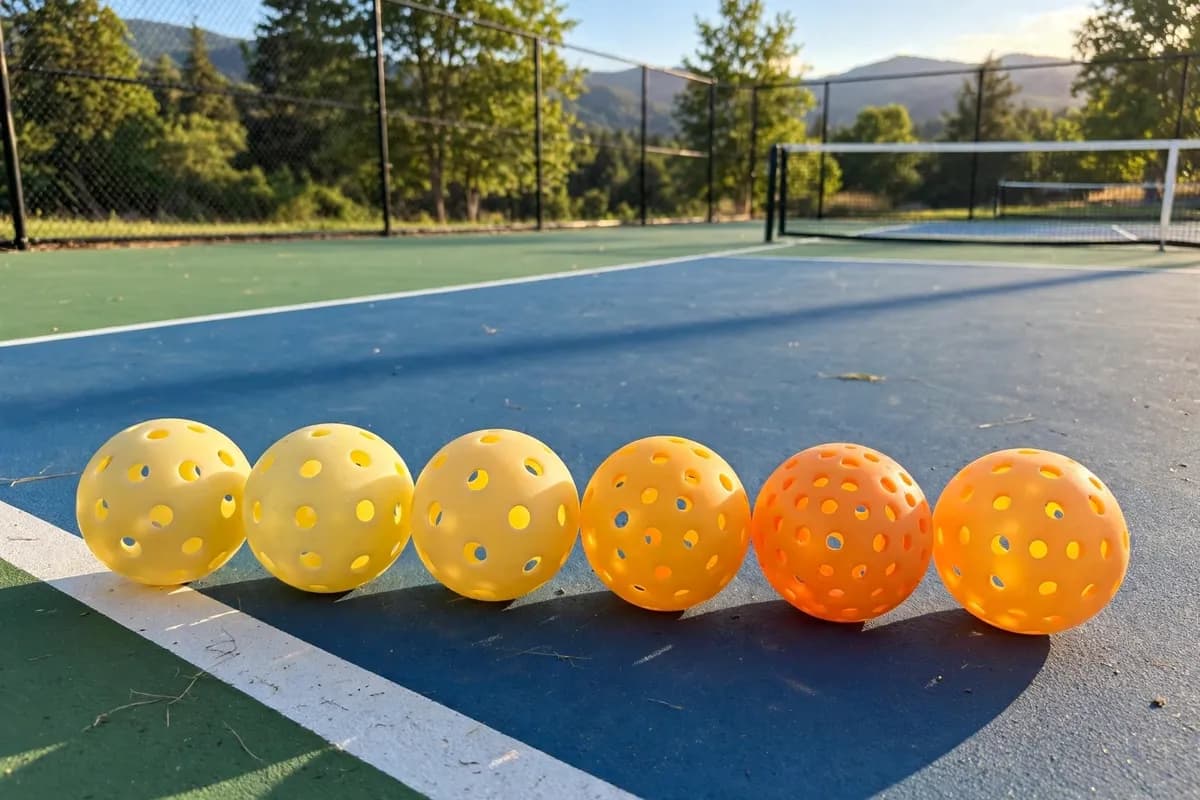
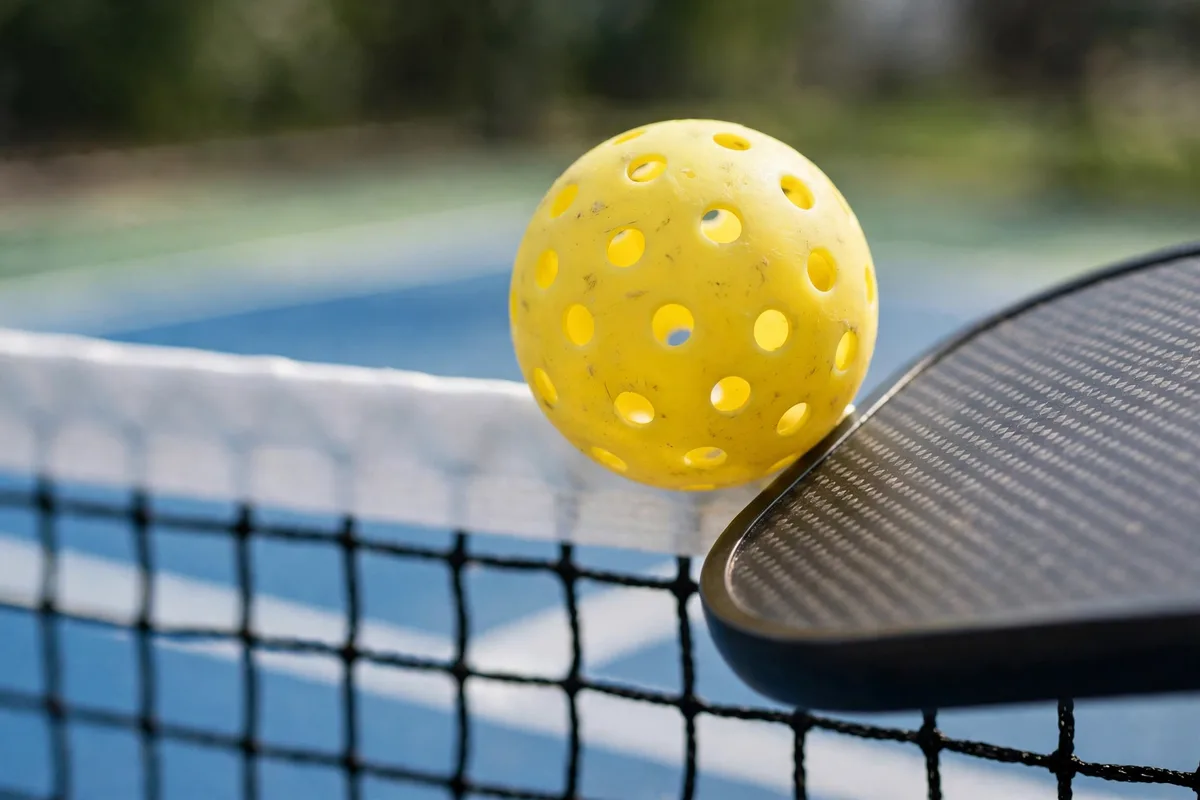
Outdoor balls typically have 40 small holes. Indoor balls typically have 26 larger holes. That is the fastest way to tell them apart in a mixed bucket, and the difference is not decoration. Smaller, more numerous holes help an outdoor ball hold its line when the wind pushes on it. Bigger holes make an indoor ball a touch slower and softer through the air, which suits a gym where there is no wind at all and the floor is smooth wood or sport court. If you remember one number pair from this page, make it 40 outside, 26 inside.
Hard outside, soft inside — but the same weight
Outdoor balls are made from a harder plastic. They need to survive rough asphalt and concrete courts, sun, and cold mornings, and their firmness keeps them lively when a breeze is moving across the court. Indoor balls are softer and feel a little lighter in the hand. On a gym floor, that softness is a feature: the ball grips the polished surface instead of skidding, bounces a bit lower and slower, and gives you a fraction more time on every shot. Neither ball is better — each one is tuned for the surface under your feet. Pick one up and squeeze: the difference is obvious in two seconds. Here is the surprise when you weigh them: the official range is identical. USA Pickleball's equipment rules say a legal pickleball must weigh between 0.78 and 0.935 ounces, indoors or out. When players say an outdoor ball feels heavier, they are really feeling the harder plastic and the way it jumps off the paddle. An indoor ball at the same weight feels softer because it gives a little at contact. So do not shop by weight. Shop by where you play, and let the holes and the feel guide you. Our equipment basics page covers balls alongside paddles and court shoes if you are gearing up from scratch.
What happens with the wrong ball
Use an outdoor ball indoors and two things happen right away: it is loud — a hard ball on a gym floor cracks like a drum — and it plays fast, skidding off the polished surface before your feet are set. Use an indoor ball outdoors and the wind owns it. A soft, big-holed ball floats, drifts sideways on anything more than a light breeze, and gets pushed around on serves and lobs. Cold weather is harder on it too: soft balls played outside in the cold crack sooner, sometimes in a single session.
When a ball is done
Pickleballs do not pop, so players keep them long past their prime. Retire a ball when you spot a crack around a hole, feel a dead spot where the ball thuds instead of bouncing, or notice it has gone slightly out of round and wobbles in flight. A worn ball lies to you — it makes good shots look bad and teaches your hands the wrong touch. Fresh balls are cheap, and your game is worth more than the last session you can squeeze out of a cracked one. Keep two or three good balls in your bag and rotate them so they wear evenly.
Not sure which ball your local courts use? Ask what the regulars play with and match it — consistency beats novelty while you are learning. And once you have the right ball in hand, find out which of your shots needs the work with our free skill check. It grades your serve, return, dinks, drops, volleys, and resets, and shows you exactly where to spend your practice time.