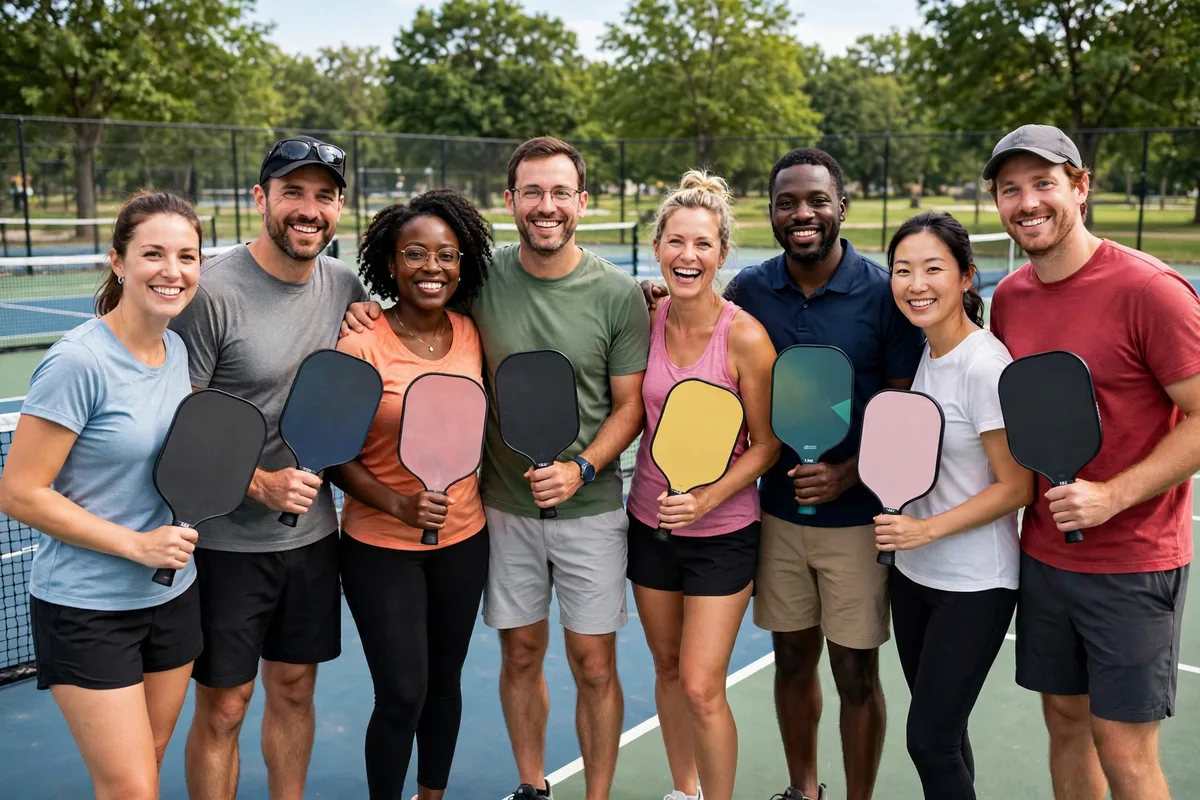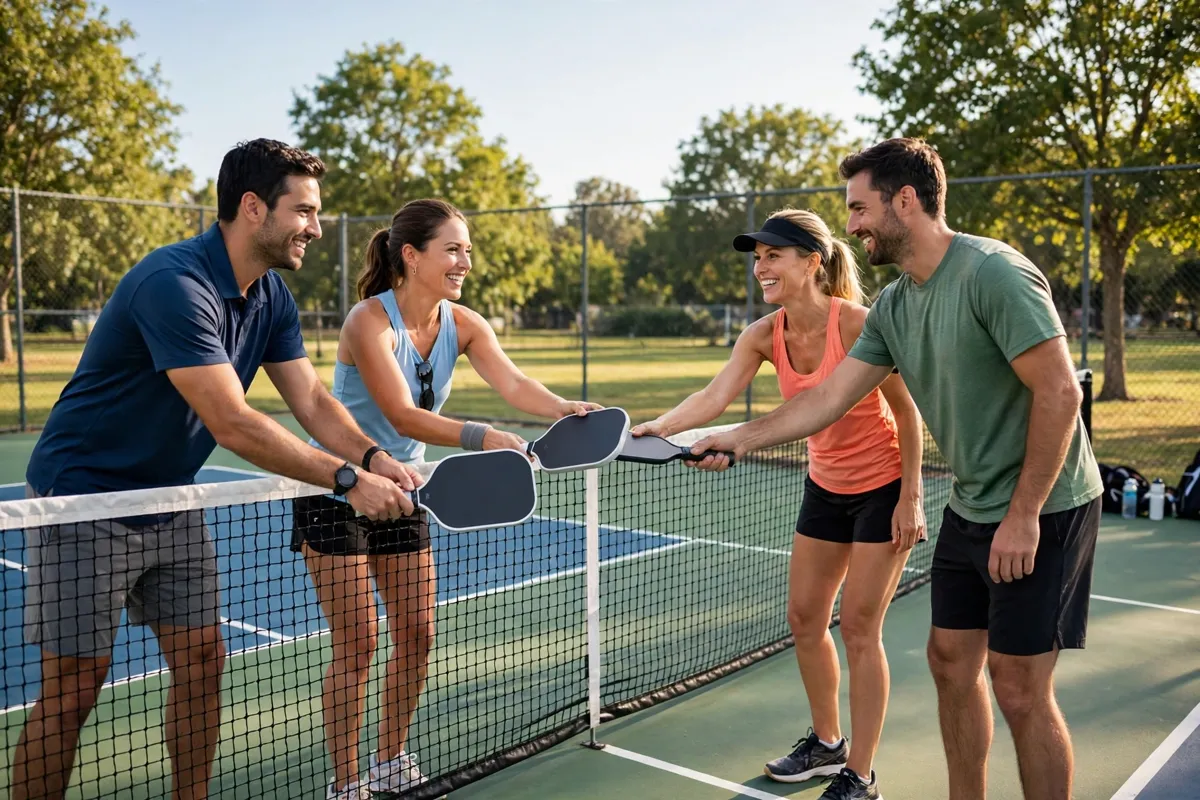
Open play is the drop-in heart of pickleball. It is a scheduled session at a park or rec center where you simply show up — no team, no partner, no reservation — and rotate into game after game with whoever else is there. For most players it is where the sport stops being a lesson and starts being a habit. Nearly every court community runs some version of it. If you have never been, here is exactly how it works, and how to walk in as a beginner without feeling lost.
The paddle queue runs everything
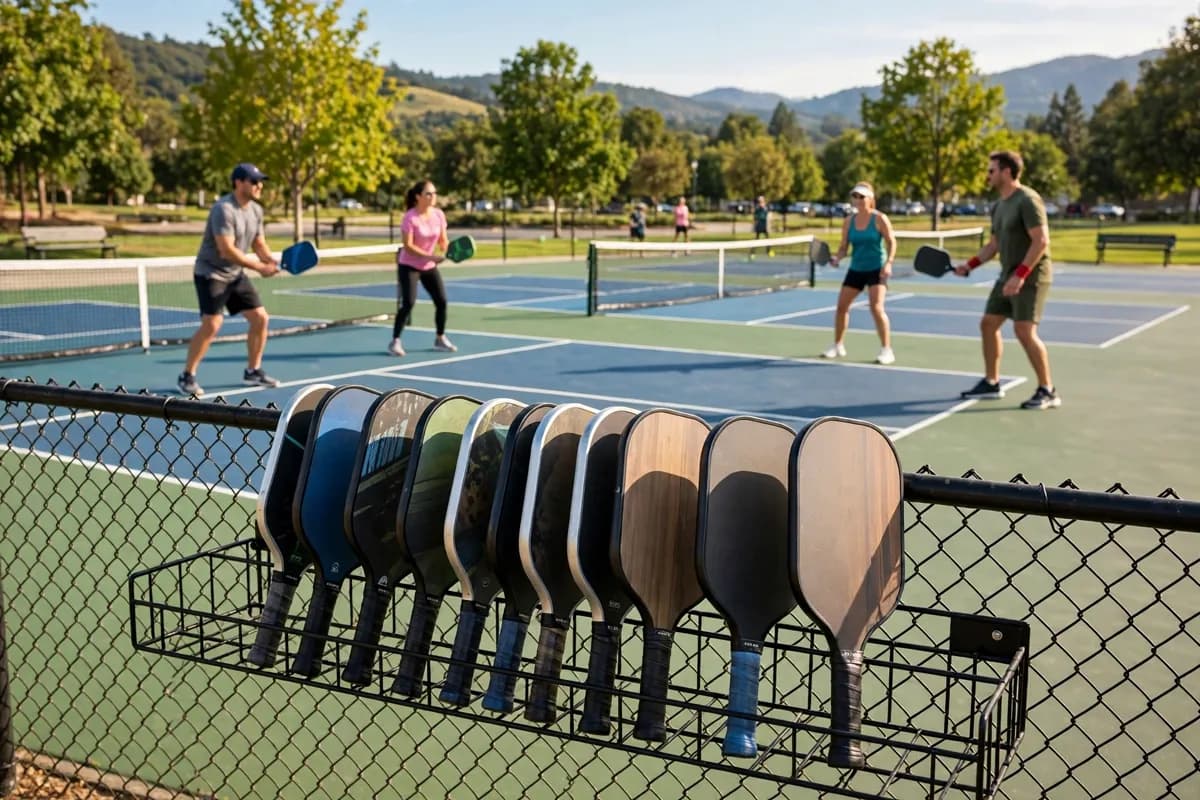
Open play is organized by a simple, brilliant system: the paddle queue. When you arrive, you lay your paddle in a rack, a line on the fence, or a row on the ground with the other waiting players. When a court opens, the next four paddles go on together. The common pattern is four on, four off — a full game leaves, a full game starts. At some places winners stay and split while two new players rotate in, or winners play a set number of games in a row before cycling out. Watch the rack for two minutes and you will know the local version.
Courts sort themselves by level
Nobody assigns you a court, yet within an hour the courts sort themselves. Stronger players drift toward the games that look fastest, and newer players find the courts where rallies are longer and mistakes are forgiven with a laugh. Many venues help this along with a challenge court for advanced players or a labeled beginner-friendly court at certain hours. Do not read this as a wall. It is how open play keeps games close, and close games are the fun ones. If you land in a game that feels over your head, finish it with a smile — the rotation moves you on in about ten minutes.
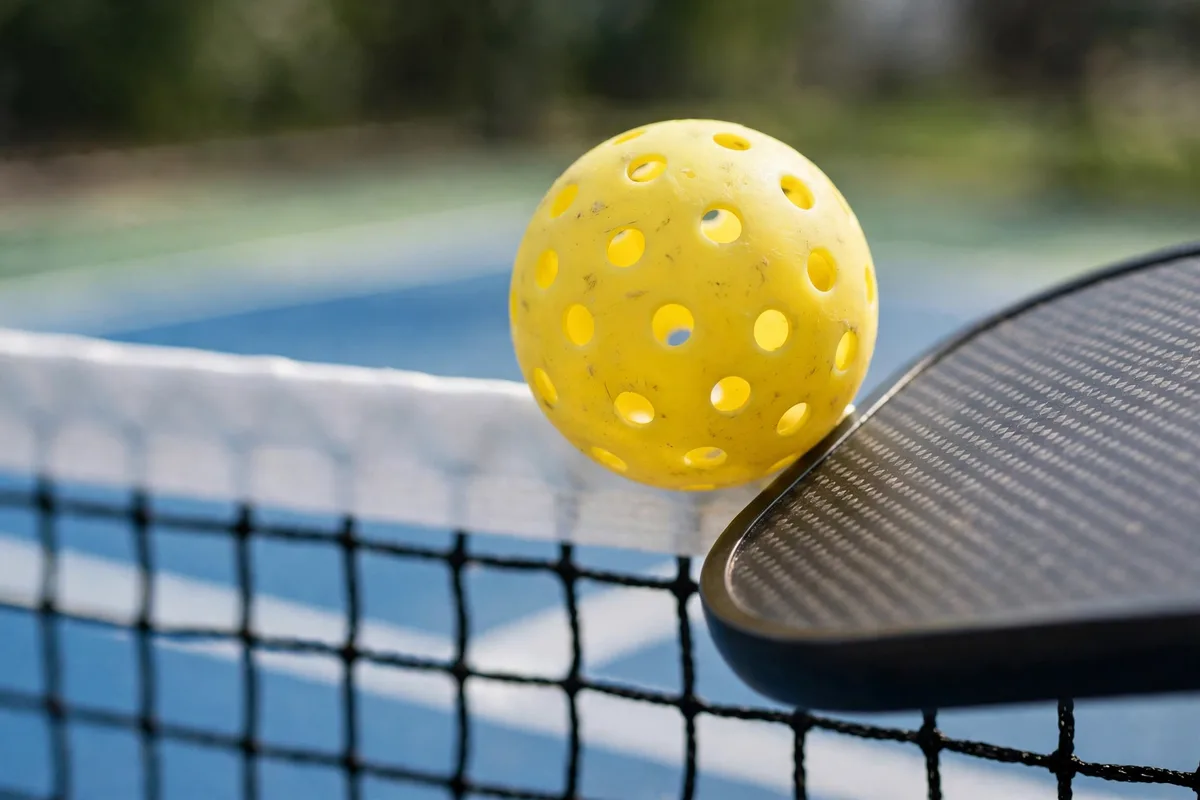
How to join as a beginner
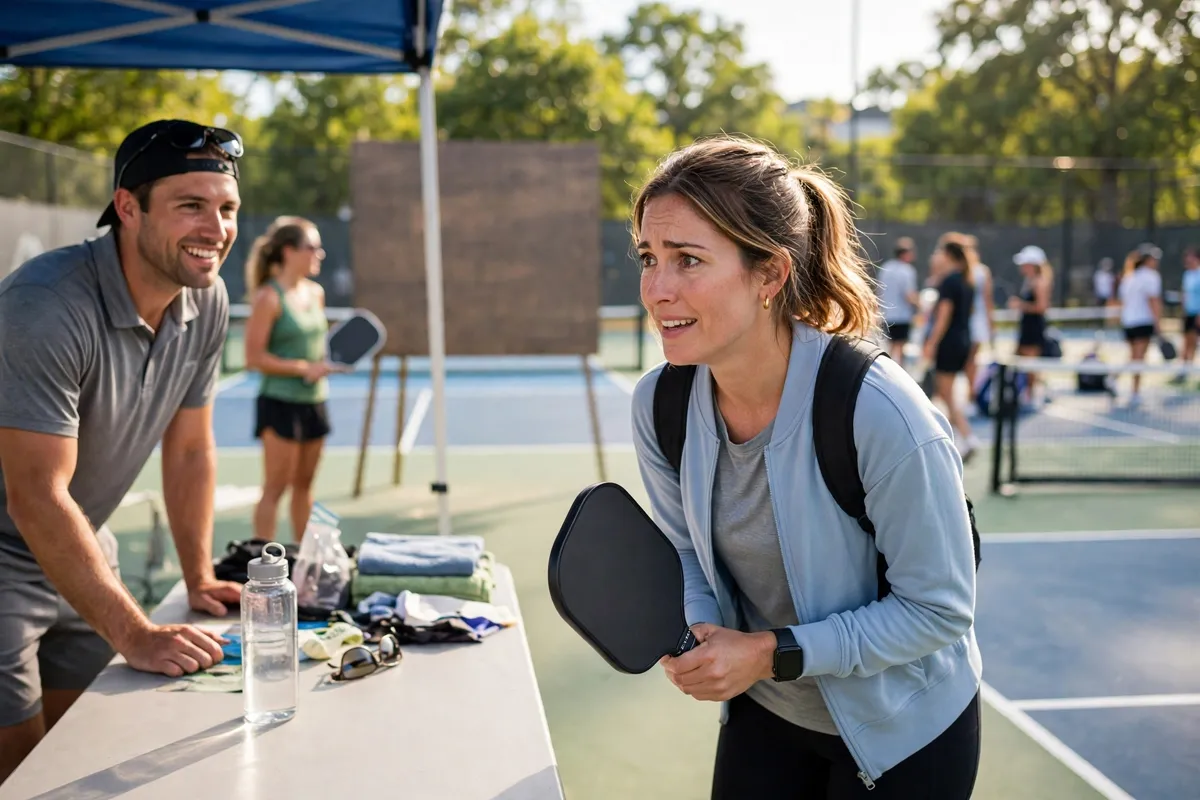
Arrive, put your paddle in the queue, and watch one full rotation before your turn comes up. You will learn the pace, the score-calling habits, and which court has the friendliest game. If you are brand new, say so — 'First time at open play, happy to be pointed at the right court' works everywhere, because every regular was new once and most remember it kindly. New to organized play entirely? Our guide to running a round robin uses the same rotation logic, and a few minutes with the unwritten etiquette rules will cover the rest.
Busy days: winners, losers, and splits
When the courts are packed, many sessions tighten the rotation. Winners split up and stay for one more game while the losing pair comes off, or every game ends with all four players returning their paddles to the back of the queue. Some places use rally scoring — every rally scores a point, not just rallies the serving side wins — or shorten games to keep things moving. None of this is personal and none of it is about you. It is crowd control, and the same rules land on the best player at the park. Keep your paddle in line, stay near the queue when your turn is close, and the system treats everyone the same.
Most public courts post open play hours on a sign at the gate, and clubs list them on their schedules. If you are hunting for courts and sessions in a new area, start with our court finder and then ask the first regular you meet when open play runs — locals always know, and asking is a good first conversation. Bring water, a paddle, and court shoes, and plan to stay for at least an hour: the second hour of open play, once people learn your name, is better than the first. One last tip before your first session: know roughly where your game stands so you can pick the right courts with confidence. Our free skill check takes a few minutes and gives you a level for your serve, return, dinks, drops, volleys, and resets. Walk into open play knowing your number, and you will find your games faster. That small bit of self-knowledge is the difference between wandering the courts and belonging on one.