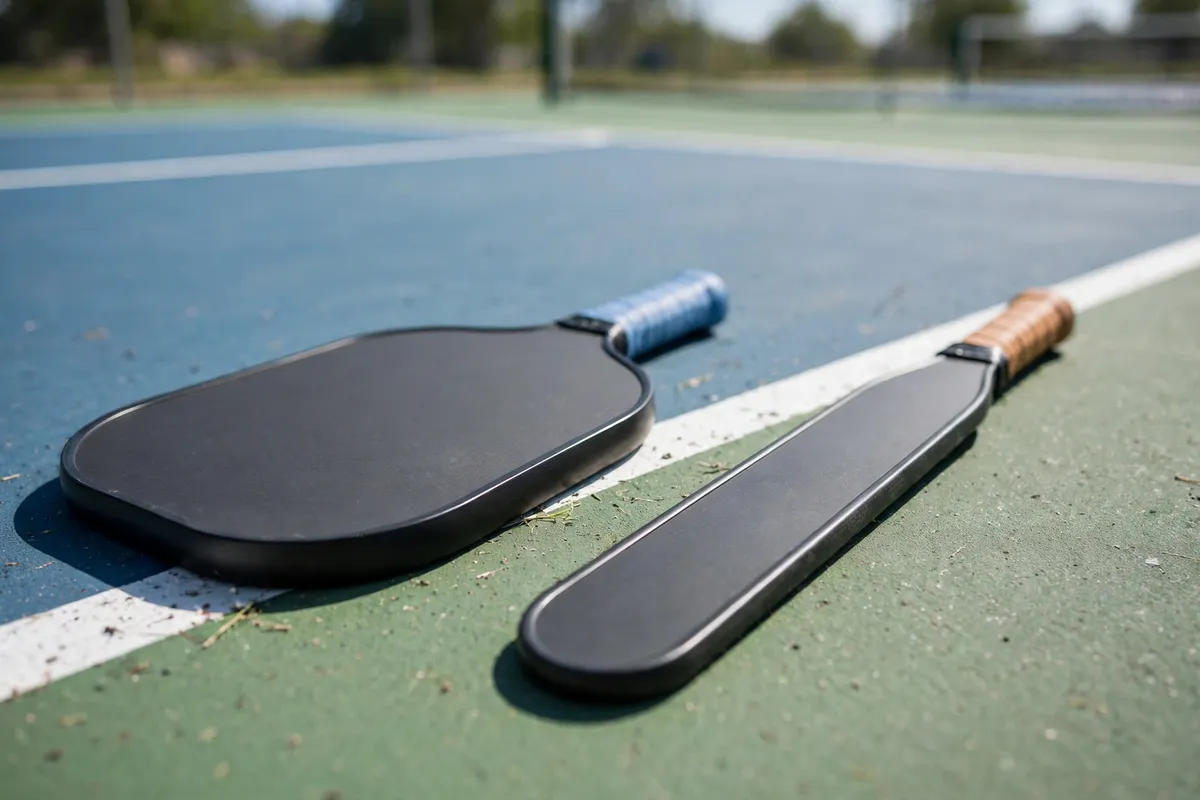
The biggest brand in pickleball is slowly walking away from the paddle shape its own engineers like most. Rob Barnes of Selkirk laid out the company's shape strategy in a sit-down on Nico the Lefty's YouTube channel, the fourth episode of his mini series called The Main, as reported by The Dink. The headline: Selkirk will move away from the widebody paddle over time, with more hybrid shapes arriving around mid-2027.
The reason is simple sales math. Barnes said Selkirk sells roughly eight elongated paddles for every one widebody, so the shape is not a popular one even though it performs. That is the part worth sitting with: a shape can be excellent on paper and still lose the popularity contest.
The shape that works but does not sell
Barnes agreed the widebody is a bit like the underhand free throw — statistically better, but almost nobody wants to be seen using it. Selkirk's engineers see the widebody as an amazing shape for sweet spot, playability and consistency. A couple of years ago Selkirk revamped its shapes, and the numbers pushed the company toward widebody designs that played really well. So the shift is not about the shape failing. It is about what players actually buy.
It is not an overnight switch, either. The upcoming Boomstik ST is still coming in widebody and elongated shapes, ahead of its November 10 launch, according to The Dink's first look linked in the report.
Why hybrids changed the math
The technology inside paddles improved, which shrank the penalty for choosing a hybrid. Barnes said the negatives of a hybrid compared to a widebody are far smaller than they used to be, pointing to newer core and surface technology — in his words, the hybrids simply play great now. That removes the old tradeoff, where you gave up forgiveness to get reach and spin potential.
Barnes was blunter about trends. He called the flat top hybrid craze mostly a fad, joked that the most overrated technology might be the flat top hybrid itself, and said the amount of shape shifting in the industry is "just crazy." His plan is to keep building solid underlying technology and only tweak shapes based on data and statistics.
Between the Boomstik and the Omni, Barnes said Selkirk is hitting roughly 80 percent of players from a playing characteristic standpoint: the Omni is the all-court option with movable weights, the Boomstik is the power option. The practical takeaway for your next paddle is his: shape matters less than the technology inside it, and adjustable weight you can tune beats a trending outline. Our guide to paddle weight and grip size helps you sort the fit. Want to know where your own game stands? Take the free skill check.
Source: The Dink, "Why Selkirk Is Moving Away From the Widebody Paddle" (published Nov. 4, 2026), reporting Rob Barnes' comments on Nico the Lefty's The Main. Figures and quotes as reported there.