Tennis players pick up a pickleball paddle and feel at home within minutes — then the ball lands in a seven-foot zone they are not allowed to volley from, and the family resemblance gets complicated. The two sports share a net, a court with lines, and a rally, but they ask for different things. Here is the honest comparison: what is actually different, what transfers, and what each game asks of your body and your calendar. Neither is the better sport. They are different tools for different days.
First difference: the size of the world
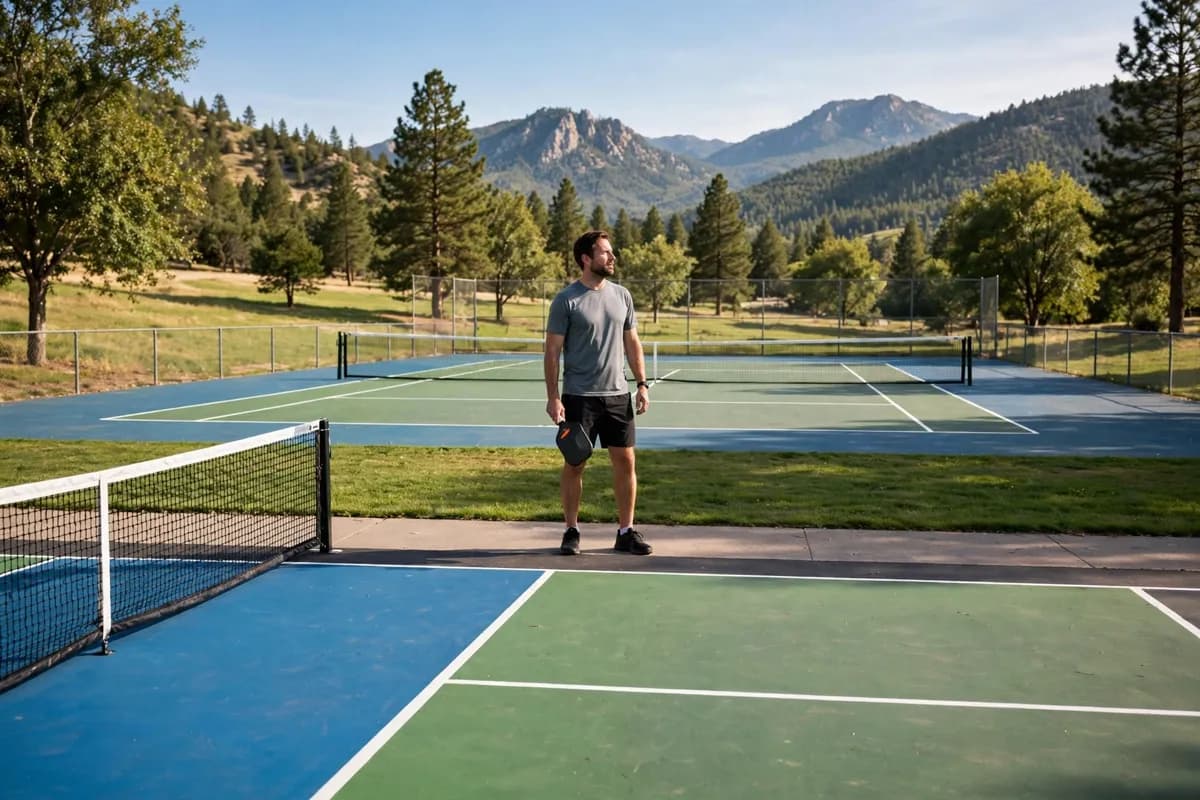
A pickleball court is 20 feet wide by 44 feet long — the exact footprint of a doubles badminton court. A tennis court is 78 feet long, 27 feet wide for singles and 36 for doubles. That is why parks often fit several pickleball courts onto one tennis court when they convert a facility. Less court means shorter runs, quicker points, and more players per acre, which is a big part of why pickleball courts have spread so fast. It also means the geometry of angles and passing shots plays out in miniature.
The serve and the kitchen set the tempo
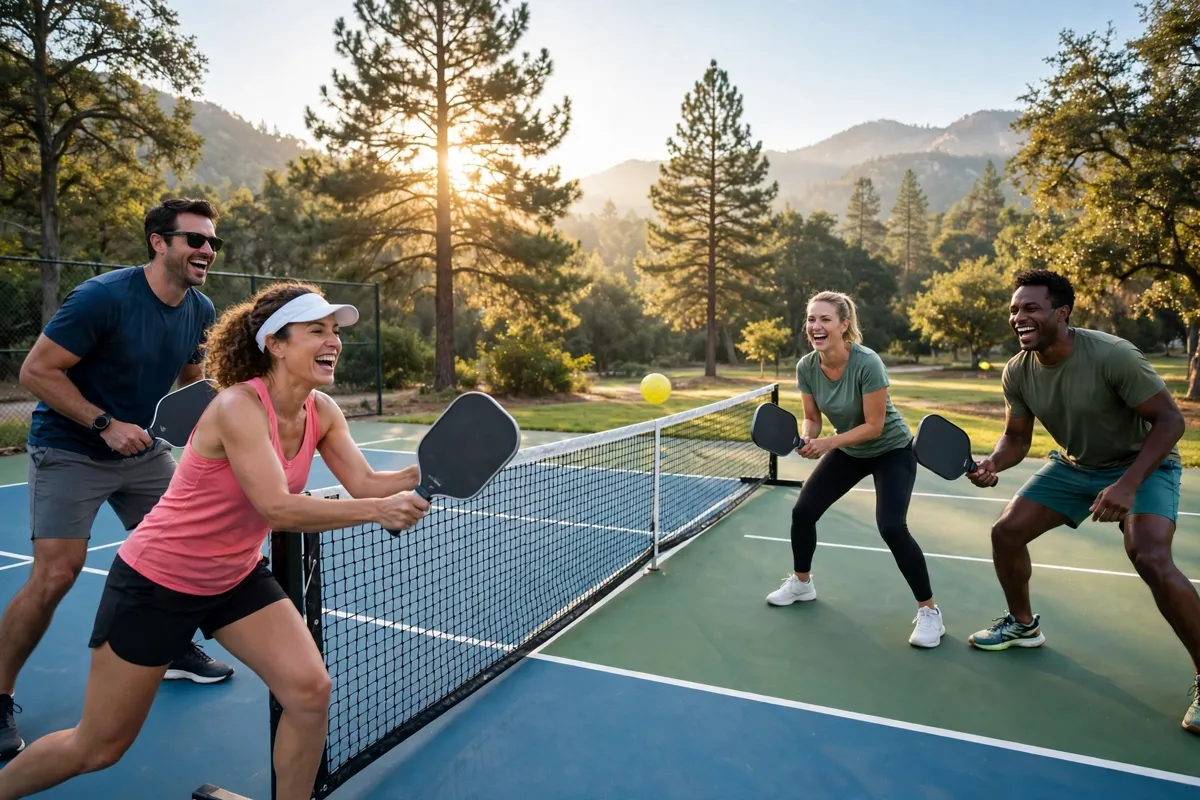
Tennis serves start overhead, as fast as the server can manage, and the serve is a weapon. Pickleball serves are hit underhand, below the waist, and can never be that kind of weapon on purpose — the rules are written to start a rally, not end one. Everything downstream follows from that choice: tennis points often end in a few shots built around serve and return, while pickleball points are built to last long enough for position to matter. Pickleball then adds two rules tennis does not have. The kitchen — officially the non-volley zone, the seven feet on each side of the net — forbids hitting the ball out of the air while you stand in it. And the two-bounce rule says the serve and the return must each bounce before anyone can volley. Together they stop players from camping at the net and create pickleball's signature scene: all four players at the kitchen line, trading soft shots called dinks, waiting for one ball to float too high. Our court basics page shows the lines and zones if you want the full picture.
Scoring, clocks, and the learning curve
Pickleball games are usually played to 11 points, win by 2, and a game often takes ten to twenty minutes. Tennis counts in games and sets — 15, 30, 40, deuce — and a match can run past two hours. Pickleball's short games are also why a group of mixed levels can happily share one morning: nobody is stuck inside a lopsided match for long. Practically, that means pickleball fits into a lunch break, and a group of eight can rotate through games all morning, while tennis asks for a bigger block of the day. The learning curves differ just as much. In pickleball, the court is small, the paddle is light, and the ball is slow enough that most people can hold a real rally on their very first day. In tennis, the serve alone takes weeks of practice to land reliably, and rallies come later. That fast first success is why so many people stick with pickleball after one session. The depth is still there — it just hides in touch, patience, and positioning rather than in raw technique.
What each asks of your body
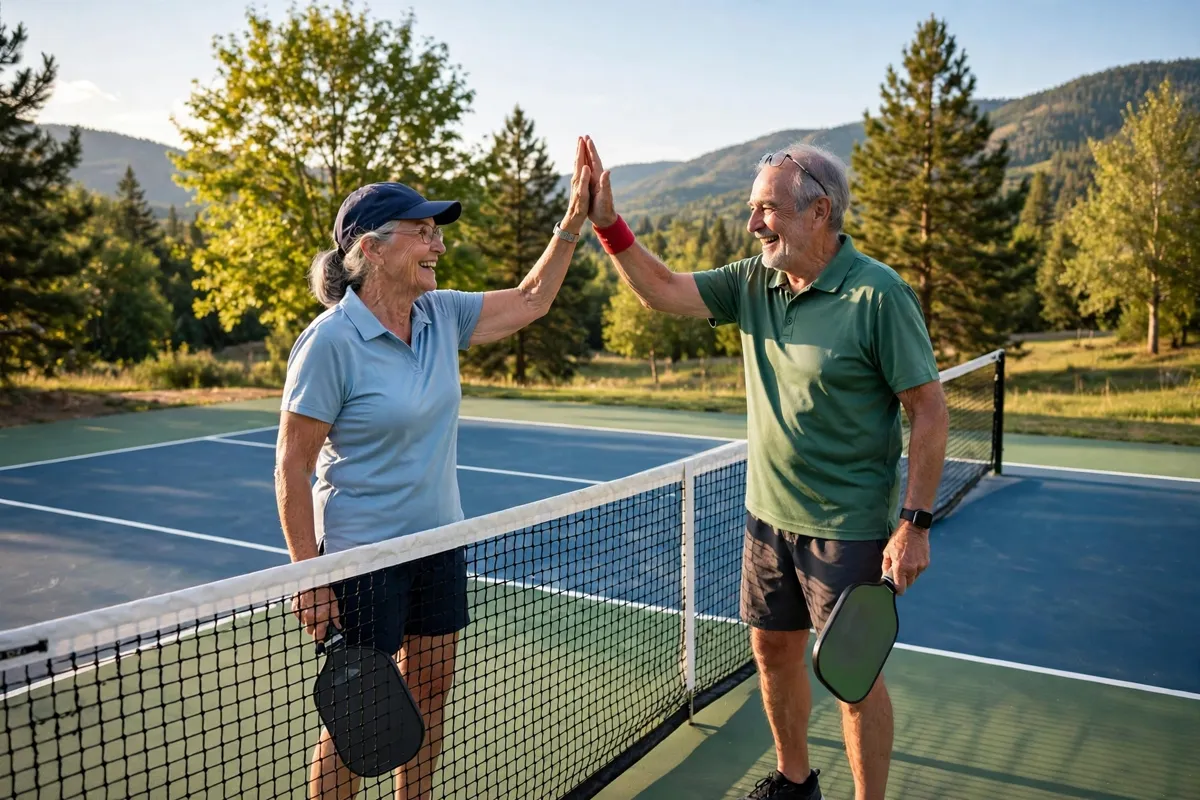
Both are real exercise. Tennis generally covers more ground, with longer sprints and higher peak speeds across a much bigger court. Pickleball is built from short bursts — a few steps, a lunge, a quick shuffle — repeated for as long as you keep playing, and plenty of players play for two or three hours. Pickleball's smaller court and lighter ball are why many older players find it the friendlier of the two; our guide to pickleball for seniors goes deeper on that. Whichever you choose, warm up and wear court shoes.
If you already play one and are learning the other, your footwork and net instincts transfer better than your habits do. The fastest way to see where your game stands in pickleball terms is our free skill check — it scores your serve, return, dinks, drops, volleys, and resets against pickleball levels, not tennis ones.