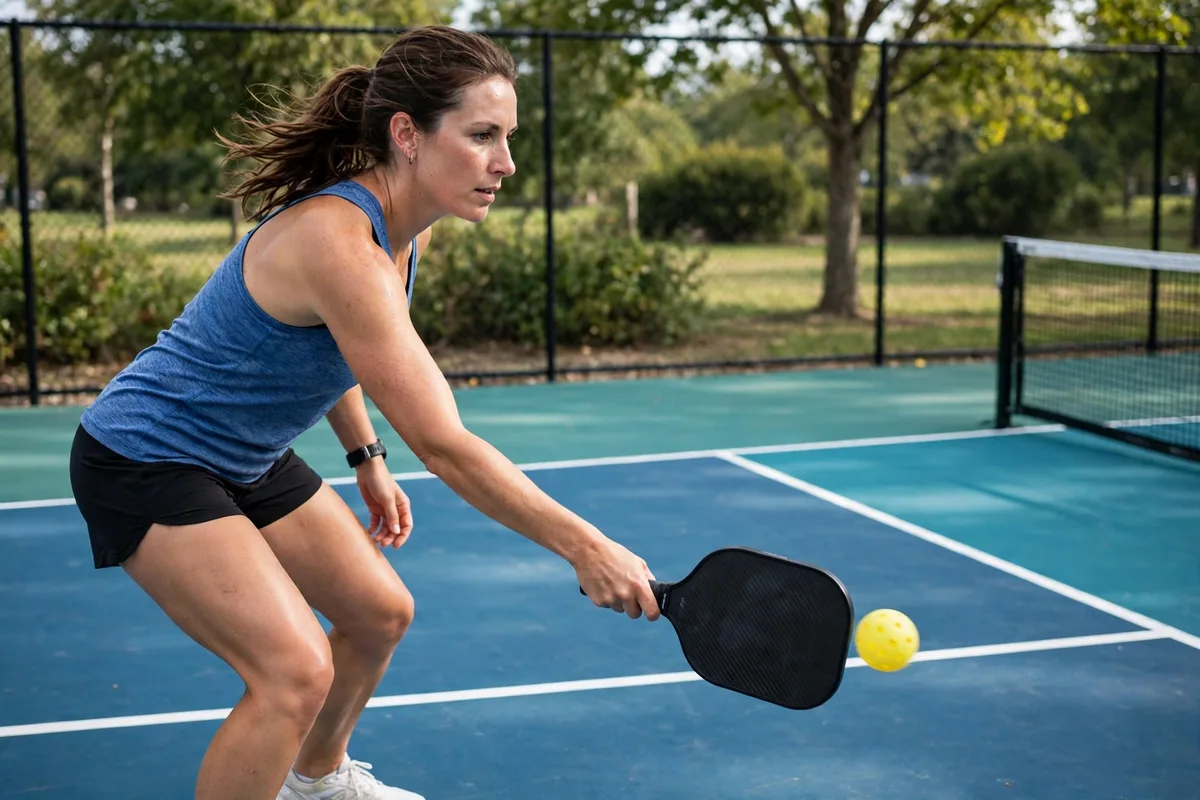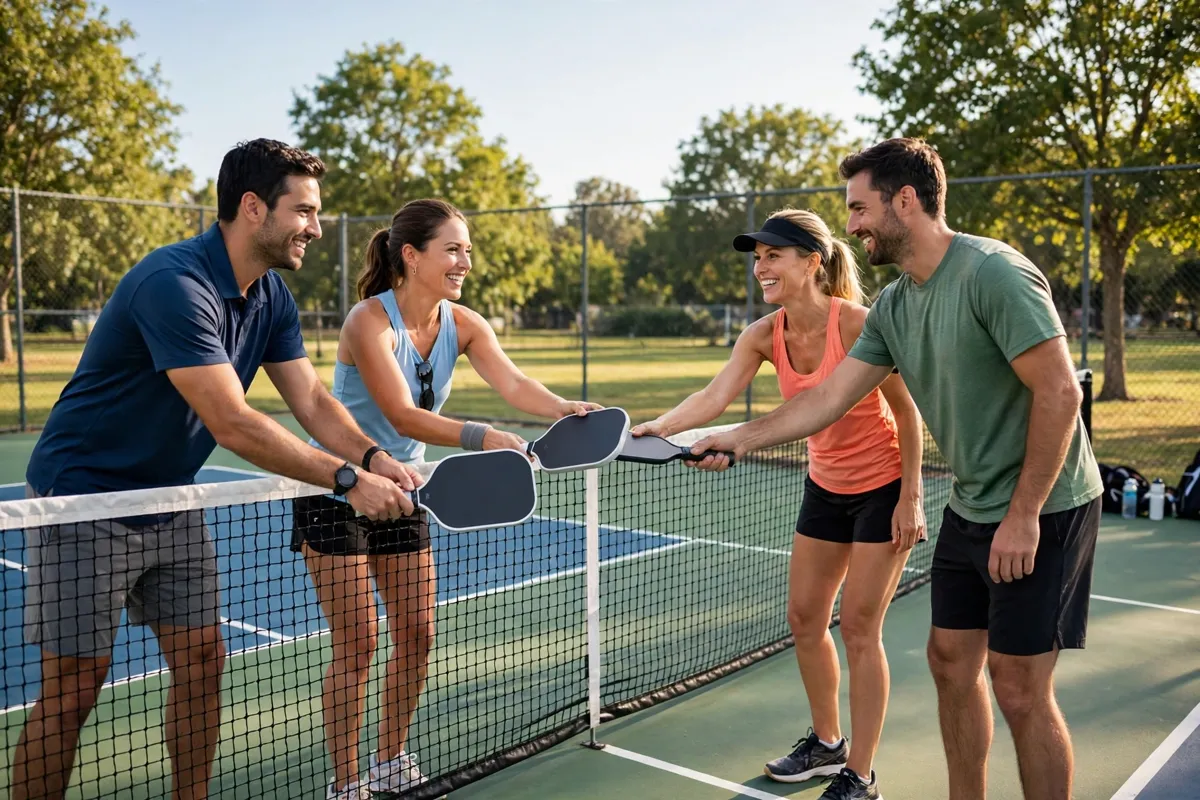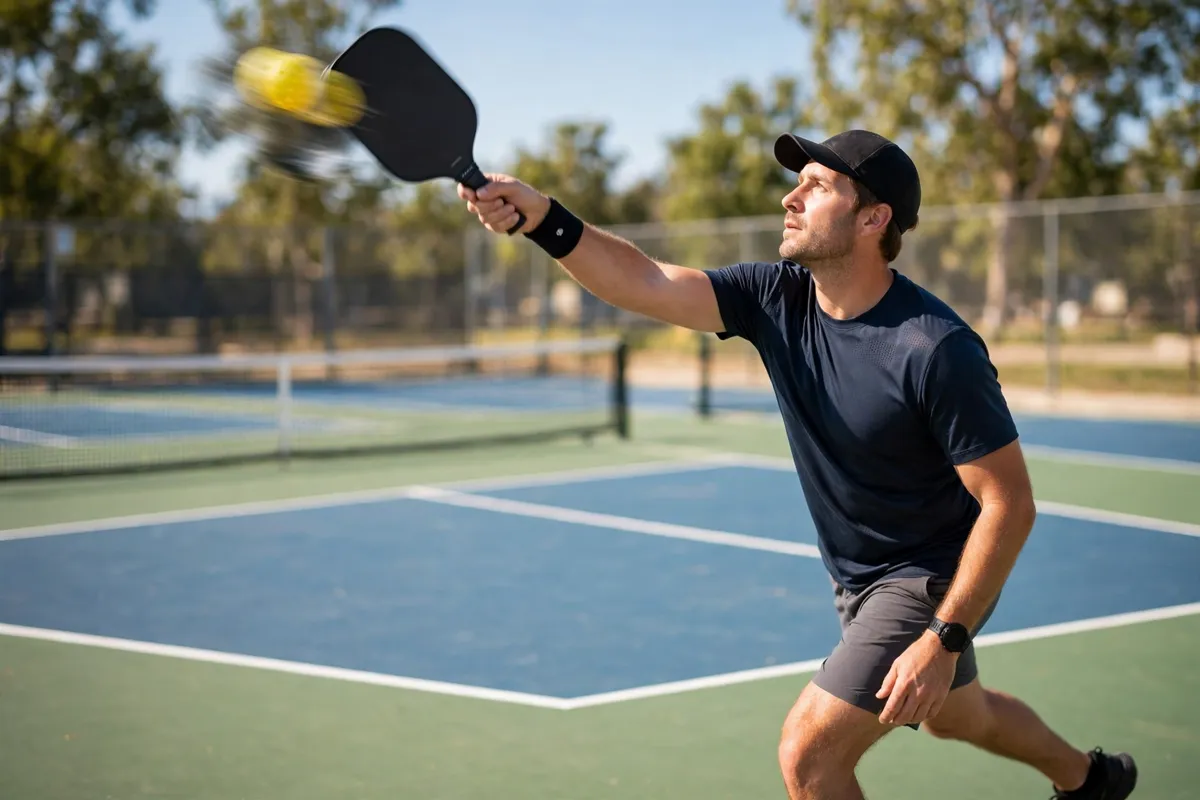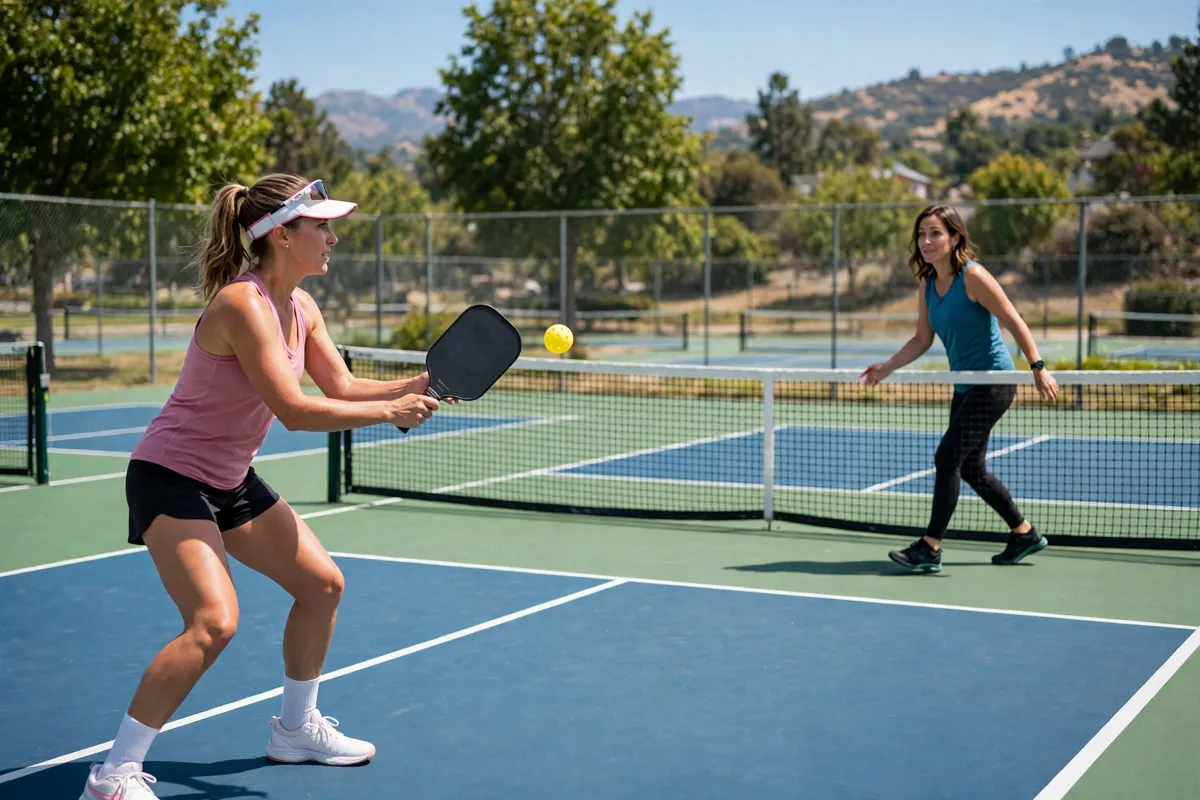
Every so often, a server looks up, ignores the player waiting to return serve, and fires the ball straight at the returner's partner — the one standing up by the net, minding their own business. If it clips them, the serving team wins the rally, and the court usually goes quiet in a particular way. That shot has a name: the Nasty Nelson. It is one of pickleball's strangest collisions of rules and manners, because it is completely legal under USA Pickleball's rulebook and yet almost universally disliked. This guide explains what it is, why the rules allow it, and how to make yourself immune to it.
How the shot works
Start with the setup. In doubles, only one player on the receiving team returns each serve: the one standing diagonally opposite the server. Their partner — the non-receiver — usually waits near the kitchen line (the line marking the 7-foot non-volley zone by the net) so they are ready for the rally that follows. A Nasty Nelson targets that waiting partner. The server aims the serve at them instead of into the service box, hoping the ball strikes them before it bounces. Under USA Pickleball's rules, a serve that hits the non-receiver is a fault on the receiving team, which means the serving team wins the rally outright, with the point or the serve changing hands under normal scoring.
Wait — why is hitting a player a fault on them?
The logic is the same one that governs the whole sport: the ball is live, and players are responsible for where they stand. If any live ball strikes a player (other than in the act of legally hitting it), that player's team loses the rally. That is why a hard drive that catches a net player's shoulder wins the rally for the hitter. The serve is no different in the rulebook's eyes: the non-receiver is part of the court during the serve, and if the serve reaches them untouched, the fault belongs to their team. The rule was not written to encourage the tactic; it simply never carved out an exception for it.
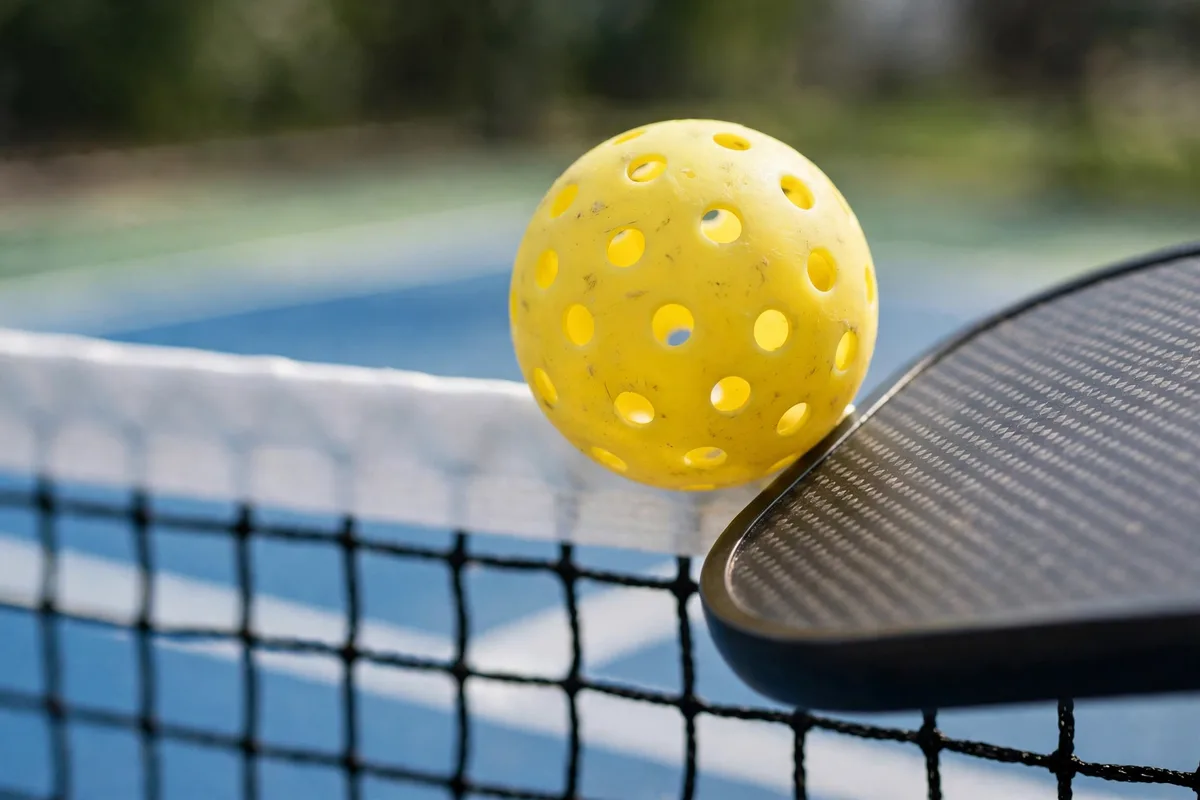
Legal, but read the room
Legality is only half the story. The Nasty Nelson is widely considered poor sportsmanship because it wins a rally without outplaying anyone — the target is not holding a ready paddle for that ball and is not part of the serve at all. Many clubs, leagues, and regular groups ban it outright with a house rule (a local rule a group adopts for its own games), and in friendly play, attempting one is a reliable way to not be invited back. Context matters too: an accidental serve that drifts into a partner who wandered into its path is just a weird rally, no apology needed beyond a grin. The deliberate version, aimed with intent, is the one with the name and the reputation.
How to defend against it
The good news: this shot only works on a stationary target, and you control the target. If you are the non-receiving partner, simply refuse to be one. Stand a few steps back from the kitchen line until the serve lands, or shade off to the side, outside the likely path between the server and the service box. Once the serve bounces and the return is away, step up to your normal spot. Some partners even crouch slightly or hold their paddle across their body as a shield, which at least turns a hit into a block. The deeper habit is awareness: know who is serving, know their habits, and never drift into the serve's lane while you are watching the returner. The unwritten rules of pickleball cover more of these court-awareness habits. In a sanctioned match where the rules allow it and the stakes are real, a few competitive players keep it as a surprise when a non-receiver crowds carelessly. Everywhere else, the honest advice is to leave it in the bag. The standard serve game — deep, consistent, well-placed — already wins plenty of rallies, as how to serve in pickleball explains, and it never costs you a playing partner. If a serve like this is attempted on you, smile, step back next time, and take the target away.
A Nasty Nelson is a serve aimed at the non-receiving partner: legal under USA Pickleball's rules, a rally-winner if it connects, and frowned upon almost everywhere it is tried. Defend it by standing back or aside until the serve lands, and you will never donate a rally to it. Court awareness like this is part of what separates levels — our free skill check scores the six shots that define yours and shows what to build next.